


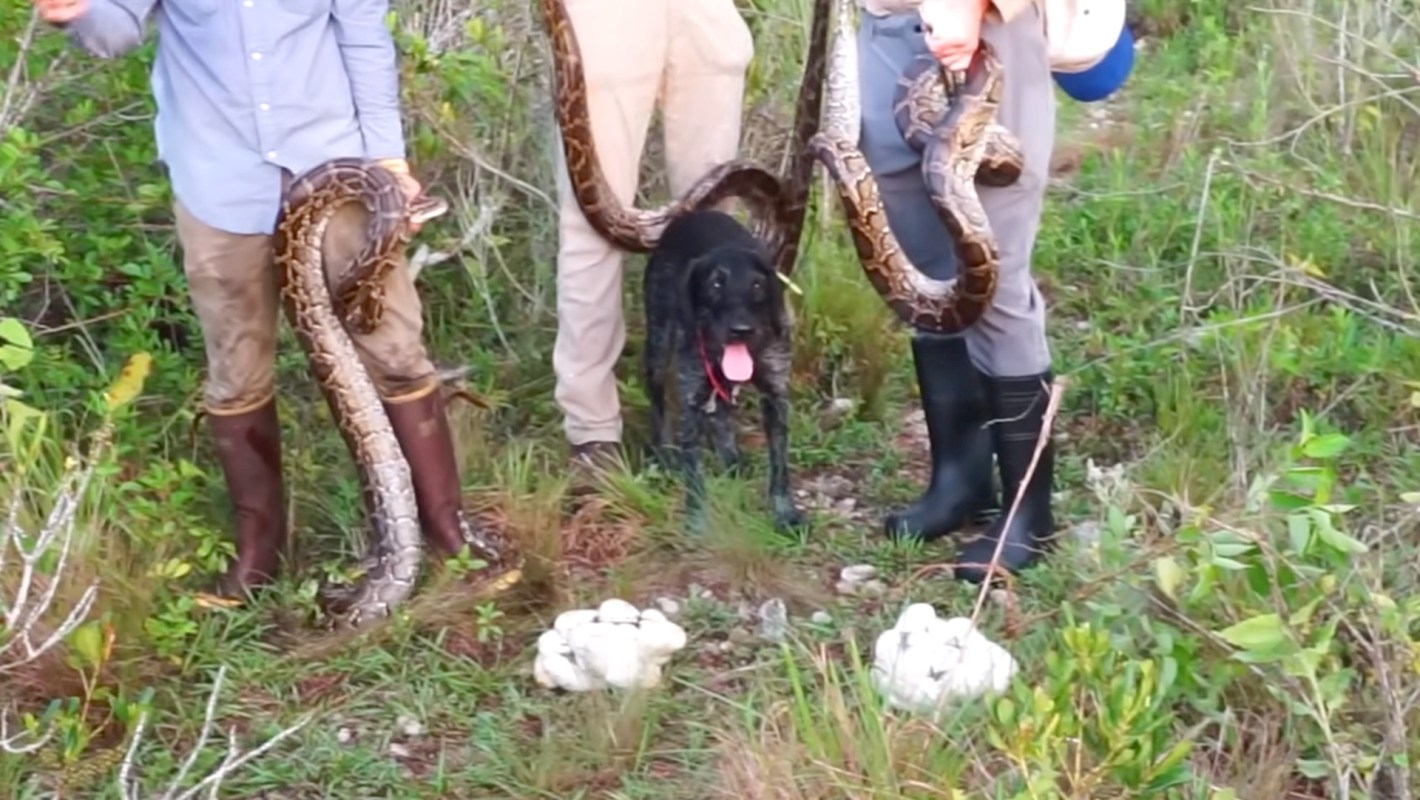
A routine stop in the Florida Everglades quickly became a stark reminder of just how deeply invasive Burmese pythons have taken hold in the wetland.
On one island, the Python Cowboy team (@PythonCowboy) encountered an unusually dense breeding cluster that blew away their expectations.
What happened?
In a YouTube video, content creator Python Cowboy described the discovery in dramatic terms in the caption, writing "this hunt was next level."
According to the caption, the search escalated almost as soon as the group reached the first island, when their dog "Otto locked in on something big," the creator said.
Only after the team moved in did they realize the find was far bigger than expected.
"What we thought was just one nesting python turned into something we've never seen before," Python Cowboy wrote. "Four big pythons, 3 active nests, and a female still full of eggs. All in the same sawgrass head."
TCD Picks » Quince Spotlight
💡These best-sellers from Quince deliver affordable, sustainable luxury for all




Finding several reproductive adults and nests together suggests that nesting season can bring breeding females into tight groupings.
Because Burmese pythons have already devastated native mammal populations in the Everglades, uncovering multiple active nests at once gives removal teams a chance to keep more hatchlings out of the ecosystem.
For Python Cowboy, the hunt had extra meaning. It was one of the last that his beloved dog, Otto, took part in.
"This one hits extra hard it was one of Otto's last big finds before he passed," the creator wrote in the caption. "He gave it his all and led us right to a discovery that will leave a lasting impact."
Why does it matter?
The scene captures the scale of the problem in one place. In a small region, large invasive predators are breeding successfully in a fragile ecosystem meant to support native wildlife.
Burmese pythons are not native to Florida, and their spread is widely linked to human activity, particularly the exotic pet trade and the release or escape of captive animals over time.
When invasive predators multiply, the damage does not stay confined to one patch of marsh. Native mammals and other animals can disappear from food webs, disrupting the balance of the Everglades.
This affects biodiversity, restoration efforts, and the natural spaces that support tourism and outdoor recreation.
What's being done?
Nesting season draws intense attention because removing egg-carrying females and active nests can have an outsized impact. Interrupting one reproductive cluster can stop many more snakes from hatching and spreading deeper into the wetlands.
This type of fieldwork is part of a broader effort in Florida to track, capture, and remove invasive pythons from the Everglades. Discoveries like this can help officials and removal teams identify where snakes may be concentrating and guide a rapid response.
Prevention includes not releasing exotic pets into the wild and reporting invasive species sightings to the appropriate wildlife authorities when possible. Responsible pet ownership can help keep the next ecological crisis from taking root.
"These invasive breeders are wiping out native wildlife, and finds like this prove just how urgent our work is out here," Python Cowboy wrote in the caption.

Get TCD's free newsletters for easy tips, smart advice, and a chance to earn $5,000 toward home upgrades. To see more stories like this one, change your Google preferences here.







