


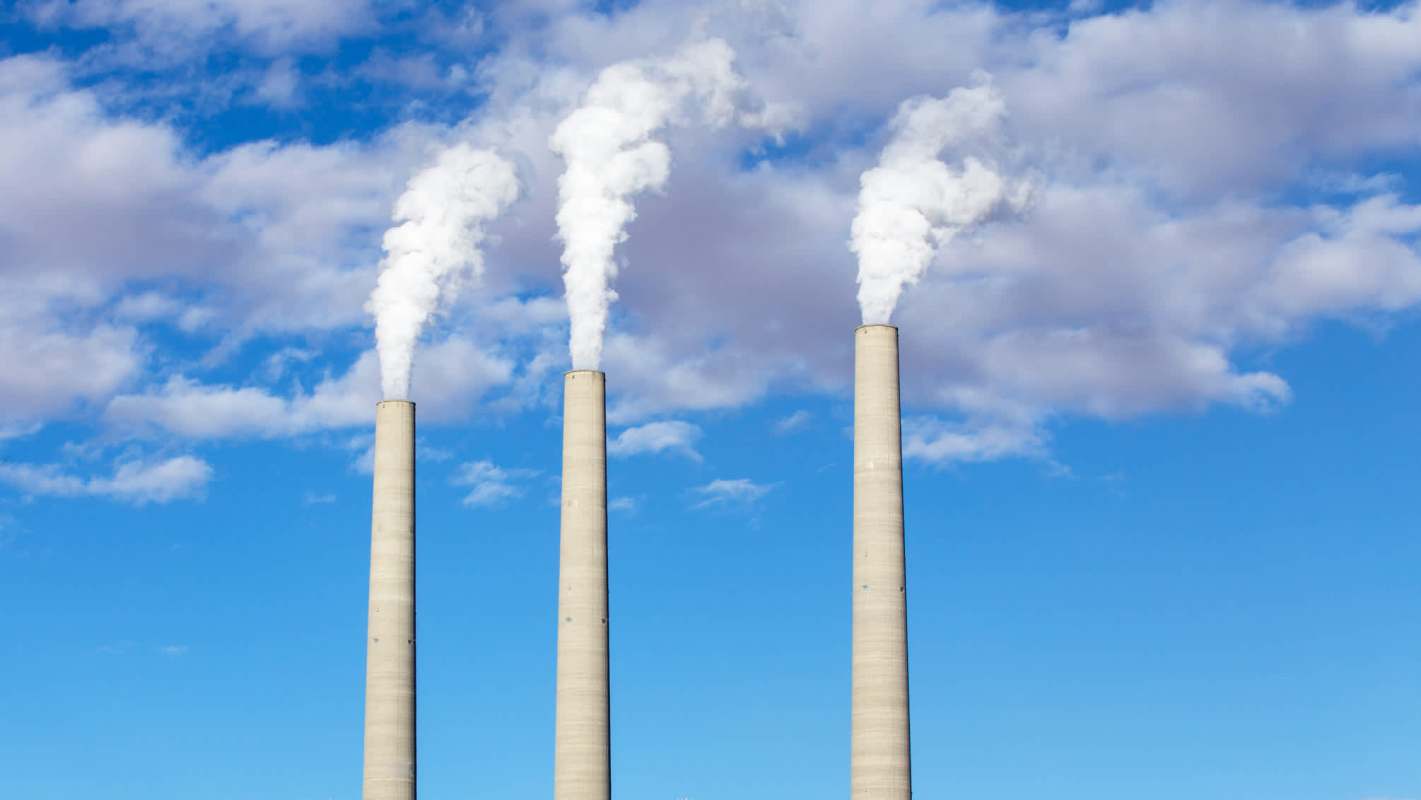
An Arizona plant that had received federal help to replace coal with renewable power is now getting another federal award aimed at keeping its coal unit operating.
The reversal at one Arizona facility underscores how costly it can be to keep aging fossil fuel infrastructure operating, even after utilities have spent years planning for a cleaner, less expensive energy future.
What happened?
On June 4, Apache Generating Station received nearly $21 million to keep its coal turbine in service and upgrade it. The award came two years after Arizona Electric Power Cooperative got $485 million from the U.S. Department of Agriculture for 800 megawatts of renewable energy and a plan to phase out coal by 2028.
According to The Arizona Republic, the money is part of a broader Department of Energy effort, using the Defense Production Act, to distribute $425 million to 12 coal facilities.
The move comes as the Trump administration pushes to extend the life of coal plants across the country, despite coal's long-running decline.
In Arizona, coal's share of electricity generation fell from 38% a decade ago to about 8% in 2024, while renewables rose to 19%, The Arizona Republic reported.
TCD Picks » Quince Spotlight
💡These best-sellers from Quince deliver affordable, sustainable luxury for all




Amanda Ormond, executive director of the Just Energy Transition Center at Arizona State University, summed up the economics plainly: "In general, coal plants retire because they aren't cost-effective compared to the new stuff."
Why does it matter?
Ted Kelly, the Environmental Defense Fund's director and lead counsel for U.S. clean energy, said federal support is trying to fill a "gaping wound" created by rising costs.
Because Apache's coal turbine is 47 years old, the federal award covers only part of the expense; the co-op is also expected to contribute $32 million.
Arizona regulators have already shown how expensive coal extensions can become. In another Arizona case, the Arizona Corporation Commission, as cited by the Republic, found that keeping Tucson Electric Power's coal units online would require more than $450 million in upgrades, compared with $170 million to convert them to natural gas.
Kelly noted, "As we've seen with these coal plants kept open by the Trump administration, they've really increased electric costs in the area."
"Coal power plants have really severe air quality consequences," Kelly said, pointing to impacts including asthma, heart problems, and premature deaths.
Environmental Protection Agency data cited by the Republic showed Apache's coal turbine emitted almost three times as much mercury in 2025 as in 2024, even as its operating hours declined.
Fossil fuel assets can quickly become liabilities when fuel, maintenance, and compliance costs keep rising.
Cleaner energy projects, by contrast, often offer more stable economics and stronger local resilience.
What's being done?
Despite the new funding for coal, Arizona utilities are still moving ahead with cleaner energy projects.
AEPCO said that it remains committed to a 70% cut in generation-portfolio emissions by 2031 and expects renewables to make up more than 60% of its mix by then, including solar, battery storage, and hydropower, the Republic reported.
The co-op recently completed a 295-megawatt solar field in Cochise, and another 400-megawatt solar project is in development.
Other Arizona utilities have made similar moves away from coal, even if some timelines have shifted. According to the Republic, Arizona Public Service closed the Cholla coal plant last spring, while Salt River Project and Tucson Electric Power received approval for plans to convert coal turbines to gas.
"We need to be investing in the cleanest, most cost-effective technology," Ormond said. "Coal is a resource of the past. This takes our energy system backwards."

Get TCD's free newsletters for easy tips, smart advice, and a chance to earn $5,000 toward home upgrades. To see more stories like this one, change your Google preferences here.






