


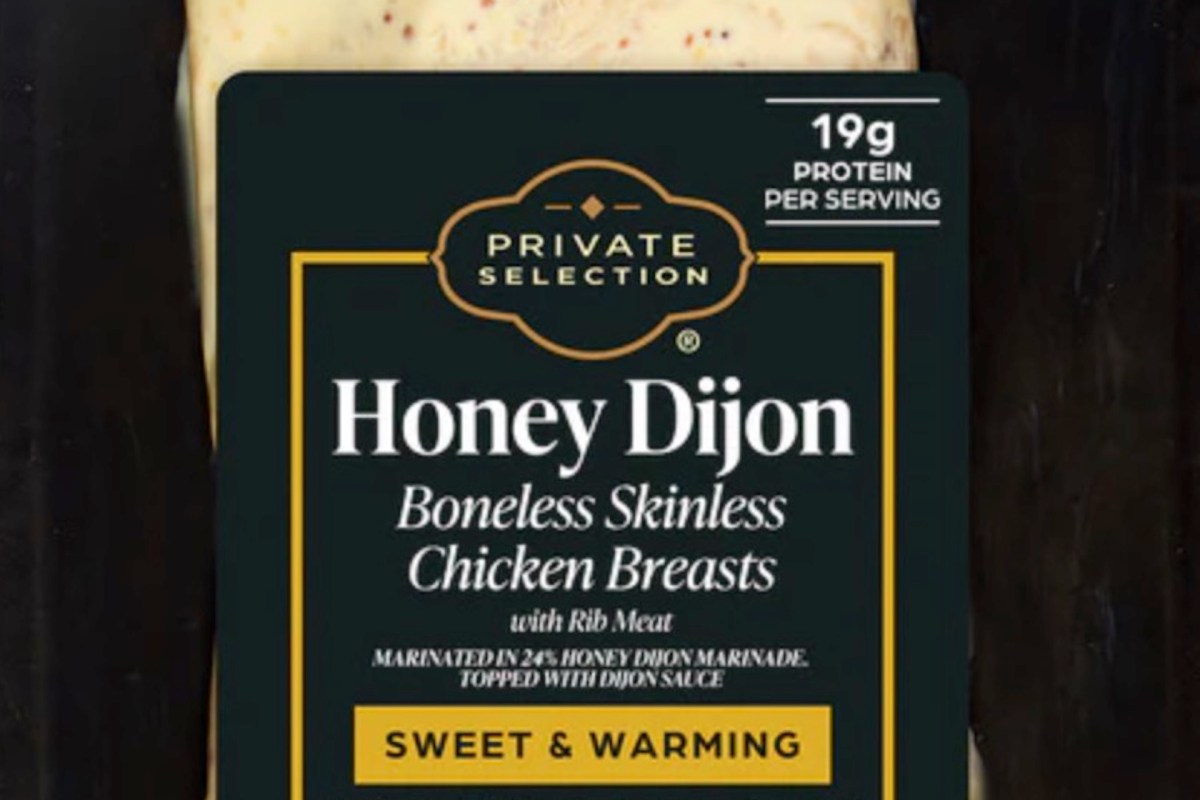
Federal regulators issued a public health alert for a raw chicken product sold at Kroger and Fred Meyer locations in nine states after its labeling failed to list eggs in the ingredients.
As Parade reported, the warning applies to a honey Dijon raw chicken item that may look routine in the meat case but could pose a serious health risk for shoppers with egg allergies.
What happened?
The U.S. Department of Agriculture's Food Safety and Inspection Service identified the product as "Private Selection Honey Dijon Boneless Skinless Chicken Breasts with Rib Meat" in the alert. The raw chicken package carried a June 2 production date, a June 28 best-by date, and lot code "15326A."
Shoppers in Alabama, Alaska, Idaho, Illinois, Indiana, Kentucky, Tennessee, Oregon, and Washington could have purchased the chicken at Kroger or Fred Meyer, the notice said. Federal officials noted the problem involved "misbranding and undeclared allergens."
Egg was present in the product, but the label did not properly disclose it. A retailer reported the issue after a store employee found the correct label on the front of the package and an incorrect one on the back, officials revealed.
Because the item was already pulled from stores, no formal recall was issued by the FSIS. Officials said there have been no confirmed adverse reactions tied to the product.
TCD Picks » Quince Spotlight
💡These best-sellers from Quince deliver affordable, sustainable luxury for all




Why does it matter?
Eggs are one of the major food allergens, and undeclared ingredients can create immediate risks for people who rely on packaging to determine what is safe to bring home and serve.
Food safety concerns do not always begin with contamination. In some cases, the danger lies in the labeling itself. A product can appear properly packaged and still carry incomplete or conflicting information.
When products move quickly through processing, packaging, distribution, and retail systems, even a relatively small labeling mistake can spread to multiple states before it is caught.
Whether unintentional or even intentionally misleading, false or insufficient labeling can confuse consumers and expose them to allergens, as well as foods that carry major health risks.
What can I do?
Consumers should check their refrigerators and freezers for "Private Selection Honey Dijon Boneless Skinless Chicken Breasts with Rib Meat" from the June 2 production run.
The product has already been removed from store shelves, which limits the chance of additional sales.
Since people often freeze proteins, officials expressed concerns in the notice that people could still unwittingly be exposed to an unlisted allergen. The FSIS advised consumers to throw away or return the product to the place of purchase.

Get TCD's free newsletters for easy tips, smart advice, and a chance to earn $5,000 toward home upgrades. To see more stories like this one, change your Google preferences here.








