


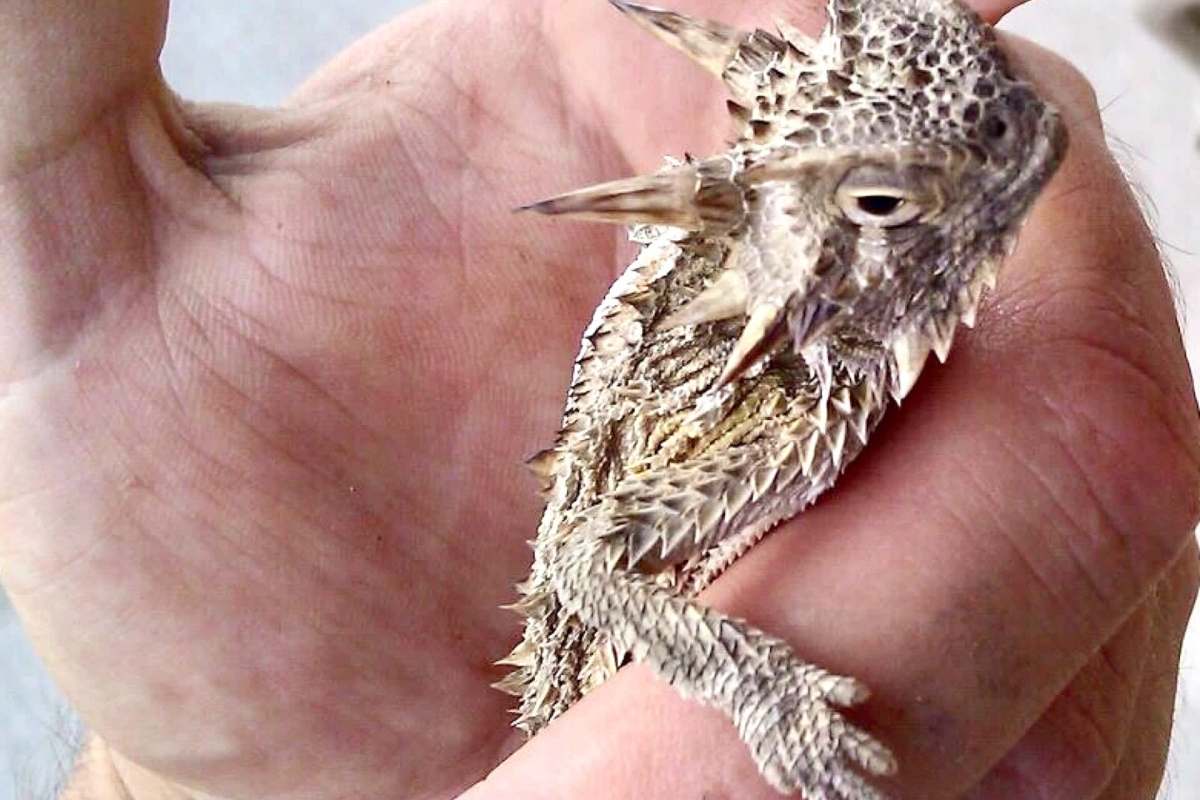
A tiny reptile spotted on a Texas ranch could signal a major conservation breakthrough.
A Texas horned lizard found on the property has researchers intrigued because the dark markings on its underside don't match anything in their catalog, raising the possibility that it hatched in the wild after the San Antonio Zoo's release effort.
What happened?
According to the San Antonio Report, the San Antonio Zoo began breeding Texas horned lizards in 2020 and has been placing them on a Blanco County ranch where native plants were restored.
Bekky Muscher-Hodges said that the team refers to the zoo's Center for Conservation and Research as "the lizard factory." About 50 adult horned lizards are kept there in climate-managed habitats, with eggs incubated nearby and young lizards raised in a separate nursery.
Researchers document each animal before it is released by taking a genetic swab and photographing the black-spotted pattern on its belly, which serves as an identifying marker.
That is why a lizard discovered in May stood out: its belly pattern did not visually correspond to anything in the records, though genetic analysis is still required to determine whether it was born on the ranch.
TCD Picks » Quince Spotlight
💡These best-sellers from Quince deliver affordable, sustainable luxury for all




Why does it matter?
In the San Antonio area, Texas horned lizards used to be a familiar sight, but their range has contracted sharply due to habitat loss, development, pesticide use, and invasive fire ants.
"The species has pretty much disappeared entirely on the eastern side of the I-35 corridor," said Dean Williams, a Texas Christian University biologist, according to the San Antonio Report.
By reestablishing native Texas vegetation, the ranch's owners created habitat better suited to helping horned lizards live and reproduce.
If that model proves successful, it could give more landowners a reason to reestablish native grasses and preserve space for other wildlife, too.
That kind of restoration can create ripple effects across an ecosystem, benefiting birds and plants while also preserving a beloved part of regional identity.
What are people saying?
Researchers noted that it will be several months before the zoo can, through genetic testing at Williams' lab, prove whether the lizard found was wild-born. An alternative explanation is that t it came from a wild population elsewhere, or that it's a released pet.
"The landowners went through a lot of trouble trying to rehabilitate that land to get it back to native Texas vegetation, proving that this is what these animals need to survive and thrive," Muscher-Hodges said, according to the San Antonio Report. "Having offspring is proof of them thriving and continuing that life cycle."
However, Williams noted that even at other release sites, they are "not at the point where I would say it's self-sustaining."

Get TCD's free newsletters for easy tips, smart advice, and a chance to earn $5,000 toward home upgrades. To see more stories like this one, change your Google preferences here.






