


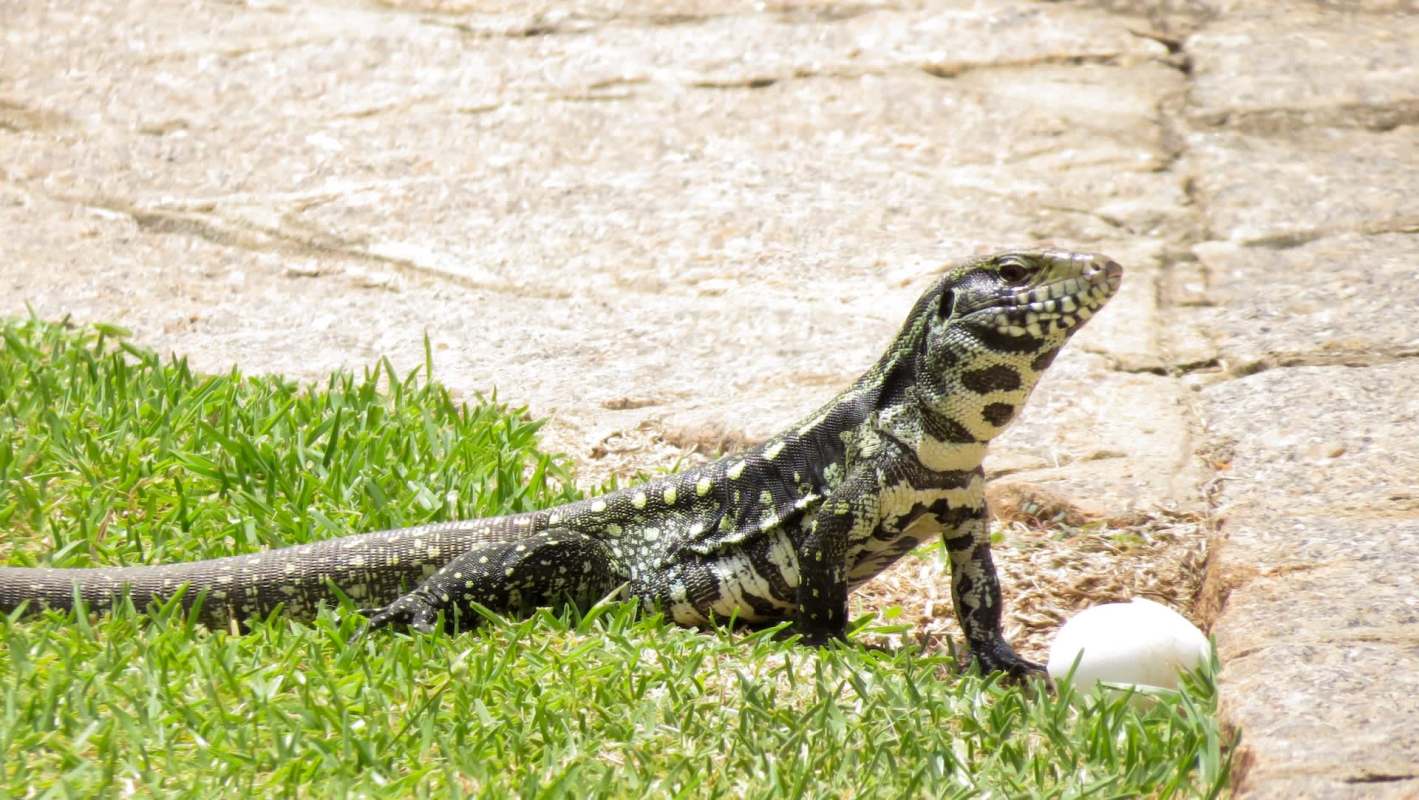
Georgia officials are warning residents about an invasive reptile that can grow to 4 feet, top 10 pounds, and prey on the eggs of native animals.
Wildlife managers say the Argentine black and white tegu is appearing more often in southeast Georgia, raising concerns about harm to local ecosystems.
What's happening?
Reports are concentrated in Toombs and Tattnall counties, but sightings have now been logged in about 30 counties across Georgia, prompting a warning from the state Department of Natural Resources, according to OutdoorHub. The species is native to South America.
Georgia DNR first began investigating reports in 2018. Since then, officials have captured or killed at least 30 tegus in the two hardest-hit counties.
Tegus are strong swimmers, can survive colder weather through a hibernation-like state known as brumation, and females may produce as many as 35 eggs each year.
Their diet is wide-ranging, including insects, small animals, pet food, carrion, fruits, and vegetables. That adaptability also leads them to eat the eggs of species such as turkey and quail, along with those of American alligators and gopher tortoises.
TCD Picks » Quince Spotlight
💡These best-sellers from Quince deliver affordable, sustainable luxury for all




Why does it matter?
Invasive species can create major challenges for communities trying to protect wildlife, agriculture, and public health.
In Georgia, officials say tegus may carry salmonella and may also spread parasites or contaminate agricultural areas.
Ground-nesting birds and threatened reptiles are especially vulnerable to predators like tegus, and once an invasive species becomes established, it can be costly and time-consuming to bring under control.
In Florida, the species already has breeding populations in parts of the south and center of the state. Wildlife managers there classify it as a "high priority invasive species" and liken the challenge to the ongoing Burmese python invasion in the Everglades.
What's being done?
Georgia is working with federal researchers at the U.S. Geological Survey and scientists at Georgia Southern University to trap and remove tegus while researchers continue studying how far the lizards have spread. Because the species is non-native, it is not protected under Georgia law.
If someone spots a tegu, officials want them to take a photo if possible, write down where it was seen, and report it to the Georgia Department of Natural Resources at (478) 994-1438 or gainvasives@dnr.ga.gov.
On private property, residents are legally allowed to humanely trap or kill tegus year-round if they have the landowner's permission.
Officials believe many of the tegus found in the Southeast likely came from exotic pets that escaped or were intentionally released.
Wildlife officials said, "These animals are fast, adaptable, and difficult to catch."

Get TCD's free newsletters for easy tips, smart advice, and a chance to earn $5,000 toward home upgrades. To see more stories like this one, change your Google preferences here.







