


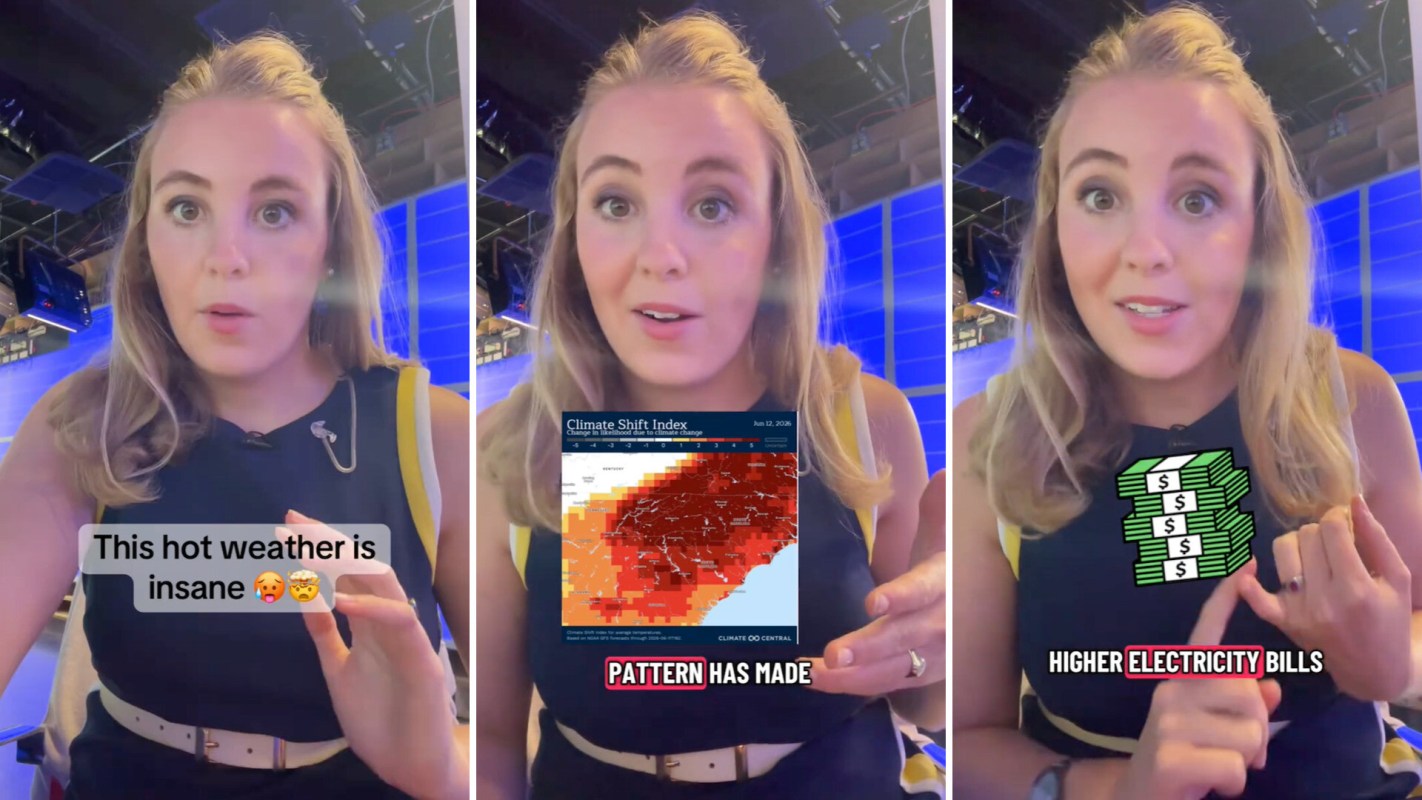
A South Carolina meteorologist is sounding the alarm after taking a close look at how much climate change is amplifying summer heat in the Southeast.
"My jaw just dropped, and not in a good way," she said after reviewing a map.
What happened?
In a TikTok video, Nicole Collins said the sweltering conditions hitting South Carolina are not just a fluke of summer weather.
Though it is only June, Collins said temperatures had already climbed into the 90s, with the heat index rising above 100 degrees.
"It is just June and we should not be this hot," she said.
According to Collins, the stretch of heat fits into a broader warming trend rather than standing alone. She said these kinds of events are becoming more common in the Upstate region and added, "That warming pattern has made this heat wave that we've been stuck in five times more likely to happen."
TCD Picks » Quince Spotlight
💡These best-sellers from Quince deliver affordable, sustainable luxury for all




She said the shift amounts to nearly an extra month of hotter than normal weather, with the area averaging about 30 more above normal temperature days than it did in 1970.
@nicolecollinswx My mind is blown after seeing this climate shift temperature map 🥵🤯 #heatwave #climate #climatechange #hot #summer ♬ original sound - SC / NC Meteorologist
Why does it matter?
Extreme heat is not just uncomfortable. It can quickly become dangerous and expensive.
Beyond making people miserable, Collins said the heat can strain both health and household budgets. Hotter summers force air conditioners to work harder, raising electricity bills for families already dealing with high energy costs while also increasing the risks of heat stroke and other heat-related illnesses, especially for children, older adults, outdoor workers, and people without reliable cooling.
She said the damage can extend beyond individual households as well. Collins warned about "issues with crops because it is so hot" and the possibility of "increased drought," which can put pressure on local food systems and water supplies.
Commenters echoed those concerns.
"It was unbelievable Saturday in SC…what happened?" one wrote. Another added a reminder that heat stress affects wildlife too, saying: "Remember to fill up your bird feeders and outside water source for the wild animals right now too. I had a wild deer drinking out of my bird bath this week. They're absolutely seeking water sources right now."
What can I do?
Checking local forecasts and heat advisories, limiting outdoor activity during the hottest part of the day, staying hydrated, and making sure vulnerable neighbors have access to cooling can all help during heat waves.
For households trying to manage costs, simple steps such as closing blinds during peak sun, using fans strategically, and sealing drafts can help reduce the burden on air conditioning systems. If cooling equipment breaks, local cooling centers, libraries, and community buildings may offer temporary relief.
Leaving out fresh water for pets and wildlife can also help during prolonged dry, hot stretches, as commenters pointed out.

Get TCD's free newsletters for easy tips, smart advice, and a chance to earn $5,000 toward home upgrades. To see more stories like this one, change your Google preferences here.






