


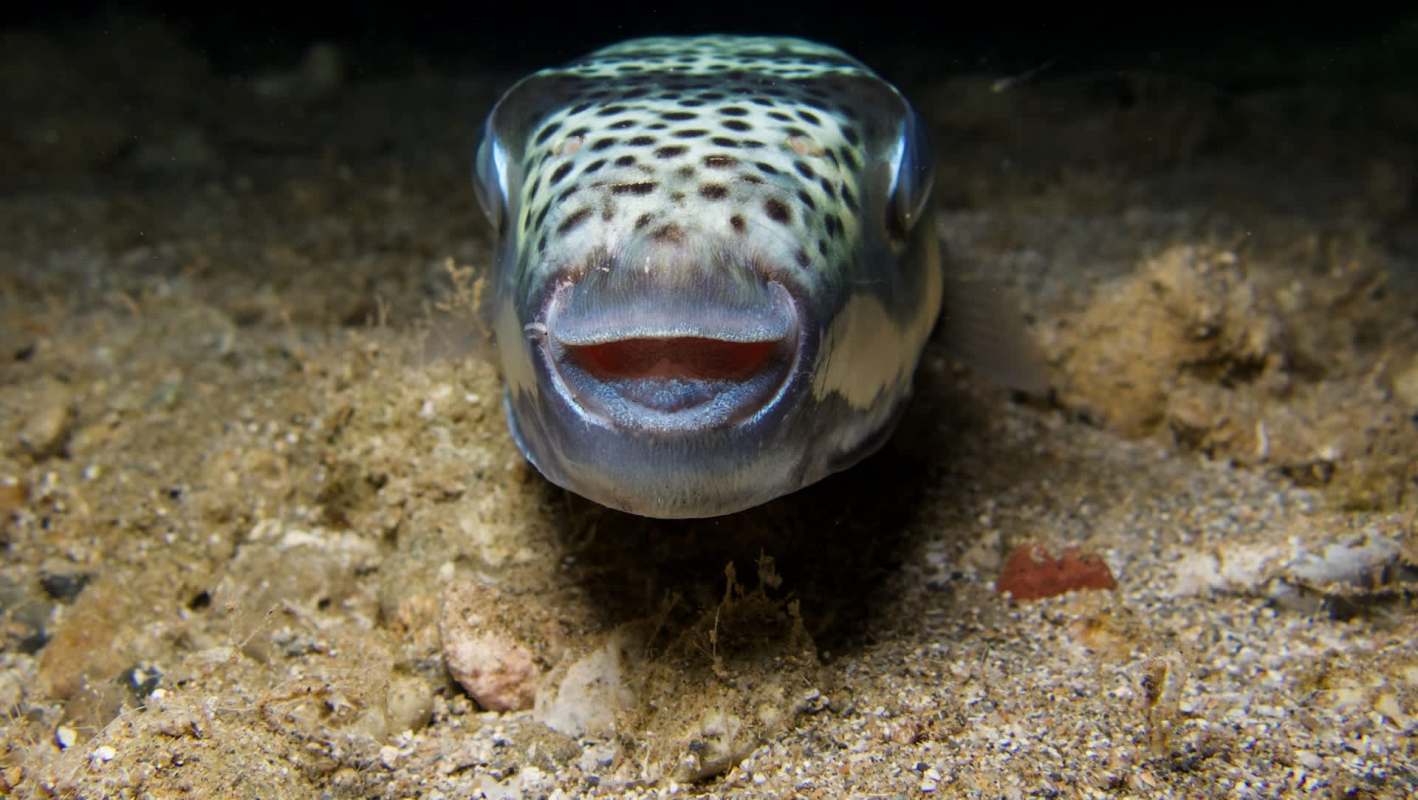
Communities along Greece's coast that depend on the sea for income, food, and recreation are facing a growing problem: an invasive pufferfish is showing up more often.
The toxic silver-cheeked pufferfish is now present across much of the country's waters, creating risks for fishermen, swimmers, seafood consumers, and local habitats.
What's happening?
Greek waters near Rhodes and Crete recorded their first sightings of the silver-cheeked pufferfish, or Lagocephalus sceleratus, in 2005, two years after the species was first documented in the Mediterranean off Turkey, Greek Reporter reported.
According to Stefanos Kalogirou, Associate Professor at the Agricultural University of Athens, the fish now ranges "from the southern Aegean to the northern Aegean and from the southern Ionian to the northern Ionian," underscoring how widely it has spread in Greece.
Even tissue that people might try to eat can carry the fish's toxin. Tetrodotoxin is found primarily in the liver and reproductive organs, and Kalogirou said it can also be found in muscle tissue.
"Tetrodotoxin causes muscle paralysis, blocks the nervous system, and can lead to death," he told Greek Reporter.
TCD Picks » Quince Spotlight
💡These best-sellers from Quince deliver affordable, sustainable luxury for all




Kalogirou said the danger from the toxin is tied to consumption rather than a bite: "The toxin affects humans only when they consume the fish, not if the pufferfish injures them with its teeth."
Why does it matter?
For fishing families already under pressure, the species can bring extra losses because its strong teeth can tear nets, damage longlines, and destroy catches.
Cuttlefish and octopus, both commercially important in Greece, are among the mollusks targeted by larger silver-cheeked pufferfish, according to earlier research by Kalogirou cited by Greek Reporter. That research also found the species feeds on invertebrates and fish.
Serious injuries are also possible in encounters with the fish. Although documented bite cases remain limited, reports from across the Mediterranean show that it can cause significant harm.
If it enters the food chain, the consequences could be even more severe. European rules already bar fish from poisonous families, such as Tetraodontidae, from the human consumption market.
What's being done?
Officials and researchers are focusing on prevention, public awareness, and safe handling.
The guidance is straightforward: Do not eat this fish, and do not approach it in the water. If someone is bitten, the first priority is to treat the wound: clean it, watch for signs of infection, and seek medical help for deeper bites.
Kalogirou said proper disposal is also important, including waste-management steps that prevent the fish from creating new dangers after landing.
Researchers are also looking at broader responses. According to Greek Reporter, the Horizon Europe project MECCAM uses Greece as a case study and names the silver-cheeked toadfish as a species relevant to small-scale fisheries.
Kalogirou sees targeted depletion fishing as one way to partly lower the population, while cautioning that it would not fully solve the problem.
"It is a problem that must be addressed," Kalogirou told Greek Reporter.
He also noted that "Invasive species usually follow a boom-and-bust process, increasing rapidly and then being reduced and stabilized. This can take years."

Get TCD's free newsletters for easy tips, smart advice, and a chance to earn $5,000 toward home upgrades. To see more stories like this one, change your Google preferences here.






