


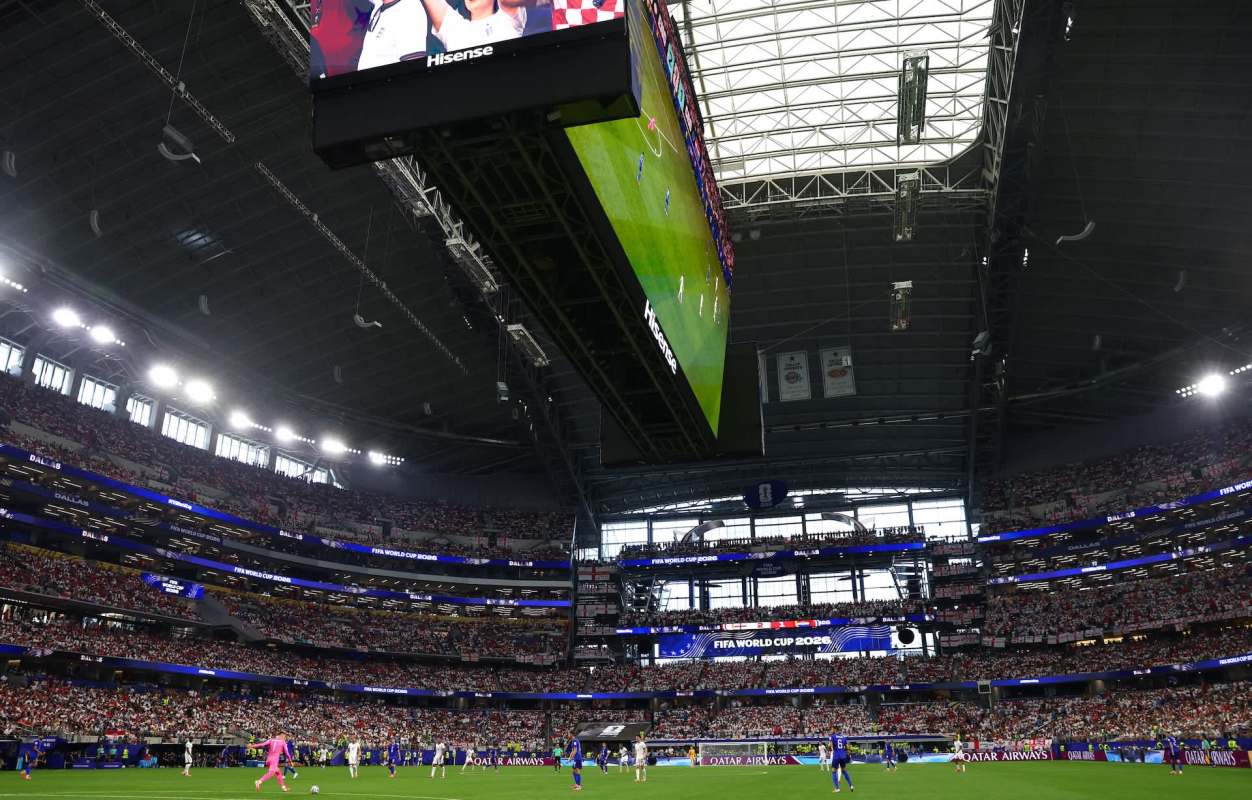
A estimate circulating points to a significant hidden cost of hosting the 2026 FIFA World Cup in the United States: electricity.
Among the U.S. host cities, Dallas is projected to use more stadium power than any other venue, contributing to an overall electricity bill of about $860,000 — but it's not the most expensive bill out there.
What happened?
Venue size, local weather, roof design, and electricity rates were all part of Payless Power's analysis of 11 U.S. World Cup stadiums, according to The Mirror. Using those factors, the company estimated that Dallas would consume roughly 899,323 kilowatt-hours over nine matches, the highest total among host cities.
Summer heat and the cooling needs of enclosed venues appear to drive much of that demand. On a per-match basis, Dallas was estimated at about 99,925 kWh, followed by Houston at 97,344 kWh and Atlanta at 96,020 kWh, while Boston was listed lowest at 53,493 kWh.
The analysis also found that the stadium using the most electricity is not necessarily the one facing the highest bill. Dallas' estimated power cost is about $77,000, while Los Angeles could pay roughly $152,864 over eight matches despite lower total electricity use.
Regional electricity prices account for much of that gap. San Francisco is expected to have the lowest total electricity use, while Seattle is projected to have the smallest overall bill at $38,106 over six matches.
TCD Picks » Quince Spotlight
💡These best-sellers from Quince deliver affordable, sustainable luxury for all




Why does it matter?
Mega-events such as the World Cup can require large amounts of energy to keep massive buildings comfortable during periods of extreme heat. When that demand overlaps with summer hot spells, it can add strain to local power grids at the same time households are also running air conditioning and dealing with rising utility bills of their own.
If that electricity is coming from grids still heavily powered by oil, gas, and coal, increased demand can translate into more air pollution, which also contributes to planetary warming.
What's the takeaway?
The estimates suggest that stadium design plays a major role. Enclosed-roof venues that require continuous climate control tend to consume more energy than outdoor sites.
Payless Power's main takeaway was that high electricity use does not always lead to the biggest final bill. Its estimates indicate that local power rates can shape total costs nearly as much as the stadiums themselves.
The company also pointed to roof design as a major driver of energy demand, with enclosed venues leading the per-match rankings.
Stadium operators can lower consumption through more efficient HVAC systems, LED lighting, improved insulation, and smart energy management. Cleaner electricity sources, such as solar paired with battery storage, could also help lower energy costs.

Get TCD's free newsletters for easy tips, smart advice, and a chance to earn $5,000 toward home upgrades. To see more stories like this one, change your Google preferences here.






