


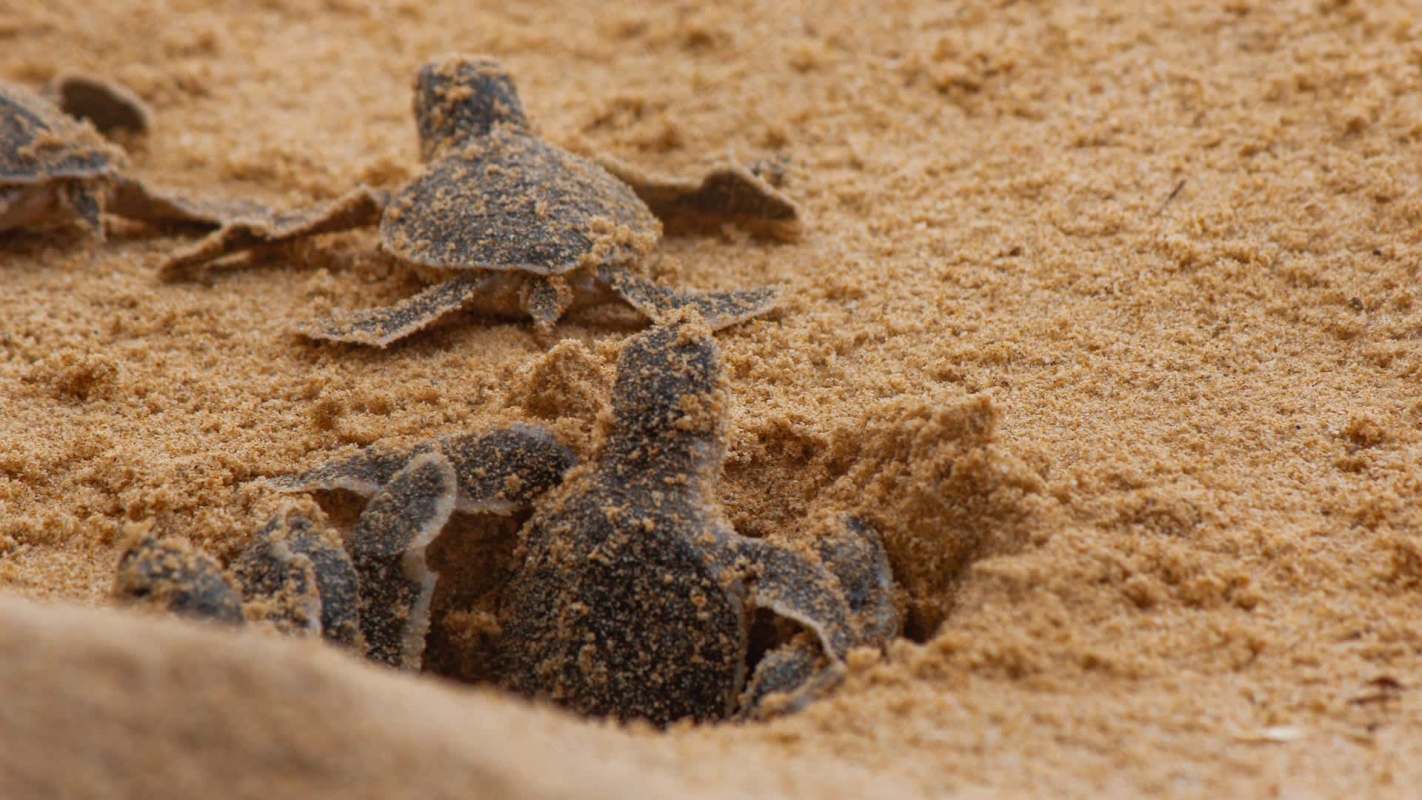
Sea turtle nesting season has opened with encouraging numbers on Florida's Gulf Coast, despite one growing threat.
Sanibel and Captiva islands are standouts so far in the season, with hundreds of loggerhead turtles nesting there, WGCU reported.
A potential obstacle is still developing, though. Rising amounts of sargassum seaweed could make it harder for nesting females to come ashore and for their hatchlings to reach the water later in the season.
What's happening?
Sanibel and Captiva islands are far ahead of last year's pace in terms of nest counts. After six weeks of nesting season, the islands had 342 sea turtle nests, compared with 264 at the same point last year, according to WGCU.
Of the 342 nests, just two are from green turtles, with the remainder being loggerhead nests.
Other Southwest Florida beaches are also reporting strong nesting activity. One Sarasota laboratory counted 531 nests across the county as of June 6, while the Collier County Sea Turtle Protection Team logged 837 nests along over 22 miles of beachfront.
TCD Picks » Quince Spotlight
💡These best-sellers from Quince deliver affordable, sustainable luxury for all




David Godfrey, director of the Sea Turtle Conservancy in Gainesville, told WGCU, "I do hear that sargassum seaweed floating up on some southern beaches is a little bit of a growing concern because it can deter the female turtles from coming offshore."
He added that it "is certainly challenging for any emerging hatchlings if they happen to encounter large piles of the stuff as they're trying to reach the sea."
Why does it matter?
Sea turtles play an important role in maintaining healthy marine ecosystems, filling a vital niche in the food web.
Unfortunately, the peak season for sargassum seaweed directly overlaps with turtle nesting season.
WGCU reported that by the end of May, the total amount of sargassum was nearing 33 tons, and the University of South Florida's Optical Oceanography Lab said 2026 could become a record year for it.
Beaches covered in seaweed can be harder to access and manage, but scientists and local conservation groups are tracking both nests and beach conditions.
The monitoring helps conservationists identify problems early, from false crawls to flooding losses to predator activity, and even to sargassum seaweed.

Get TCD's free newsletters for easy tips, smart advice, and a chance to earn $5,000 toward home upgrades. To see more stories like this one, change your Google preferences here.






