


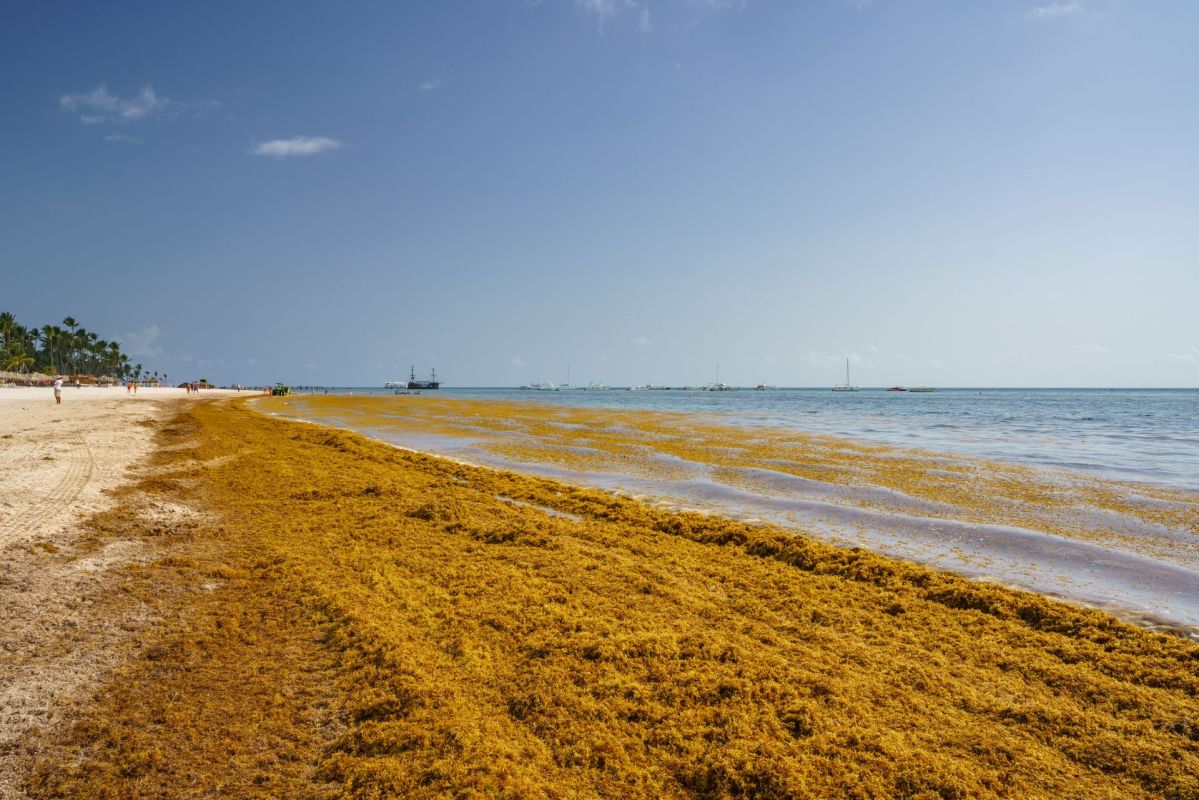
A massive surge of sargassum is threatening the Mesoamerican Reef — the world's second-largest reef system — and jeopardizing the tourism economy that supports families across Mexico, Belize, Guatemala, and Honduras.
Analysis from the Coral Reef Alliance (CORAL) found that the giant rafts of brown seaweed are doing more than just washing up on beaches; they are also choking offshore reef habitats and driving up costs for coastal communities that depend on fisheries and tourism revenue.
When the floating seaweed forms dense mats, it blocks sunlight from reaching coral and seagrass below, weakening both ecosystems.
As the sargassum accumulates and decomposes, it can also create hypoxic, or low-oxygen, zones that push fish away and disrupt reef food webs.
The crisis comes as reefs are already under pressure from warming oceans and other threats, including coral bleaching.
"The seaweed grows quickly," said Javier Pizaña-Alonso, CORAL's Cozumel program manager. "Under these conditions, blooms can double in size in about 18 days. It becomes a serious issue depending on how long they drift in the ocean before reaching shore."
TCD Picks » Quince Spotlight
💡These best-sellers from Quince deliver affordable, sustainable luxury for all




A prolonged sargassum outbreak could mean fewer fish for local harvests, fewer visitors for local businesses, and reduced natural protections for coastal communities facing increasingly severe offshore conditions.
"Travelers don't like the smell, and it affects our beautiful beaches," Pizaña-Alonso said.
The sargassum surge is especially alarming because the Mesoamerican Reef is far more than just a tourist attraction. It shields shorelines; supports fisheries; and sustains jobs tied to diving, boating, snorkeling, hotels, and restaurants.
The economic toll is rising as well. Fishing and tourism communities in Mexico, Belize, Guatemala, and Honduras have invested tens of millions of dollars in removal to protect multibillion-dollar tourism economies.
For families in the region, this is not a distant environmental problem. It can mean lost income, mounting cleanup costs, and growing uncertainty for workers whose livelihoods depend on healthy beaches and reef tourism.
When communities are forced to divert funds toward emergency cleanup, that leaves less money available for long-term restoration projects, essential local services, and future resilience efforts.
To combat the problem, researchers are investigating ways to repurpose sargassum, though the practice remains contentious. Potential applications include transforming the seaweed into animal feed, mulch, experimental construction materials, notebooks, and shoes.
However, any reuse strategy must carefully address the risks posed by heavy metals and pollutants absorbed by the seaweed to ensure it is safe for both people and the environment.
Addressing the crisis at its source will require confronting the broader environmental drivers, including rising ocean temperatures, deforestation, mining, and nutrient pollution. Reducing heat-trapping pollution, protecting forests, and improving upstream land-use practices are all essential steps toward restoring balance in ocean ecosystems.
The sargassum crisis also highlights how land-based activities can have consequences far beyond their immediate surroundings. Decisions related to agriculture, development, and pollution can impact the health of reefs and the coastal ecosystems that depend on them.

Get TCD's free newsletters for easy tips, smart advice, and a chance to earn $5,000 toward home upgrades. To see more stories like this one, change your Google preferences here.






