


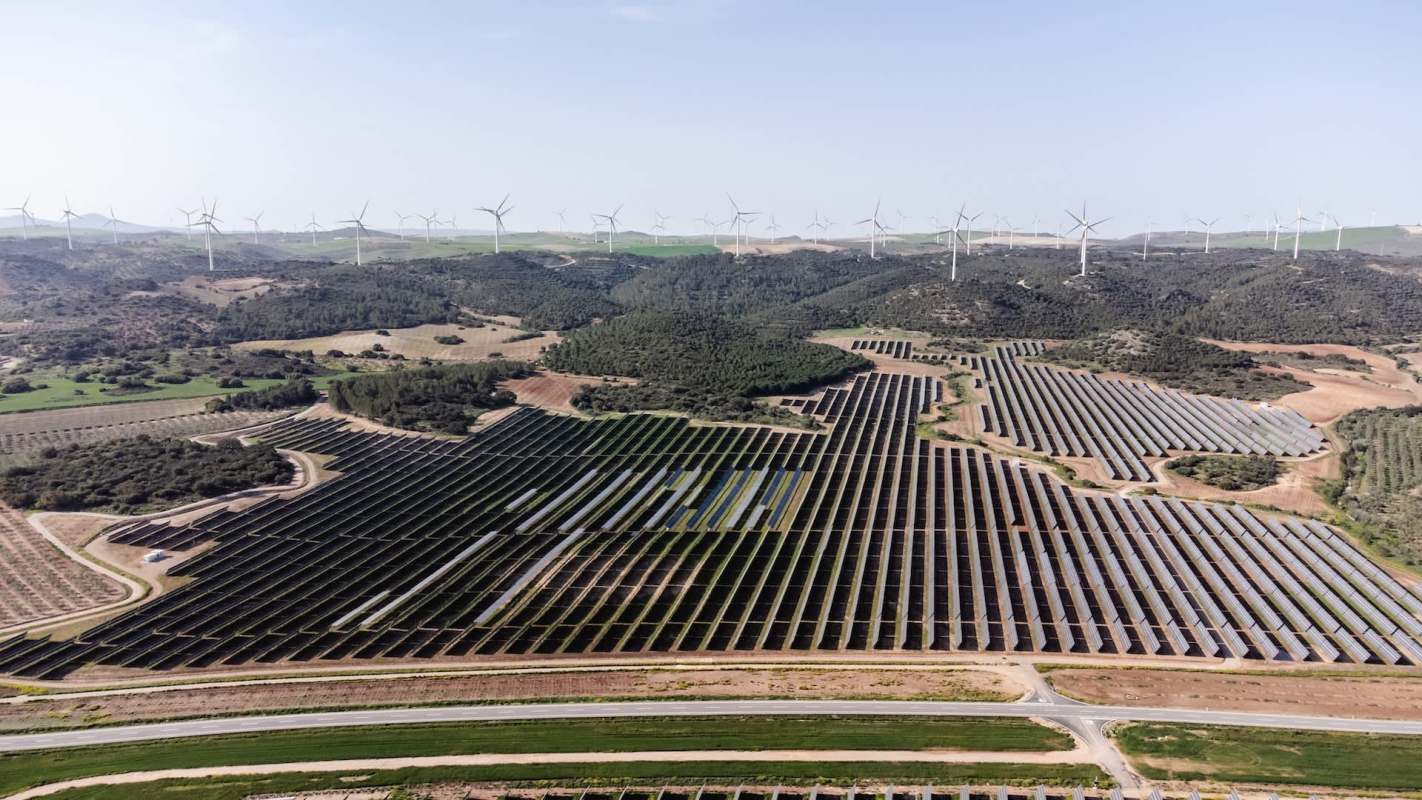
Rather than seeing household electricity costs rise with the Iran war's disruption to European energy markets, Spain saw them fall, a new report from Ember reveals.
The surprising decline offers a striking example of how adding more wind and solar can help protect families from global fossil fuel shocks, as Euronews details.
What's happening?
In Spain, Ember says households have been saving roughly €10 ($11.47) a month on electricity bills since March, when the Strait of Hormuz was effectively closed, largely because renewables have sharply reduced gas's role in setting power prices.
According to Ember, gas has set Spain's power price only about 9% of the time so far in 2026, down from 52% in 2021. Wind and solar generation grew 37% from 2021 to 2025, and that expansion has reduced fossil fuels' effect on power prices by about 75% since 2019.
"Wind and solar growth are acting as a shield against the price impacts of global instability," summed up Chris Rosslowe, author of the report.
Spain's shift has happened quickly, Ember says. The country has added more than 40 gigawatts of wind and solar since 2019, roughly doubling its capacity. Coal dropped out entirely for one month, with no coal-fired generation in August 2025, as Euronews noted.
TCD Picks » Quince Spotlight
💡These best-sellers from Quince deliver affordable, sustainable luxury for all




Why does it matter?
For everyday households, this is as much a pocketbook story as a climate one. Gas is often the most expensive fuel on the grid, so when countries rely on it, power prices can surge during wars, supply disruptions, or market panic.
Spain's lower dependence on gas helped keep wholesale electricity prices far below those in other countries, Ember's analysis reveals. Average power prices in March were €143 per megawatt-hour in Italy, versus €42 per megawatt-hour in Spain, the report found.
The EU has increased fossil fuel imports since the Iran war began, leaving the bloc with an energy bill of about €60 billion, per Euronews. Alice Moscovici, a researcher at the European think tank Jacques Delors Institute, told the outlet that electrification has received under €2 billion, or less than 5% of that total, despite its potential to reduce future exposure.
What's being done?
Spain has paired its renewable buildout with short-term consumer relief. Tax cuts in place from March to May 2026 trimmed about €8 ($9.18) from a typical monthly household electricity bill while also encouraging people to shift away from imported fossil fuels, Ember reports.
The country has kept expanding renewables even after a massive blackout in April 2025 raised concerns about grid stability. Spain steadily added roughly 1.3 gigawatts of wind and solar each month from May 2025 through February 2026, Ember says. It has also taken steps to improve resilience, including making it easier to add battery storage at existing renewable sites.
"We must continue to improve the manageability and flexibility of the electricity system to reap the full benefits of renewables," Ismael Morales, Head of Climate Policy at Fundación Renovables, told Ember. "Only then will the shield become a strong armour."

Get TCD's free newsletters for easy tips, smart advice, and a chance to earn $5,000 toward home upgrades. To see more stories like this one, change your Google preferences here.






