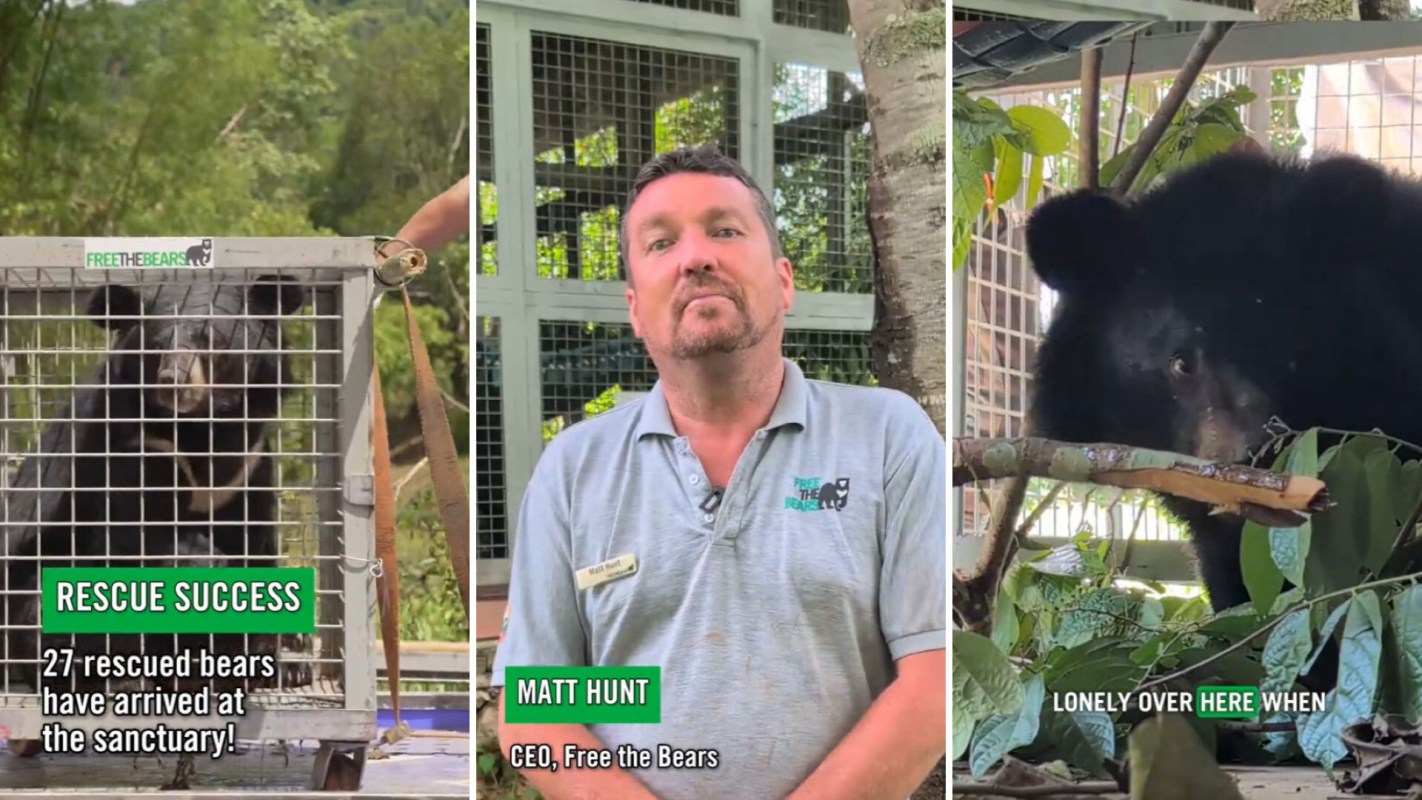
A video of moon bears in Luang Prabang, Laos, adjusting to life after an organization rescued them is bringing joy to many people online.
What happened?
Free the Bears (@FreeTheBears.Org) said the bears are now safe at Luang Prabang Wildlife Sanctuary after being held in extreme confinement. In the video's caption, the organization wrote: "27 rescued moon bears are now safe at Luang Prabang Wildlife Sanctuary... Just days ago, these bears were trapped in tiny metal cages inside a hot concrete shed, and only being given water once a day."
@freethebears.org 27 rescued moon bears are now safe at Luang Prabang Wildlife Sanctuary. We honestly cannot thank this community enough for standing behind this rescue mission to free 27 moon bears from an illegal bear farm in Laos. Your support helped make it possible for us to say yes when these bears needed us most. Just days ago, these bears were trapped in tiny metal cages inside a hot concrete shed, and only being given water once a day. Many are believed to be only 1–3 years old. They were stolen from the wild as cubs. Now, they are beginning the next chapter of their lives. That has meant tasting honey for the first time. Walking on solid ground instead of metal bars. Climbing into a pool. Feeling leaves beneath their feet. While the bears are finally safe, the work is far from over. Right now, they are settling into quarantine, which is a critical part of the rescue process. The facility they came from was overcrowded and unhygienic, with bears housed alongside birds and domestic pets. Before they can move into our wider sanctuary population, we need to carefully monitor their health. Years spent confined to tiny cages have also left their muscles severely weakened. Some are already sore simply from walking around their quarantine dens. Before they can move into larger forested enclosures, they need time to gradually rebuild their strength and coordination so they don't injure themselves doing what should be very normal things for a bear, like climbing, running, or playing. Our veterinary and bear care teams are monitoring them closely every step of the way. This rescue has also pushed Luang Prabang Wildlife Sanctuary to capacity. We urgently need to expand the sanctuary to give these bears the lifelong care they deserve. That means building new bear houses, expanding veterinary and quarantine facilities, purchasing more land, and planting forest habitat for the bears to explore for decades to come. We cannot thank you enough for your support so far, and thank you for standing with us through one of the biggest rescue missions in our history. Donate to their care at the link in our bio 💚
♬ original sound - Free the Bears
The montage begins with footage of the bears in the metal cages. It then shifts to scenes of them exploring their new surroundings.
Free the Bears said several of the animals are believed to be just 1 to 3 years old and "were stolen from the wild as cubs."
"Now, they are beginning the next chapter of their lives," the organization continued in the caption. "That has meant tasting honey for the first time. Walking on solid ground instead of metal bars. Climbing into a pool. Feeling leaves beneath their feet."
Why was rescuing the moon bears important to do?
Habitat loss and illegal wildlife trade threaten moon bears, which are also known as Asian black bears. Sometimes, people take young animals from the wild long before they ever have the chance to live naturally.
TCD Picks » Good Store Spotlight
Get 10% off your next purchase with code TCD10



Sanctuaries give traumatized animals veterinary care, space, and the opportunity to develop healthy, natural behavior. They're a part of a wider effort to push back against wildlife exploitation.
That work can also benefit nearby communities by supporting conservation education and a healthier relationship between people and local ecosystems.
What are people saying?
Commenters praised the rescue and the organization's work.
"What an incredible story, and you are amazing," one person wrote.
TCD Picks » Quince Spotlight
💡These best-sellers from Quince deliver affordable, sustainable luxury for all




Another added: "Thank you so much for all that you're doing for these beautiful bears. To see the joy on their faces is priceless. You are amazing."
A third said, "I love the honesty of this video, I wish you all the success in the world."

Get TCD's free newsletters for easy tips, smart advice, and a chance to earn $5,000 toward home upgrades. To see more stories like this one, change your Google preferences here.