


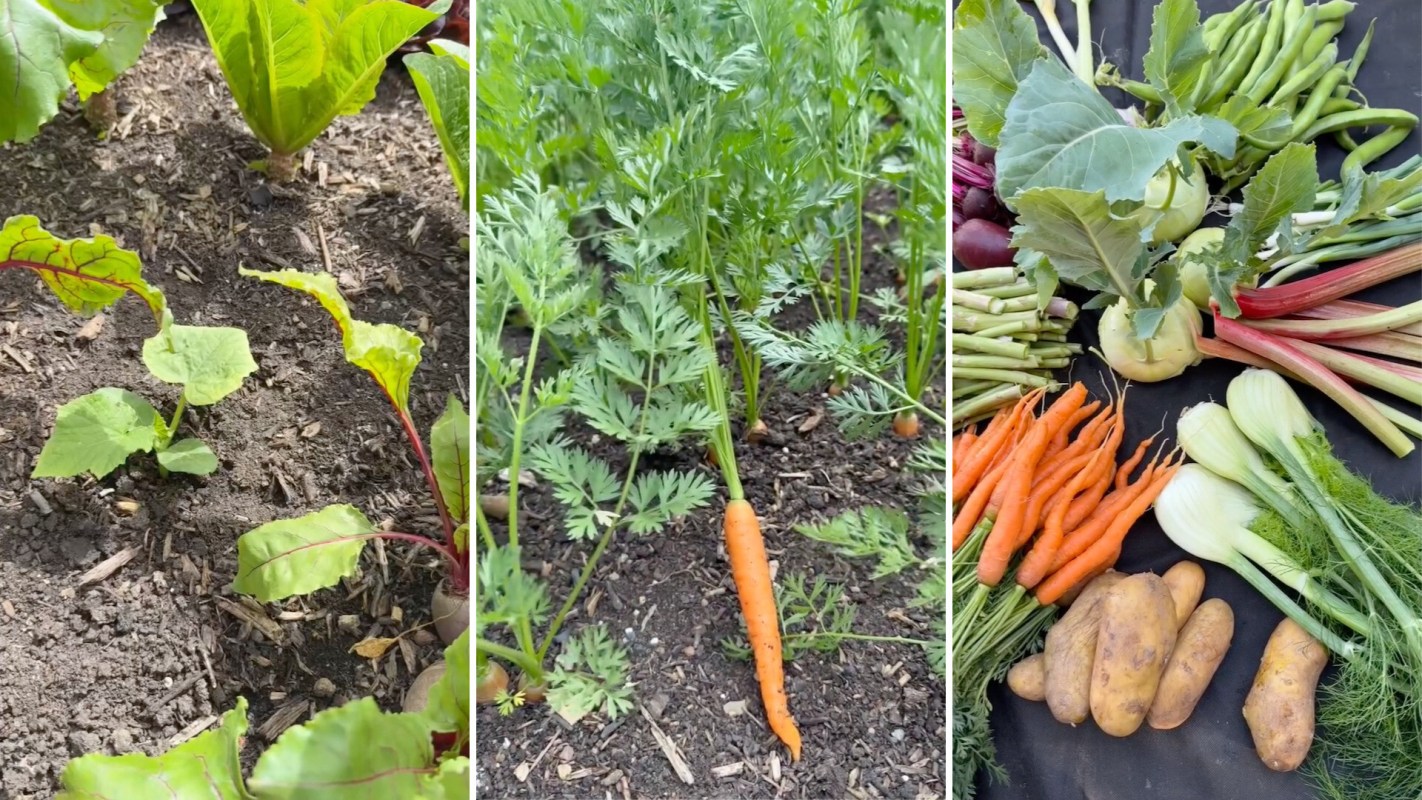
A no-dig gardener is offering a clear view of what peak kitchen-garden efficiency can look like: a table full of homegrown vegetables, with the next round of crops already growing in the same beds.
In a recent Instagram reel, gardener Charles Dowding turned a simple course lunch into a snapshot of how productive a well-planned garden can be.
What happened?
Dowding's reel takes viewers through a no-dig vegetable garden in active rotation. Many of the vegetables harvested for lunch were growing alongside the next planting, which was already underway.
Dowding's caption said the meal featured "super tasty vegetables," with climbing beans sharing space with leftover kohlrabi, cucumbers going into spots where multisown beetroot clumps had been removed, and carrots being thinned from an outdoor sowing.
He also wrote in the caption that the potatoes were kept from the previous July's harvest, and that the onions were Red Baron from the prior August.
Why does it matter?
Continuous planting can mean more food from the same amount of space. If one crop is finishing as another gets started, a backyard bed can stay productive longer through the season, helping households make the most of every square foot.
TCD Picks » Quince Spotlight
💡These best-sellers from Quince deliver affordable, sustainable luxury for all




Growing some of your own food can help cut grocery bills, especially when it comes to vegetables that are expensive to buy fresh. Produce picked close to mealtime often tastes better than store-bought options that may have traveled long distances.
From the physical work of tending beds to the satisfaction of watching food grow, gardening can support both physical and mental well-being.
One viewer wrote, "What glorious veggies!"
What can I do?
One raised bed, or even a few containers, can be enough to practice succession planting — harvesting one crop and starting the next right away.
Dowding's layout shows how fast-growing vegetables can make room for later crops, and how some beds can hold overlapping plantings for a time. Carrots can be thinned gradually instead of being cleared all at once, while spaces opened up by harvested beets or greens can be replanted quickly.

Get TCD's free newsletters for easy tips, smart advice, and a chance to earn $5,000 toward home upgrades. To see more stories like this one, change your Google preferences here.






