


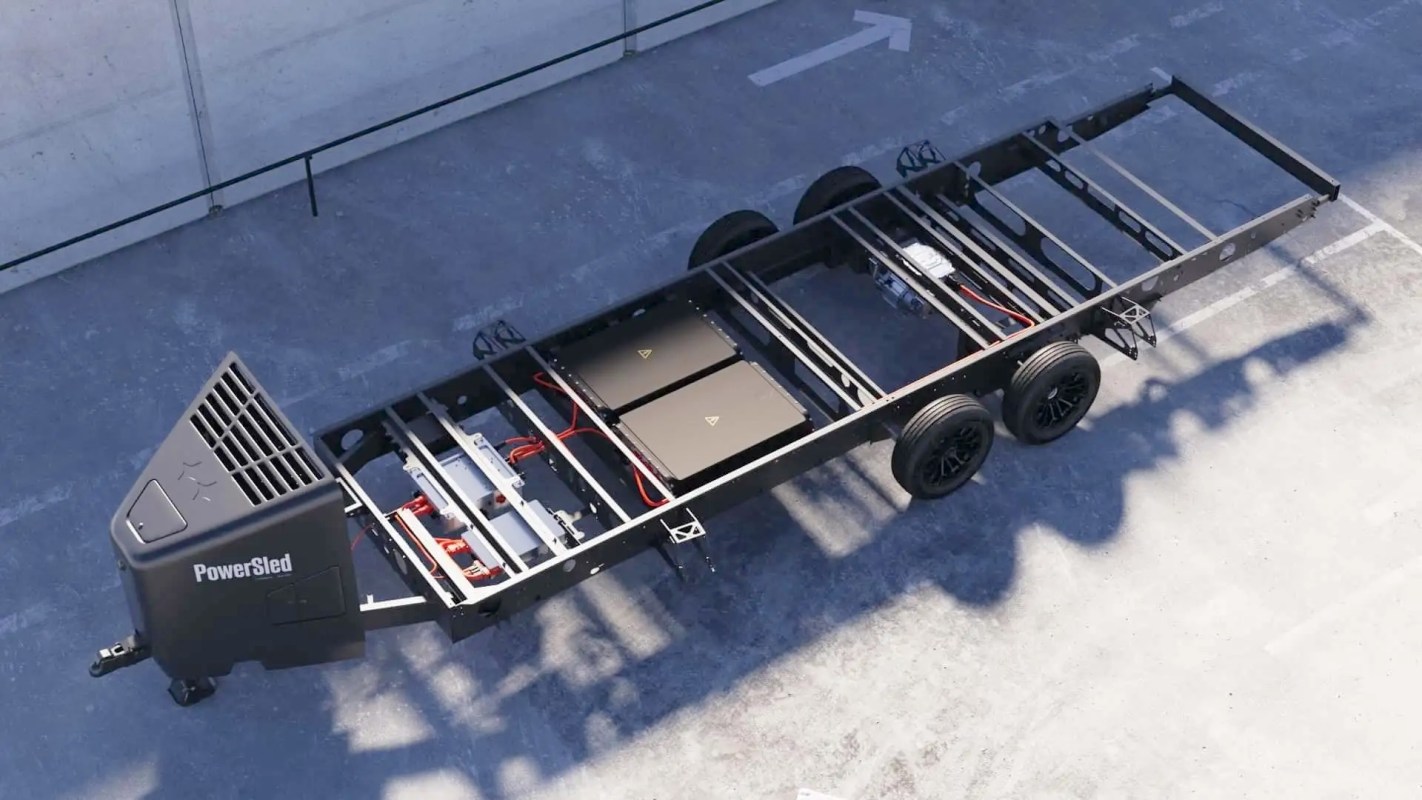
Lightship is drawing attention online with a new twist on its sleek self-powered RV trailer: a battery-packed work trailer designed to keep tools, equipment, and even emergency operations running far from the grid.
Called the PowerSled, the dual-axle trailer does more than store electricity. It can also propel itself, which Lightship says could dramatically reduce the usual fuel penalty that comes with towing, according to InsideEVs.
What's happening?
Lightship has opened orders for the PowerSled, a trailer designed for job sites and emergency response situations.
Rather than dedicating the entire trailer to a noisy generator, Lightship places a lithium iron phosphate battery pack between the frame rails. That leaves the upper portion available for a flatbed, stripped chassis, or enclosed cargo configuration, InsideEVs reported.
In the company's launch materials, Lightship said the battery trailer can "double the fuel efficiency" of a tow vehicle compared with a similarly sized conventional trailer.
Buyers can choose from 80-, 160-, or 240-kilowatt-hour battery packs, while the built-in TrekDrive motor helps turn the trailer's wheels during towing.
TCD Picks » Quince Spotlight
💡These best-sellers from Quince deliver affordable, sustainable luxury for all




Lightship also said the largest version can keep lower-draw operations running for at least two days. Deliveries have begun to Exedy Drones, which intends to use the trailer as a "mobile charging and field operations hub."
Why does it matter?
Towable generators can be useful, but they also tend to be noisy, polluting, and take up a significant amount of space.
A battery-powered trailer could let crews bring both cargo and power in a single trip — and do so without diesel exhaust surrounding workers or nearby communities. For emergency response teams, that could mean quieter overnight operations and cleaner backup power when the grid goes down.
Electric vehicles can also cost less to operate over time, especially when they are charged at home. Fortunately, Qmerit is helping homeowners interested in installing Level 2 EV chargers, providing free, instant installation estimates. By charging at home rather than in public, you could save hundreds annually.

Get TCD's free newsletters for easy tips, smart advice, and a chance to earn $5,000 toward home upgrades. To see more stories like this one, change your Google preferences here.






