


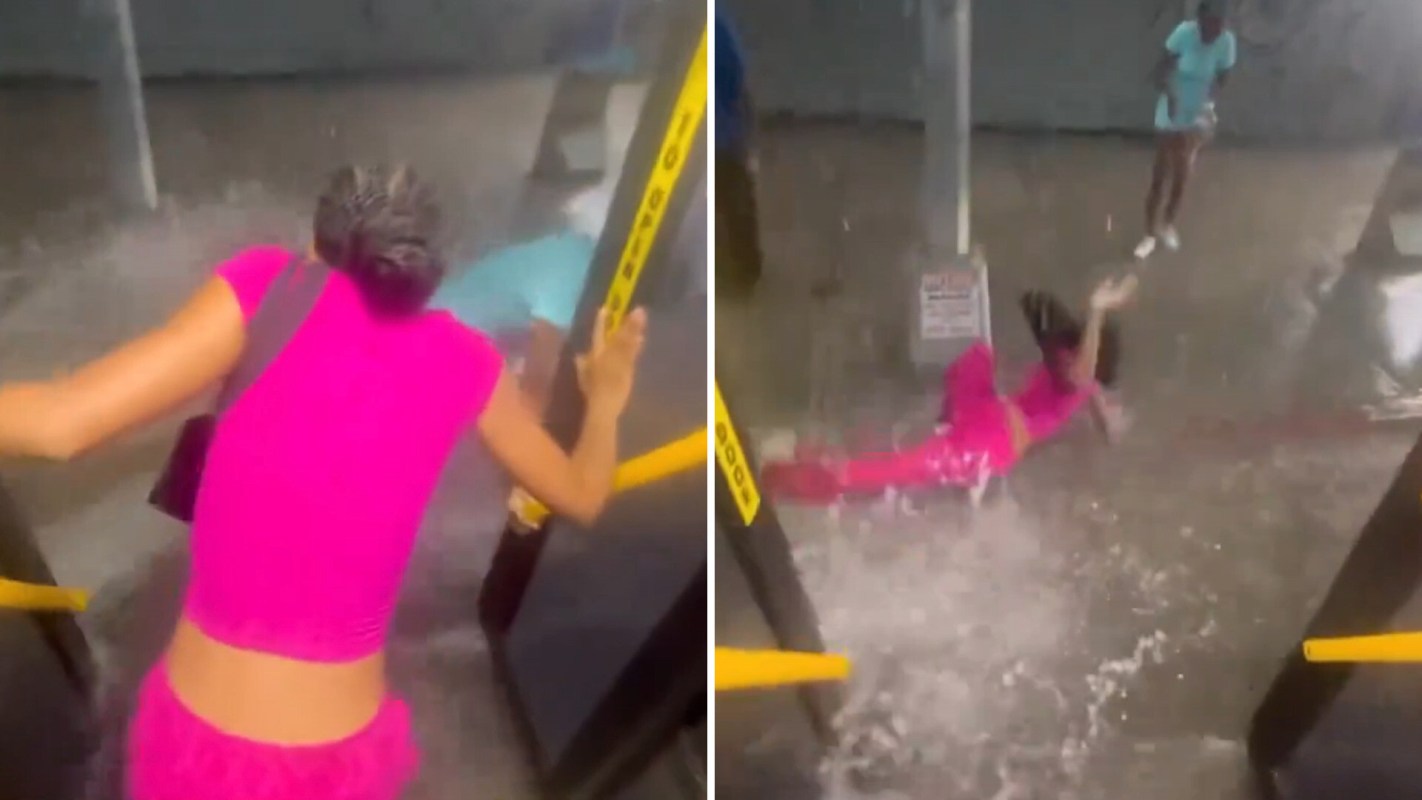
New York City's first severe flash-flooding episode of the year turned streets into pools, stalled trains, and left some residents wading through knee-high water.
Heavy rain hit parts of the city earlier in May, overwhelming roads and subway stations across Manhattan, Queens, and Brooklyn. Videos shared online showed flooded intersections, backed-up traffic, and other transit disruptions as water rushed through streets and underground stations.
In one alarming scene, local news station PIX11 reported that a woman was swept away by floodwater after getting off a public bus. Footage was shared on social media by Rain Drops Media (@Raindropsmedia1).
Woman got washed away in the NYC flood. 😭💔 pic.twitter.com/KFWwASKwYW
— Rain Drops Media (@Raindropsmedia1) May 21, 2026
The National Weather Service reported that parts of Queens received more than 2.2 inches of rain during the storm, while Brooklyn saw just under 2 inches, according to PIX11. That was enough to push the city's sewer system beyond its limits.
The local station said officials linked the problem in part to New York's aging sewer system, built to handle 1.75 inches of rain per hour — not the more intense bursts now hitting the city with increasing frequency.
Fast-rising water can trap commuters, damage and destroy homes and businesses, contaminate streets and buildings, and delay emergency response. Flooded storefronts can mean lost income, damaged inventory, and costly repairs. Delayed trains and impassable roads can keep workers from reaching jobs and families from getting home safely. Public health can suffer, too, as standing water and overloaded sewer systems raise sanitation concerns and even risks involving disease-carrying creatures, such as mosquitoes and rodents.
TCD Picks » Quince Spotlight
💡These best-sellers from Quince deliver affordable, sustainable luxury for all




Warmer air can hold more moisture, helping fuel heavier rainstorms. Infrastructure built for older weather patterns is increasingly outmatched by shifting patterns. Rising sea levels are also threatening the city and many others, putting millions of residents at risk of severe flooding.
City agencies and residents are left trying to keep drains clear, restore transit service, and move people out of dangerous conditions as storms hit. Addressing the problem will require infrastructure upgrades that reflect today's weather reality.
That might include expanding stormwater capacity, modernizing sewer systems, improving flood alerts, and redesigning streets so water has somewhere to go besides subway platforms and sidewalks. These kinds of investments can reduce damage, improve safety, and help cities recover more quickly after extreme weather.
In a city as dense and interconnected as New York, one overwhelmed drain or flooded station can quickly become a broader public safety concern and even an economic problem.

Get TCD's free newsletters for easy tips, smart advice, and a chance to earn $5,000 toward home upgrades. To see more stories like this one, change your Google preferences here.






