


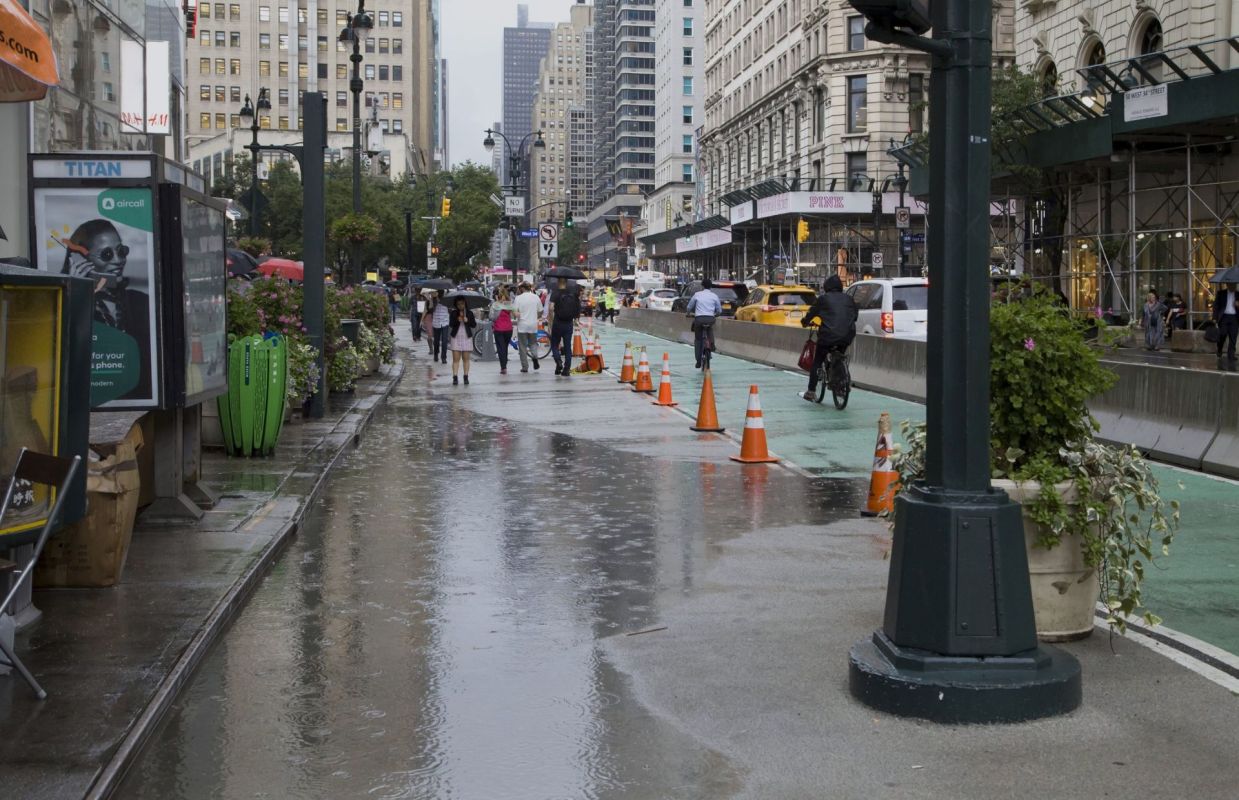
A new study is sounding the alarm on flood danger across the U.S., particularly in New York.
Using hazard mapping, population vulnerability measures, and records of earlier damage, the study, published in the journal Science Advances, shows just how many people and structures are in harm's way.
As Live Science summarized, the results suggest that about 4.4 million people in New York City, around half its population, could be affected by flooding. It also found that 47% of the city's buildings are at major risk of severe flood damage.
One of the biggest factors is rapidly rising sea levels. A 2012 study cited by National Geographic found that sea levels in East Coast cities are climbing roughly three to four times as quickly as the worldwide average.
While those rises are still gradual rather than an overnight catastrophe, that means flood risk is no longer limited to rare, worst-case events. In many neighborhoods, higher water levels can make routine tides more disruptive and storm surges more destructive.
Flooding on this scale threatens much more than buildings. Worsening extreme weather disasters can put lives and livelihoods at risk by damaging homes, hospitals, schools, roads, and public transit systems while forcing families and businesses into costly recoveries.
TCD Picks » Quince Spotlight
💡These best-sellers from Quince deliver affordable, sustainable luxury for all




Floodwaters can also contaminate drinking water, spread mold, increase the risk of injury, and worsen stress and other health problems for people dealing with displacement or repeated property loss.
For a dense city like New York, the stakes are especially high. When streets, tunnels, subways, and apartment buildings flood, entire communities can lose access to work, medical care, groceries, and emergency services.
Repeated damage can also push up insurance costs, lower property values, and strain city budgets, all of which can deepen inequality, since lower-income residents often have fewer resources to prepare, relocate, or rebuild.
The findings also point to a broader trend unfolding across the country as rising global temperatures drive sea level rise and more intense weather. New York may be one of the clearest examples, but it is far from alone, as Live Science observed.
New Orleans faces the greatest risk, according to the study, with 98% of its population and 99% of its infrastructure at high risk of being exposed to devastating flood damage.
The researchers said cities can reduce flood damage by investing in major protections and by building levees and dikes while keeping wetland buffers intact. Those wetlands can help absorb water, reduce erosion, and weaken the force of storm surge before it reaches homes and infrastructure.
For residents, research like this can help inform smarter local planning and stronger calls for resilience investments in the neighborhoods that need them most. That can include supporting updated building standards, better drainage systems, flood-resistant infrastructure, and land-use decisions that account for future water levels instead of past conditions.

Get TCD's free newsletters for easy tips, smart advice, and a chance to earn $5,000 toward home upgrades. To see more stories like this one, change your Google preferences here.







