


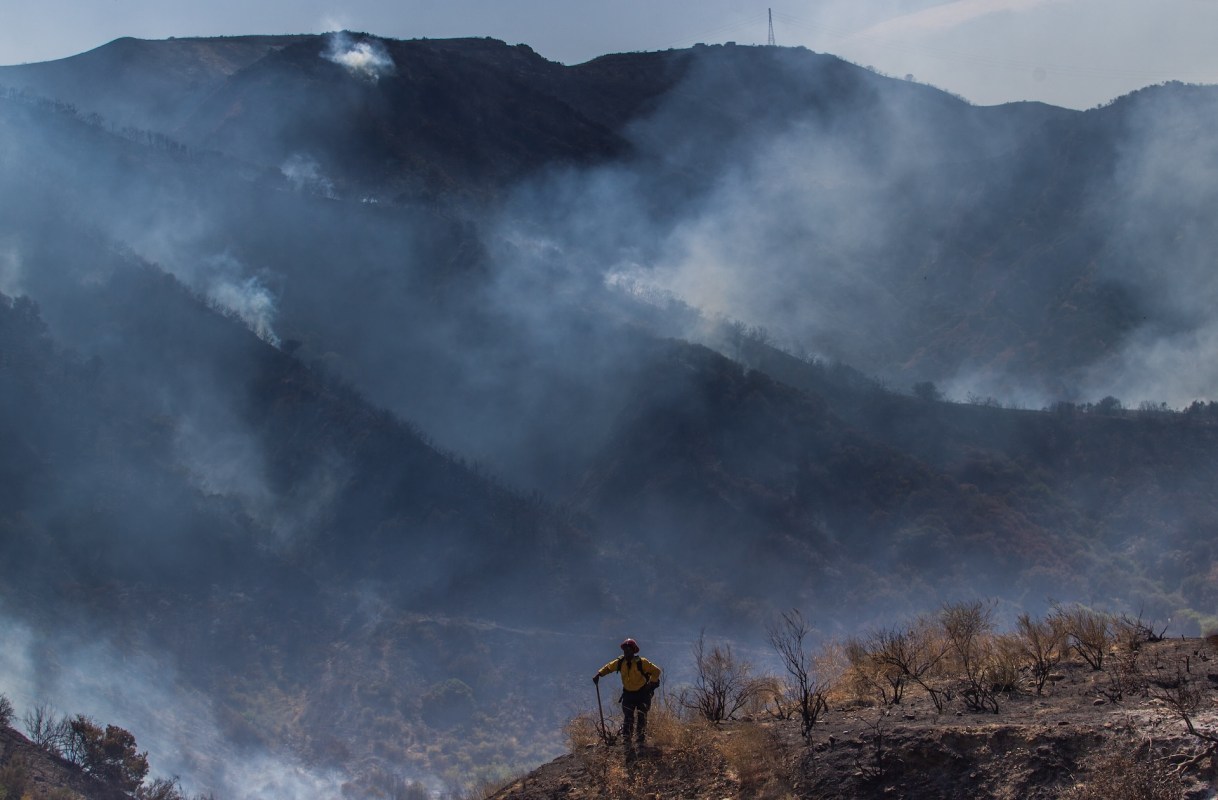
Most evacuation orders connected to Southern California's Sandy Fire have now been lifted as firefighters gain ground on the blaze. After flaring up earlier this week, the wildfire has reached 40% containment, offering some relief to communities near Simi Valley and Bell Canyon.
What's happening?
According to CBS News LA, Cal Fire said the Sandy Fire started near Sandy Avenue a little after 10 a.m. Monday and grew to 2,141 acres.
Firefighters had seemed to be making progress before a Tuesday flare-up drove renewed growth in a remote area between Simi Valley and Bell Canyon. Fire officials said shifting winds, steep terrain, and canyon-driven fire behavior helped push the fire further.
More than 850 personnel have been assigned to the incident, and crews remain stationed throughout nearby communities in case hot spots or flare-ups threaten homes again.
Andrew Dowd, the Public Information Officer for the Ventura County Fire Department, said at least one home has been destroyed.
The Simi Valley Police Department said the fire may have started when an individual "hit a rock with a tractor" in the area of the 2600 block of Rudolph Drive, according to CBS, setting off the blaze. Gov. Gavin Newsom also announced Monday that California secured federal firefighting support through a Fire Management Assistance Grant from the Federal Emergency Management Agency.
TCD Picks » Quince Spotlight
💡These best-sellers from Quince deliver affordable, sustainable luxury for all




Why is it concerning?
Even with many evacuation orders lifted, the Sandy Fire is another reminder of how quickly wildfires can disrupt daily life. Families may be forced from their homes with little notice, while road closures, smoke, and emergency activity can affect work, school, and access to essential services across an entire region.
Worsening extreme weather disasters endanger lives and livelihoods by threatening homes, straining emergency systems, and creating major financial losses for families and local governments. When fires intensify, they can damage property, force evacuations, worsen air quality, and leave communities facing long recoveries that affect public health, safety, and economic stability.
The destruction of at least one home underscores those risks. For residents in fire-prone parts of California, every jump in containment can mean the difference between a close call and a devastating loss.
What's being done to help?
Fire crews are continuing an aggressive response, with hundreds of personnel working to contain the blaze and protect neighborhoods in the Simi Valley area. Their ongoing presence in nearby communities is meant to ensure a fast response if hot spots reignite.
State and federal resources are also being mobilized. California secured federal firefighting funds through FEMA to support suppression efforts, helping local responders access more financial backing as the operation continues.
"We continue to aggressively fight this fire," Dowd said, according to CBS. "Our firefighters are out there just doing tremendous work in bringing this fire to a conclusion."

Get TCD's free newsletters for easy tips, smart advice, and a chance to earn $5,000 toward home upgrades. To see more stories like this one, change your Google preferences here.







