


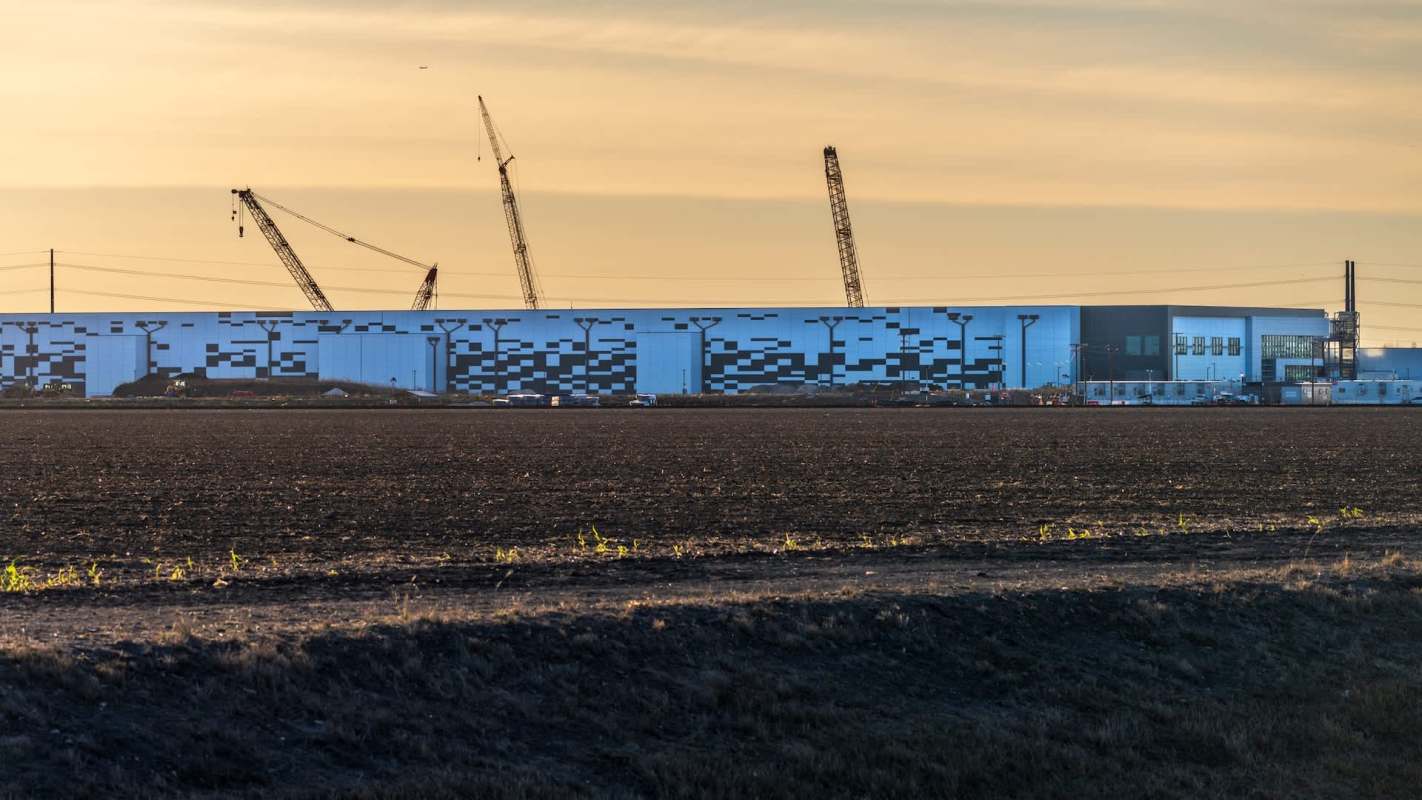
Texas is creating a plan that acknowledges a future of tighter water supplies and rising demand. But the state's calculations barely reflect one of its fastest-growing industries.
According to E&E News, a draft of Texas' 2027 state water plan estimates the state will need roughly $174 billion in water infrastructure projects over the next 50 years to avoid severe regional shortages during drought. It mentions nothing, however, about data centers.
This is happening despite Texas ranking second only to Virginia in the amount of data center development underway.
The issue appears to stem largely from timing and limited data. State planners rely heavily on historical water-use records. Much of the draft plan comes from 2020 figures, before the recent AI boom dramatically accelerated data center construction.
"Water is a really scarce resource in this state, and so we have to have a clear picture of what these facilities use on the water side," Thomas Gleeson, chair of the Public Utility Commission of Texas, told state lawmakers last month.
More than 65% of Texas was experiencing drought conditions as of May 12. The Texas Water Development Board projects dependable water supplies could decline by about 10% between 2030 and 2080.
TCD Picks » Quince Spotlight
💡These best-sellers from Quince deliver affordable, sustainable luxury for all




E&E News mentioned a University of Texas at Austin estimate that data centers could account for more than 9% of Texas' total water use by 2040. That percentage could surpass the state's oil and gas production amounts.
Data centers require large amounts of water to cool servers and computing equipment. Some large facilities consume millions of gallons daily depending on their cooling systems.
In drought-prone regions, that can place additional strain on the water supplies that farmers and rural communities use.
Even facilities that reduce direct water use through air cooling or closed-loop systems can still increase electricity demand significantly. Power plants supplying that electricity, especially natural gas and coal units, also consume large amounts of water for cooling and steam generation.
ERCOT has projected that data centers could add more than 228 gigawatts of electricity demand to the Texas grid by 2032. By comparison, the grid's all-time peak demand in 2023 was just 85.5 gigawatts.
When a rapidly expanding industry is missing from core planning documents, communities lose valuable time to prepare for future strain on infrastructure and resources.
"It's just popped up so fast and changed so fast, even in between the time of the start of the last legislative session and now that the state is running really behind," said Rachel Hanes, a policy director with the Greater Edwards Aquifer Alliance, per E&E News.
State officials are beginning to respond. The Public Utility Commission of Texas has a voluntary survey to developers asking about projected water use and supply sources. Lt. Gov. Dan Patrick has directed the lawmakers to study the demands of data centers.
Some proposed projects have explored desalination systems and lower-water cooling technology that could reduce pressure on freshwater supplies.
"I don't care if communities take or leave [data centers] — that's their call," state Sen. Charles Perry said, per E&E News. "But if this thing can come to fruition, if we can have more water supplies built out, that's a 50-year win."

Get TCD's free newsletters for easy tips, smart advice, and a chance to earn $5,000 toward home upgrades. To see more stories like this one, change your Google preferences here.






