


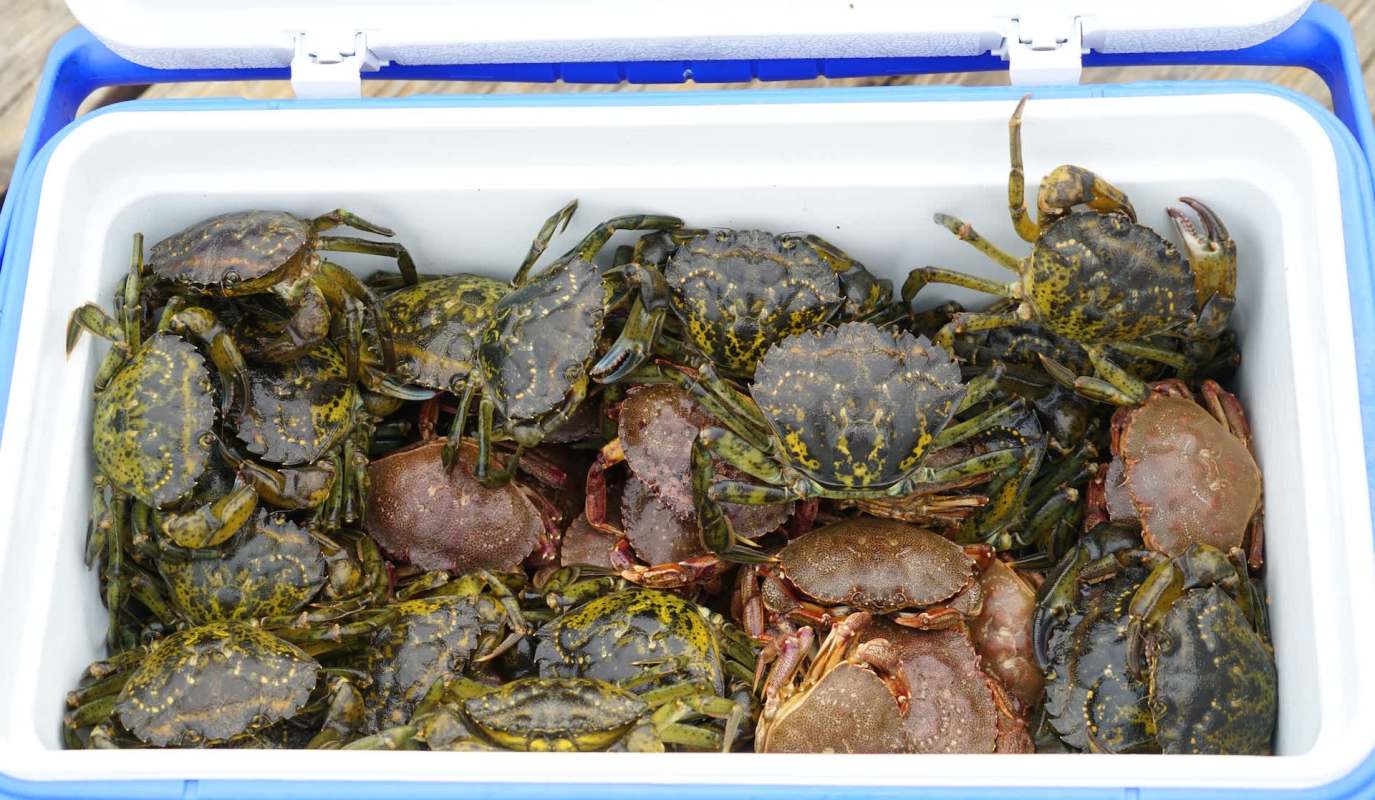
A volunteer-led conservation effort is off to a strong start in Washington, where crews at Dungeness Spit have already removed 315 invasive European green crabs in just the first two weeks of trapping season.
That number is especially promising because the work began about a month earlier than it did last year, the Peninsula Daily News reported.
In 2025, teams removed 1,668 of the destructive crabs over the full season. By getting traps into the water sooner this year, staff and volunteers hope to slow the invasion before it worsens.
The effort is taking place near Sequim, where volunteers with the Dungeness Nature Alliance are working with Jamestown's Refuge Management Program to protect sensitive habitat on the Dungeness Spit. The mission is straightforward: shield eelgrass beds and native marine life from one of the region's most damaging aquatic invaders.
European green crabs prey on and compete with native species, such as Dungeness crab and shellfish, but one of the biggest concerns in the Salish Sea is the damage they can do to eelgrass. Those underwater meadows provide critical habitat for forage fish, which help support salmon. Eelgrass also helps sustain birds, such as brant geese that winter in the area.
Protecting that interconnected system helps preserve the health of local waters that tribes, communities, fishers, and outdoor enthusiasts all depend on.
TCD Picks » Quince Spotlight
💡These best-sellers from Quince deliver affordable, sustainable luxury for all




The response is being powered by the community. More than 40 volunteers have helped set traps, sort catches, and record data throughout the season. Last year, volunteers contributed more than 800 hours to the work.
That support dramatically increases what the refuge can do. Wildlife Refuge manager Fawn Wagner told the Peninsula Daily News that a full volunteer crew can help set 100 traps in a day. Without that help, the small field staff could manage only about 40.
Teams are focusing on eelgrass-heavy hot spots after last season's data showed especially high trapping rates in those areas. They are also seeing a concerning number of female crabs carrying fertilized eggs. Catching them now could stop a huge number of future crabs from hatching, since each female can carry roughly 180,000 to 200,000 eggs.
The Dungeness effort is part of a much larger push. According to state wildlife officials, Washington's 2022 emergency order has been followed by the removal of nearly 3 million invasive green crabs statewide, with more than 1 million taken out in 2025 alone.
While there is no known way to fully stop European green crabs from entering Salish Sea waters, relentless trapping remains the best available tool for protecting native ecosystems and giving local species a better chance to thrive.
For anyone who wants to help, sightings can be reported to the Washington Invasive Species Council. Although they are illegal to possess, any information about a sighting, including the time, date, location, number of crabs, and even images, can be useful to officials.
As Wagner put it, "This is a way for people to get really active in that conservation effort."

Get TCD's free newsletters for easy tips, smart advice, and a chance to earn $5,000 toward home upgrades. To see more stories like this one, change your Google preferences here.







