


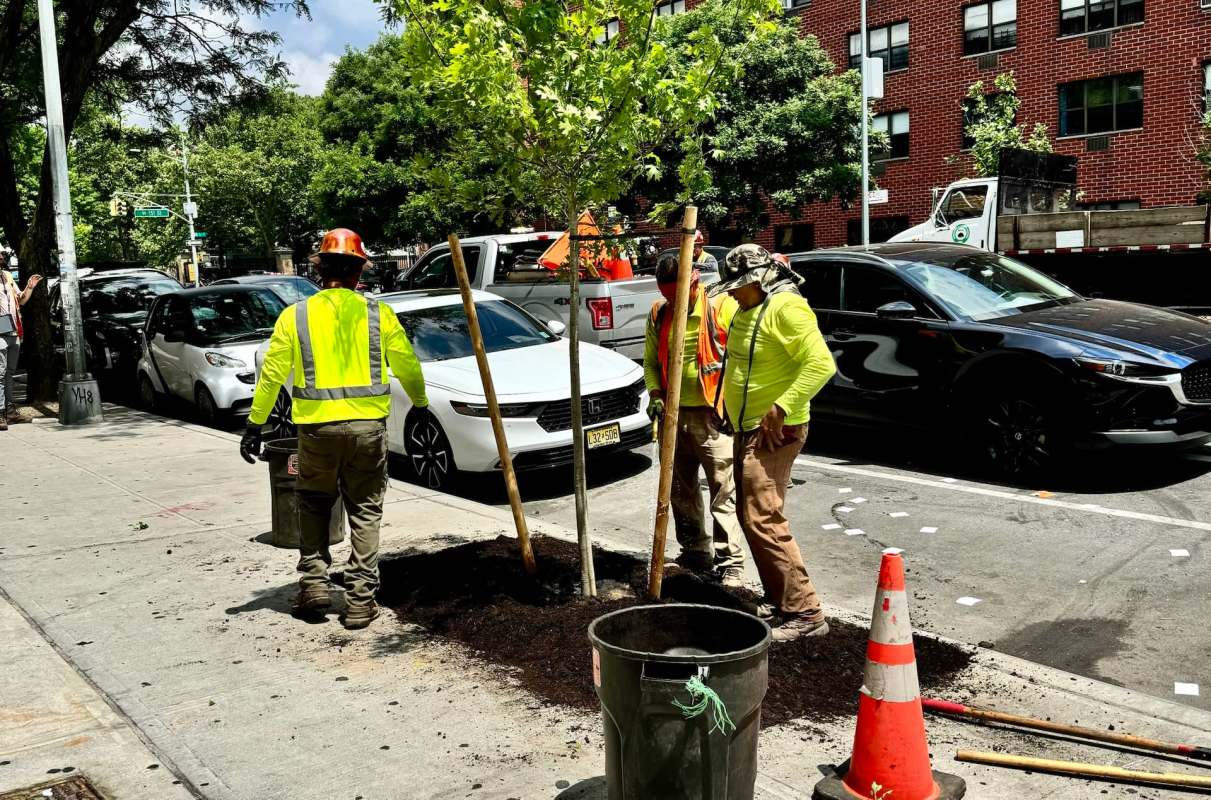
Cities could significantly reduce dangerous urban heat by planting more trees, and research suggests the payoff could be substantial.
Studies on urban heat islands, tree canopy, and city planning show that expanding urban forests can noticeably cool neighborhoods, especially those dominated by pavement, roads, and dense development, according to Louisville Public Media.
The urban heat island effect describes how cities tend to stay hotter than surrounding areas because materials such as concrete, asphalt, and buildings absorb and store heat.
During the day, those surfaces soak up sunlight. After sunset, they slowly release that heat back into the air, keeping temperatures elevated well into the night.
Trees and other vegetation work differently. They provide shade and cool the air by releasing moisture, which helps explain why greener neighborhoods often feel noticeably more comfortable during hot weather.
Extreme heat is already one of the deadliest weather-related hazards, and urban residents face even greater risks because of the heat island effect.
TCD Picks » Quince Spotlight
💡These best-sellers from Quince deliver affordable, sustainable luxury for all




In neighborhoods with little shade and consistently warm nights, people without reliable air conditioning can be especially vulnerable.
Recent studies highlight just how powerful the cooling effect of trees can be. One found that urban tree cover can offset about half of the heat island effect. Another study, which examined neighborhoods across 65 U.S. cities, found that areas with sparse canopies can experience up to 40% more excess heat than greener parts of the same city.
In some cases, the temperature difference between low-canopy and high-canopy neighborhoods approached 4 degrees Fahrenheit, creating what researchers described as a "cooling dividend" for residents living near more trees.
"Heat is already a major public health threat. It kills 350,000 people a year by some estimates, and it's worse in cities," Robert McDonald, lead scientist for nature-based solutions and the Europe region at The Nature Conservancy, per Louisville Public Media. "The urban heat island effect would be about double what it is now if world cities didn't have trees."
Trees cool urban areas in two main ways: by blocking sunlight and by releasing water vapor through their leaves.
Shade prevents sidewalks, streets, and buildings from heating up as much in the first place. At the same time, trees cool the surrounding air through evapotranspiration, a process similar to natural sweating.
Together, those effects can make tree-lined blocks significantly more livable during periods of extreme heat.
The type of tree matters, too. Larger species usually provide more shade, while some trees offer greater evaporative cooling.
Cities may prioritize native species that support birds and pollinators or opt for fruit-bearing trees that provide food and shade.
At the same time, planners have to think long-term. A tree species that thrives today may struggle in a hotter future climate, particularly in rapidly warming cities.
Urban heat is not distributed evenly. Lower-income neighborhoods often have fewer trees and more heat-trapping infrastructure, including wide roads, parking lots, industrial zones, and dense development.
That means the people most exposed to dangerous heat are most likely to have the fewest protections from urban greenery. Wealthier neighborhoods are more likely to have parks, tree-lined streets, and larger yards, while under-resourced communities may face persistent heat exposure throughout the summer.
That disparity is one reason many experts view trees as essential infrastructure rather than simple landscaping. An expanding canopy can directly reduce heat exposure in the neighborhoods that need relief the most.
Cities will likely need additional strategies, including reflective roofs, cooler pavement materials, and more heat-conscious building design.

Get TCD's free newsletters for easy tips, smart advice, and a chance to earn $5,000 toward home upgrades. To see more stories like this one, change your Google preferences here.






