


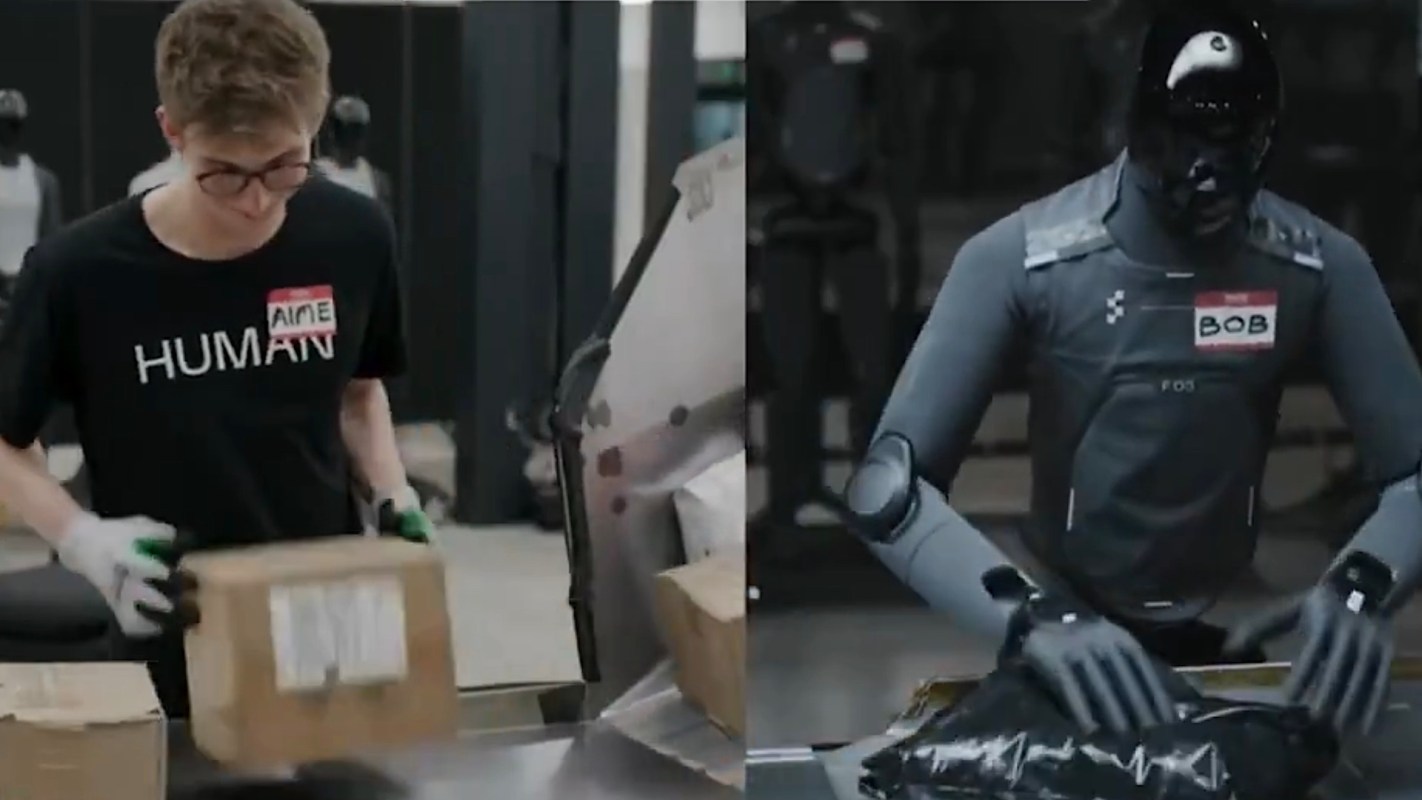
An intern just beat robots in a 10-hour "man vs. machine" parcel-sorting contest run by Figure AI. The close result shows just how far robots have come.
Figure AI pitted one of its interns, Aime, against its robots in a long-duration sorting challenge built around a very familiar warehouse task: scan a barcode, identify the parcel, and place it on a conveyor belt.
Congrats to Aime!! He said his left forearm is basically broken 😂
— Brett Adcock (@adcock_brett) May 18, 2026
Final scores:
→ F.03: 12,732 packages (2.83 seconds/package)
→ Aime: 12,924 packages (2.79 seconds/package)
This is the last time a human will ever win pic.twitter.com/CalDzPZz4d
According to The News International, Aime worked through the shift with a lunch break, while the robots rotated in and out about every hour. That setup allowed the machines to keep running continuously over the full 10-hour test.
Even with that advantage, the intern still came out on top. Aime sorted 12,924 packages, while the robot system, identified as F.03, handled 12,732. The almost 200-package gap is significant, but the speed-per-package difference was miniscule. Aime averaged 2.79 seconds per package, compared to the robot's 2.83 — just .04 of a second slower.
Figure AI CEO Brett Adcock reacted on X with a mix of praise and prediction, writing, "Congrats to Aime!! He said his left forearm is basically broken," before adding, "This is the last time a human will ever win."
While it may sound like a flashy tech stunt, the contest is really a snapshot of a much bigger shift happening in logistics and automation. Parcel sorting is repetitive, fast-paced work that can be physically demanding over long stretches, which is exactly why so many companies want robots to take on more of it.
TCD Picks » Quince Spotlight
💡These best-sellers from Quince deliver affordable, sustainable luxury for all




Better warehouse automation could eventually mean smoother supply chains and faster deliveries. If robots can reliably help with scanning and sorting, packages may move more efficiently from fulfillment centers to front doors.
At the same time, the result shows that humans are still bringing durability, adaptability, and real-world problem-solving to the job. In this case, a person working a full day — with breaks and fatigue — still managed to beat the machine.
That makes the story feel less like humans versus robots and more like a sign of just how close the two have become. A difference of only 0.04 seconds per parcel suggests warehouse automation is advancing quickly, even if it hasn't fully surpassed human performance yet.
Figure AI is continuing to develop the technology behind its robots. It introduced its proprietary AI, Helix, in 2025 for robot integration.
That kind of progress could help robots take on repetitive warehouse jobs that are exhausting and physically taxing for people. While concerns about new technologies displacing real people unnecessarily shouldn't be overlooked in workplace protection policies, continued progress in robotics could reduce strain or risk to human workers while helping businesses process goods more consistently.

Get TCD's free newsletters for easy tips, smart advice, and a chance to earn $5,000 toward home upgrades. To see more stories like this one, change your Google preferences here.






