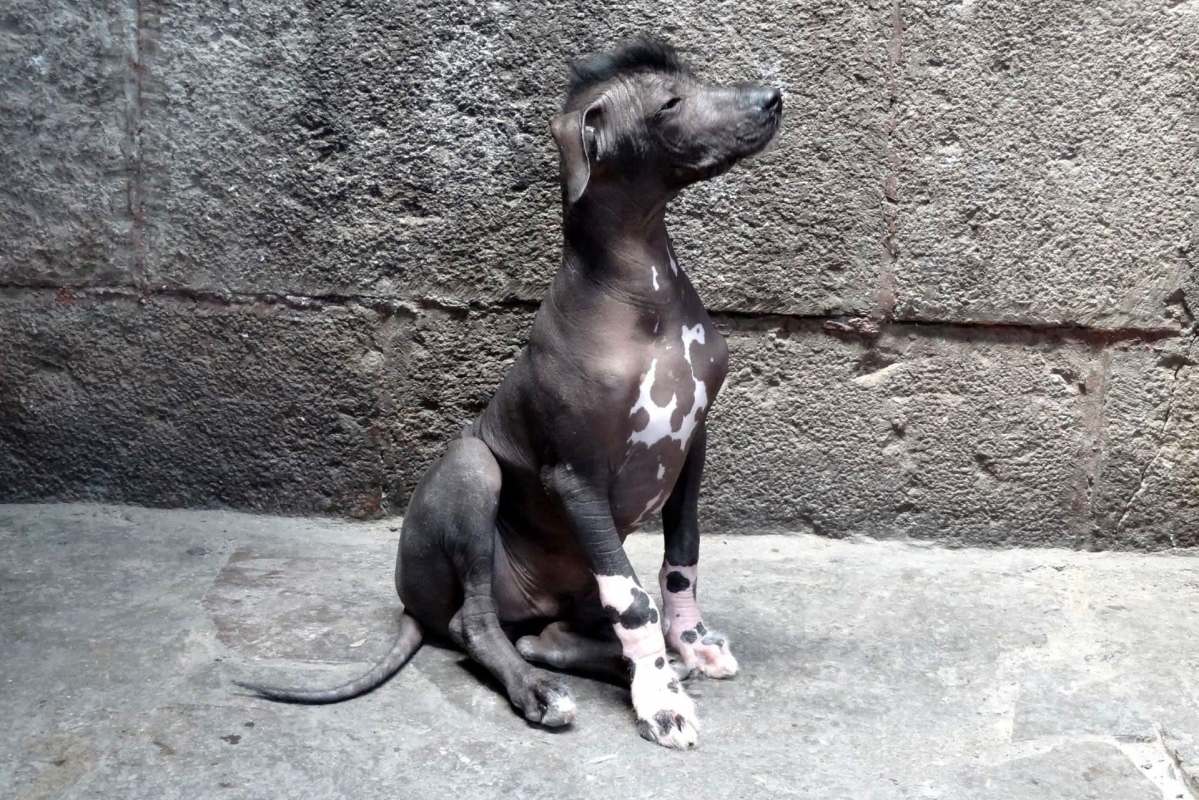
An ancient hairless dog skull with skin and ears still attached is drawing attention online after archaeologists unveiled the remarkably preserved remains in a new study at a major pre-Inca site in Peru, Earth.com reported.
The discovery was made at Castillo de Huarmey, a vast Wari Empire complex on Peru's northern coast, and researchers say it is the first physical evidence of Peruvian hairless dogs there.
According to the researchers, the region's extreme dryness preserved unusually fragile materials, including skin, hair, leather, textiles, and pigments. Among the most striking finds were a dog skull naturally preserved with skin and ears still on it, another large skull, and an almost complete male dog mummy placed in a shallow pit.
The study, published in the Journal of Anthropological Archaeology, helps address a long-standing gap in the archaeological record. As Earth.com noted, hairless dogs have long appeared in ancient Andean art, especially pottery, but firm physical links to the Wari world had remained scarce until now.
One of the clearest clues came from the animals' teeth. Weronika Tomczyk, the study's first author and a research associate in Dartmouth's Department of Anthropology, said some of the skeletons were missing teeth, "not that they lost them during their lifespan," but because certain teeth "had just never erupted."
"The same gene which is responsible for hairlessness in dogs is responsible for a reduced number of teeth," Tomczyk said, helping identify the remains as ancient Peruvian hairless dogs.
TCD Picks » Quince Spotlight
💡These best-sellers from Quince deliver affordable, sustainable luxury for all




That finding carries modern cultural significance as well. Peru gave the dogs official national cultural-heritage status in 2000, and the new evidence offers a clearer sense of how far back that relationship may extend.
The team documented 341 dog bone specimens representing at least 19 animals, plus the fully mummified male dog. Radiocarbon testing indicated the mummified dog lived at least 1,200 years ago, the earliest such date obtained so far from Castillo de Huarmey.
As reported by Earth.com, some of the animals seem to have been interred with care, while others were found among refuse, suggesting a more complicated relationship between people and dogs at the site.
One puppy thought to be 6 to 8 weeks old was laid beside an elite craftsman known as the "Master Basketmaker." Another incomplete puppy skeleton was buried alongside a sacrificed male guardian believed to have protected a tomb. Only a few of the dog remains showed butcher marks, indicating the animals were not commonly eaten.
Tomczyk said that the mix of treatment reflects a broader truth about human-animal relationships. "People in the past had often contradictory relationships with the animals, just as they do today," she said.
The researchers also analyzed isotopes in the dogs' bones and teeth to better understand their diets and lifeways. Most of the animals seem to have relied on maize, and their diets were broadly similar to those of nearby humans.
For modern audiences, the discovery is a vivid example of how environmental conditions can preserve the past in astonishing detail — and why protecting archaeological sites from looting and damage matters. It also adds to the broader story of how humans have lived with, shaped, and assigned meaning to animals over thousands of years.

Get TCD's free newsletters for easy tips, smart advice, and a chance to earn $5,000 toward home upgrades. To see more stories like this one, change your Google preferences here.