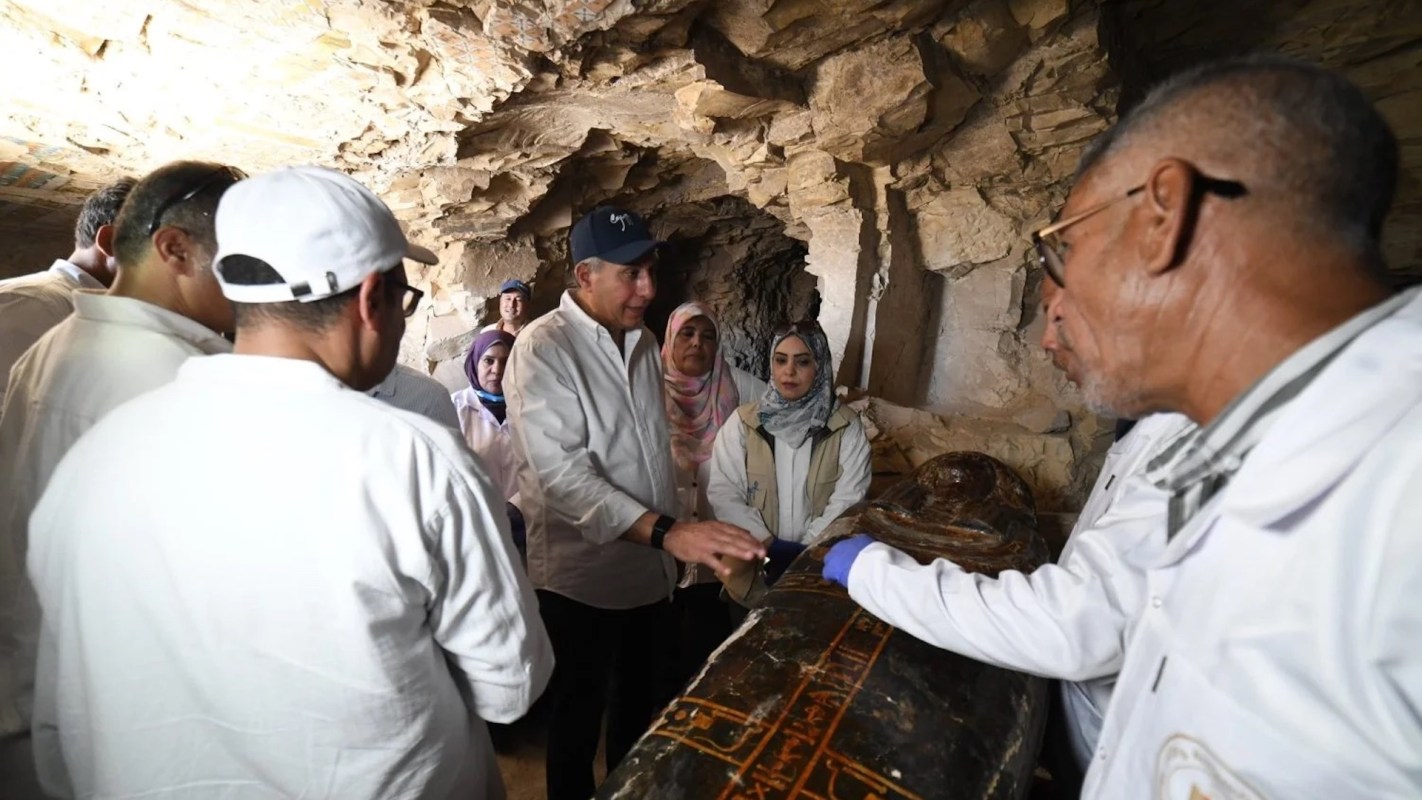
A newly uncovered burial shaft in Luxor, Egypt, is drawing major attention after archaeologists revealed a rare mix of ancient finds, including 10 painted wooden coffins, the tomb of a previously unknown priest, and more than 30 mummified cats.
The discoveries, announced by the country's Supreme Council of Antiquities, offer a detailed look at how ancient Egyptians buried, protected, and later relocated funerary items over centuries.
According to HeritageDaily, the finds were made at Abu El-Naga on Luxor's West Bank during the latest excavation season of the Egyptian archaeological mission, which began in November.
Researchers were working in a section of the tomb of Roy, known as TT255, that had been buried under debris left from excavations carried out more than 150 years ago.
In the courtyard of the nearby tomb of Baki, the team uncovered a burial shaft containing 10 painted wooden coffins that remained in unusually well-preserved condition. The coffins retain colorful decorative scenes and hieroglyphic inscriptions, and early analysis suggests they span several periods of ancient Egyptian history.
According to preliminary findings, four of the coffins date to the 18th dynasty, including one made for Meret, a chantress of Amun.
TCD Picks » Quince Spotlight
💡These best-sellers from Quince deliver affordable, sustainable luxury for all




Another, inscribed with the name "Badi-Amun," is associated with a priest of the Temple of Amun and dates to the 21st dynasty.
The mission also identified the burial of a previously unknown priest named A-Shafi-Nakhtu, described in inscriptions as a "purified priest of the Temple of Amun." His wives, Isis and Ta-Kaft, are also named in the tomb as chantresses of Amun.
Beyond the coffins, archaeologists also uncovered a sandstone shabti figure belonging to a person named Benji, along with a burial deposit containing more than 30 linen-wrapped cats from the Ptolemaic Period.
The discovery provides new insight into how burial sites were reused and protected over time in ancient Egypt.
Researchers believe the shaft may have served as a concealed storage space in which coffins were moved from earlier tombs for safekeeping, suggesting a long-term effort to preserve the dead and their burial goods.
It also highlights how much remains to be discovered in areas previously thought to be well explored. Despite being covered by old spoil heaps from earlier excavations, the site still produced significant finds spanning multiple eras.
Preliminary studies indicate the burials range from the 18th dynasty through the 21st dynasty and into the Late Period, reinforcing the idea of repeated reuse at the site over time.
For modern readers, the discovery helps bring ancient practices into sharper focus, connecting materials like wood, linen, paint, stone, and even animals to the beliefs and burial traditions of one of history's most studied civilizations.

Get TCD's free newsletters for easy tips, smart advice, and a chance to earn $5,000 toward home upgrades. To see more stories like this one, change your Google preferences here.