


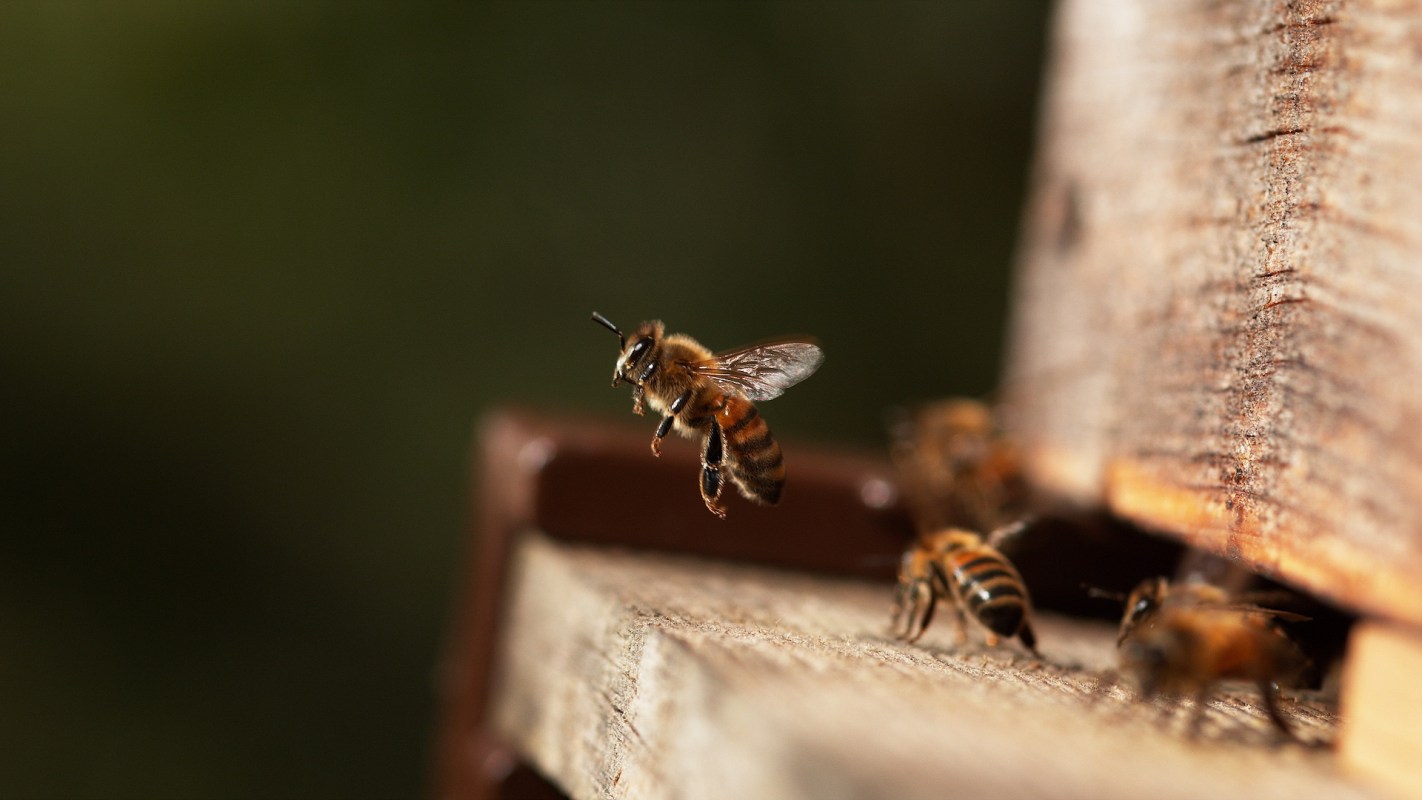
Honeybees across parts of North America are "waking up earlier" this year, with beekeepers reporting that swarm season has started more than two weeks ahead of schedule following an unusually warm winter.
What's happening?
A report from Swarmed, a honeybee relocation tracking network that works with more than 10,000 beekeepers, found that North America's 2026 swarm season is running 17 days earlier than it did in 2025, according to the Guardian.
Swarming is a natural part of a honeybee colony's life cycle. In spring, overcrowded hives often split when the queen leaves with roughly half the colony to establish a new hive. The remaining bees then raise a replacement queen.
But experts have said the timing this year is unusual.
"We saw a very warm winter in the west this year and … this is having an impact on bees," said Swarmed's managing director, Mateo Kaiser, per the Guardian. "They are waking up earlier, and in many parts of California, they are building up their populations already in January, December, and that is leading to swarms way earlier than normally."
The shift comes after a devastating year for U.S. honeybees. Beekeepers reported losing more than 60% of managed colonies last year, marking one of the most severe die-offs on record.
TCD Picks » Quince Spotlight
💡These best-sellers from Quince deliver affordable, sustainable luxury for all




At the same time, researchers are closely monitoring the spread of varroa mites, a destructive parasite that weakens bees and spreads disease-causing viruses throughout hives.
Warmer winters may be worsening the problem. Normally, colder months slow hive activity and interrupt mite reproduction cycles. But shorter, milder winters may allow both bees and parasites to remain active longer, potentially increasing stress on colonies year-round.
Why is this concerning?
Bees are essential to modern food systems. Pollinators help fertilize crops ranging from fruits and vegetables to nuts and seeds, contributing an estimated $15 billion in agricultural value annually in the United States alone, according to the Food and Drug Administration.
As seasonal patterns shift, experts have said bees may also be responding to earlier blooming cycles caused by warming temperatures.
"In terms of the environment, in terms of the blooms, the timing is what is shifting with climate change," behavioral ecologist Noah Wilson-Rich said, per the Guardian. "They are hitting their fertility point much sooner in a way that matches those other floral patterns of timings that we're seeing and expecting."
Wild bee species are also under pressure from habitat loss, pesticide exposure, disease, and climate-related disruptions. Large managed colonies can sometimes intensify competition for pollen and nectar, leaving fewer resources available for native pollinators already experiencing steep declines.
For communities, weaker pollinator populations could ripple through agriculture, food production, and ecosystems that rely on flowering plants to reproduce and maintain healthy landscapes.
What's being done about honeybees?
Beekeepers and researchers are already adapting to the changes.
Networks such as Swarmed are tracking swarm activity in real time and helping safely relocate bees when colonies split. Scientists are also studying how warmer winters may be reshaping hive behavior and affecting the spread of varroa mites.

Get TCD's free newsletters for easy tips, smart advice, and a chance to earn $5,000 toward home upgrades. To see more stories like this one, change your Google preferences here.







