


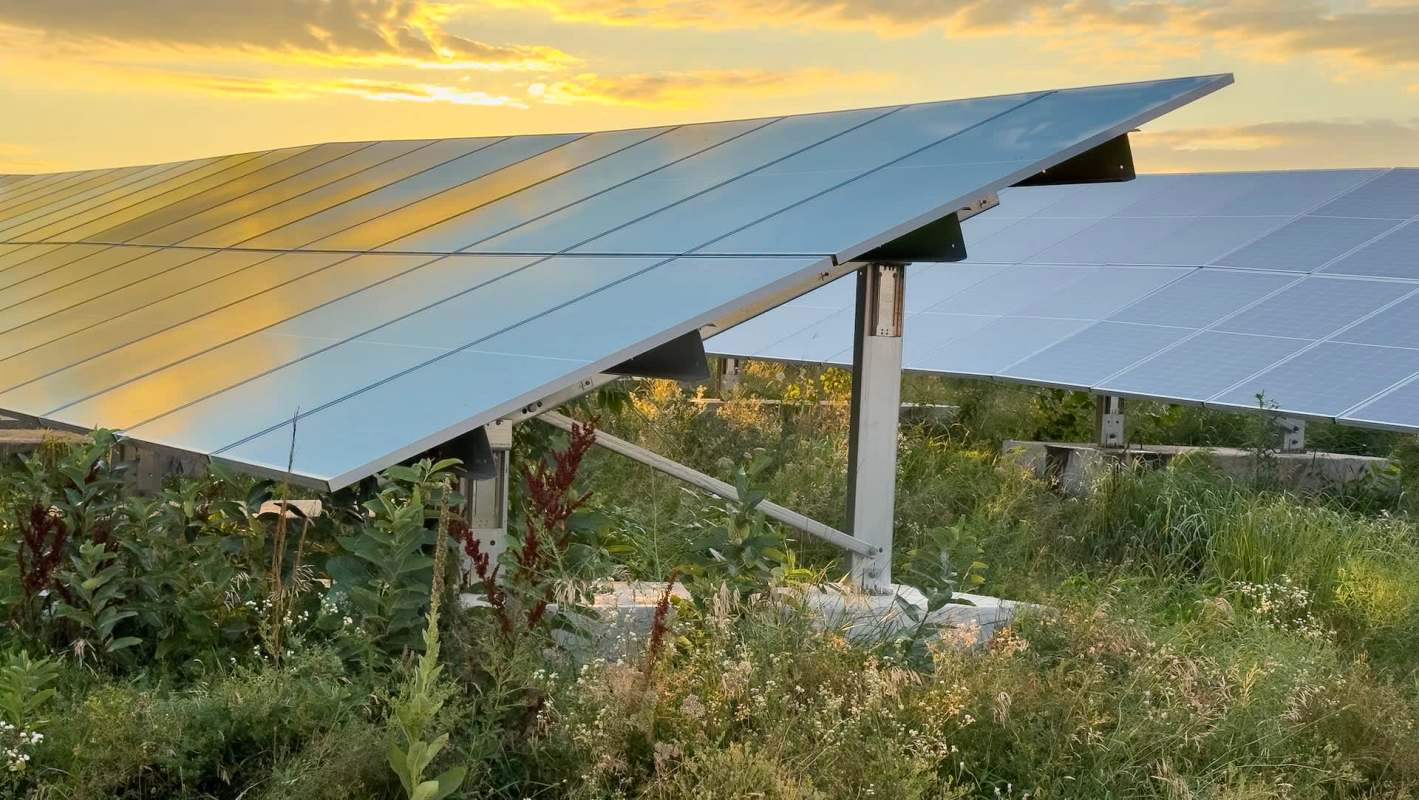
Fast-growing weeds were creeping beneath the panels at an Australian solar farm, and every solution seemed to be falling short. That is, until a local farmer tested an unlikely fix: 10 kunekune pigs.
What followed is drawing attention as a simple, low-tech strategy with outsized benefits for solar operations.
At a large Australian solar site operated by Capital Power, thick clover and other weeds were spreading aggressively beneath the panels, The Pulse reported. Heavy machinery and herbicides carried risks around sensitive equipment, and even sheep — a common choice for solar grazing — were only partly effective.
That's when kunekune pigs got their chance.
The small, calm breed was able to move between the rows of panels and reach stubborn vegetation that other methods missed. While foraging, the pigs did more than clear plant growth. They also rooted through the top layer of soil, helping loosen compacted ground.
The facility described the animals as "employees" and as the "living landscaping crew" rotated through the site, according to The Pulse.
TCD Picks » Quince Spotlight
💡These best-sellers from Quince deliver affordable, sustainable luxury for all




That mix of natural weed control and soil improvement helped clear dense growth without chemicals or heavy equipment. According to the company, the pigs were effective enough that the farm kept them on the job, helping protect more than 100,000 solar panels while supporting a broader agrivoltaics program.
Overgrown vegetation at solar farms can make maintenance harder, raise fire risk, and increase operating costs. A natural solution that keeps the area clear while improving soil health can help sites run more efficiently, supporting more reliable clean energy and lower costs over time.
For everyday people, that means cheaper, more efficient renewable energy that can benefit both communities and businesses. It also highlights how solar sites can serve as living ecosystems instead of strictly functioning as fenced-off industrial spaces.
Capital Power has presented the pigs as more than a novelty, emphasizing how they reduced fuel use, lowered maintenance needs, and improved conditions beneath the panels. What began as an unusual experiment is now being viewed as a model that other solar operators may want to try.

Get TCD's free newsletters for easy tips, smart advice, and a chance to earn $5,000 toward home upgrades. To see more stories like this one, change your Google preferences here.






