


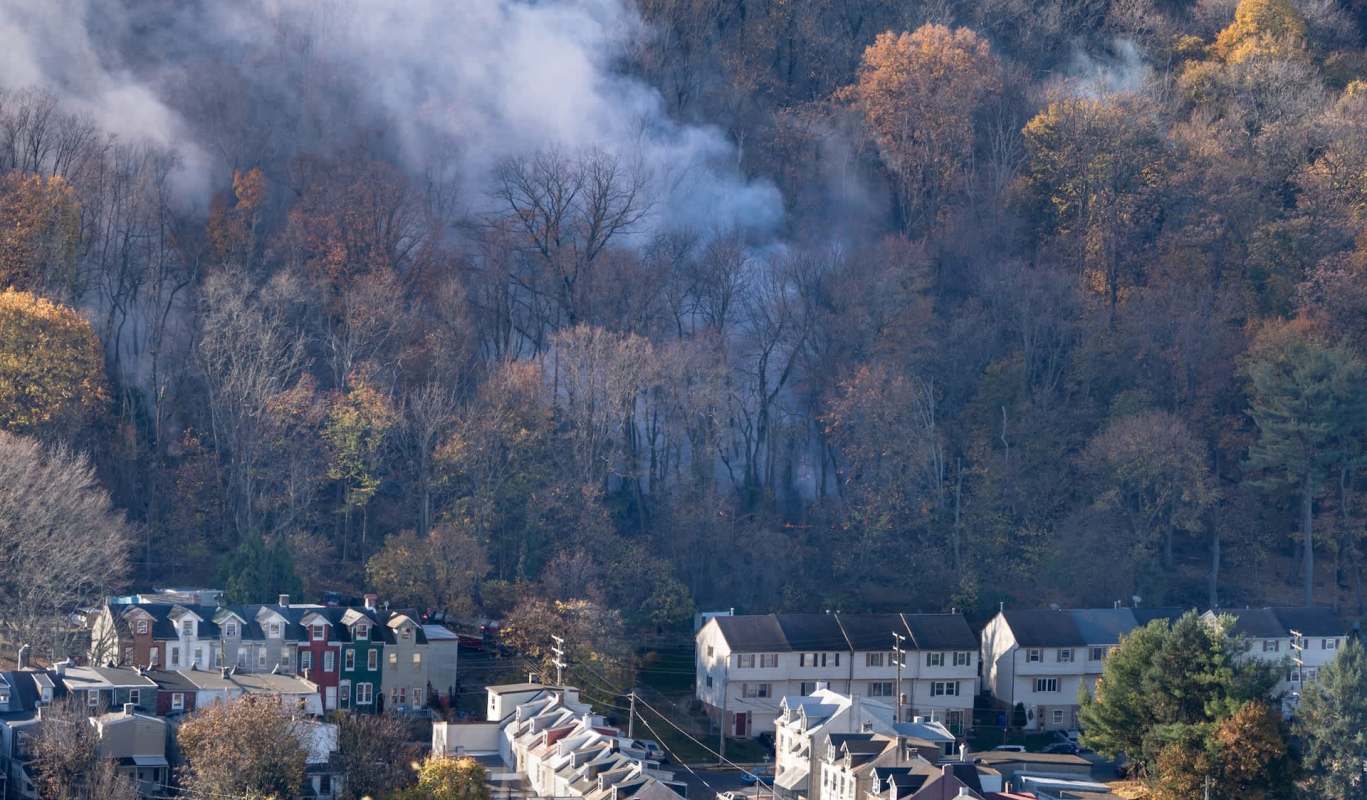
Pennsylvania's wildfire season is shifting, and officials say drought, erratic rainfall, and increasingly dry forest fuels are driving that change.
As the Republican Herald reported, three May 4 brush fires near Vulcan Hill in Mahanoy City burned roughly 15 to 17 acres, and forestry responders and local fire departments said the conditions behind that blaze are becoming more common statewide.
Pennsylvania's changing wildfire season reflects a growing pattern in which fires are no longer largely confined to the spring. Instead, drought, longer dry stretches between storms, and shifting weather patterns are creating dangerous fire conditions in both spring and fall.
The result is that forests and brush can remain primed to burn for longer periods, especially when rain falls in short bursts rather than as steady moisture that can soak into vegetation and the forest floor.
Department of Conservation and Natural Resources Bureau of Forestry figures show 1,536 wildfires in Pennsylvania in 2025, which together burned 5,527 acres, according to the Republican Herald. This topped the state's 10-year yearly averages of 1,257 fires and 4,312 burned acres.
In Schuylkill County, now under a drought warning, officials reported that recent rain has not yet restored sufficient moisture to forest fuels. Dr. Erica Smithwick added that the issue is not only low rainfall totals, but also the widening swings between wet and dry periods, which can leave vegetation ready to ignite even when a season does not appear unusually dry on paper.
TCD Picks » Quince Spotlight
💡These best-sellers from Quince deliver affordable, sustainable luxury for all




"We're not really out of the woods yet," Jake Novitsky, a fire forester with DCNR's Bureau of Forestry, said, noting that recent rain has only helped keep conditions somewhat in check rather than fully replenish dry fuels.
Forestry officials and researchers say that is part of a broader pattern across the East. More variable precipitation can bring a week or two of rain followed by several weeks of dry weather. Wet periods can also spur plant growth that later dries out and becomes additional fuel once drought sets in.
That combination can be especially dangerous in the fall, when lingering summer dryness carries into a season that historically saw less wildfire activity in Pennsylvania. Researchers say the shift is making fire behavior less predictable and increasing the likelihood that a small ignition will escalate into a more serious incident.
As the Republican Herald noted, Pennsylvania wildfires are still usually started by people rather than lightning, and DCNR says debris burning remains the state's top wildfire cause.
While people often provide the spark, weather and fuel conditions largely determine what happens next. Schuylkill County Fire Chiefs Association President Frank Zangari Jr. said many of these fires are preventable and linked to outdoor burning. His warning was direct: "Fire doesn't care."
Worsening fire conditions are adding stress to the response system, and Schuylkill County's firefighting force remains overwhelmingly volunteer, with Zangari noting that its ranks are thinner than they used to be.
Taken together, the Republican Herald said that officials see Pennsylvania moving into a more volatile fire period driven by drought, unstable rainfall patterns, longer fire seasons, and heavy reliance on volunteer responders.
The concern is not just that wildfires may become more frequent, but also that they may be harder to predict and contain.
"In the East, climate is stacking the deck and making those fires more likely to be severe and more likely to spread," Smithwick said.

Get TCD's free newsletters for easy tips, smart advice, and a chance to earn $5,000 toward home upgrades. To see more stories like this one, change your Google preferences here.







