


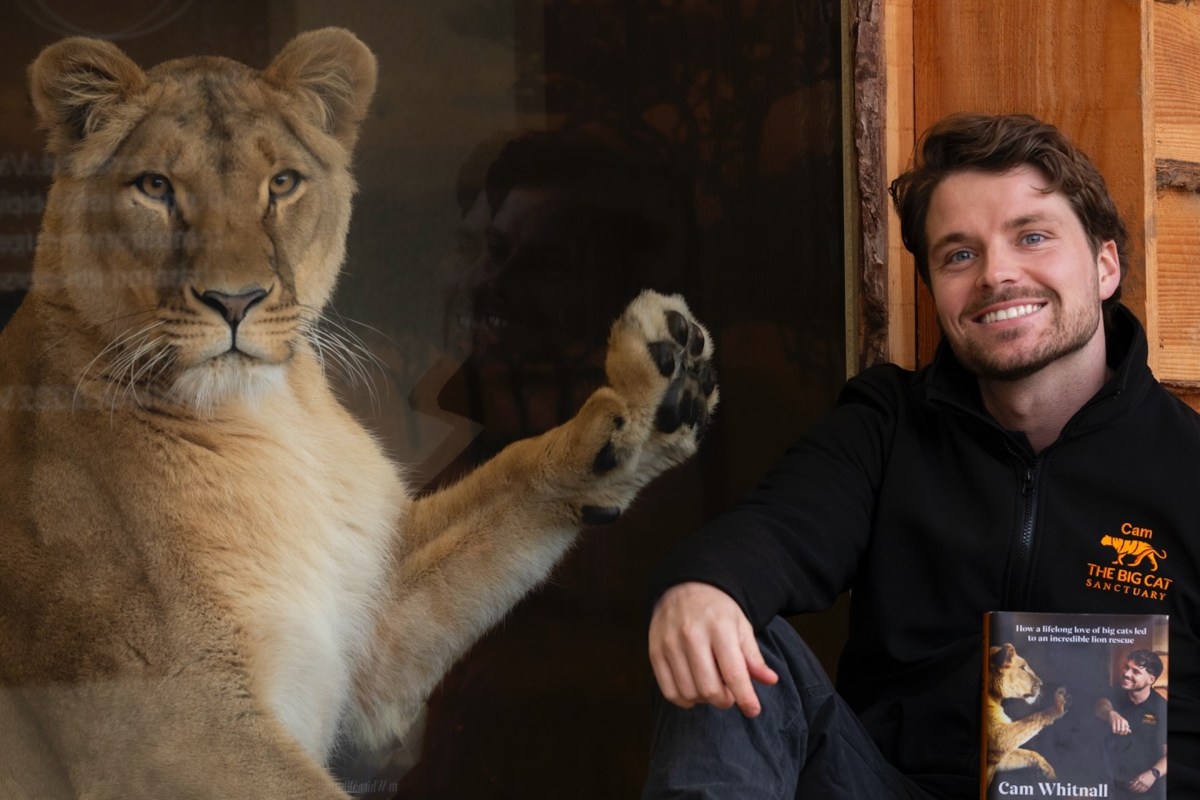
As bombs fell across Ukraine, a young lioness named Yuna was left behind in a small concrete enclosure.
Today, after a high-risk rescue that crossed an active war zone, she is safe at the Big Cat Sanctuary in Kent, England.
Yuna's journey has become one of the clearest examples of the sanctuary's mission in action. Led in part by conservation advocate and TV presenter Cam Whitnall, the organization works to improve the lives of rescued big cats while contributing to longer-term species conservation.
According to the Telegraph, Yuna was captive-born in Ukraine near the start of the war. As a cub, she was poorly nourished and developed rickets, which altered her front paws and left her walking unsteadily. After her owner fled, she was left in a pen of about 172 square feet.
Military volunteers later got her to Kyiv's Wild Animal Rescue Center. A bomb hit that site two days after her transfer.
From there, Whitnall and his team helped bring her to England.
TCD Picks » Quince Spotlight
💡These best-sellers from Quince deliver affordable, sustainable luxury for all




Yuna arrived at the Big Cat Sanctuary in the summer of 2024. She now has access to grass, sunlight, and the purpose-built Lion Rescue Center created specifically for lions saved from captivity in Ukraine.
Whitnall's connection to this kind of work goes back years. In the 1980s, his grandparents bought the struggling Broxbourne Zoo and later turned it into Paradise Wildlife Park after seeing the suffering there, including a lion that had never set foot on grass, according to the Telegraph.
Whitnall grew up around animal care, but he also became aware of the ethical complexity of keeping wild animals in captivity. After later studying television production, he returned to conservation and used social media to bring more public attention to rescue and animal welfare.
That visibility proved critical.
Whitnall told the Telegraph that he first learned about Yuna through social media. When the sanctuary said it could take her, rescuers in Kyiv asked if it could receive four additional lions. Supporters then donated approximately $670,000, which helped pay to move the animals out of Ukraine and to build the Lion Rescue Center in Kent.
All five lions — Yuna, Lira, Amani, Vanda, and Rori — are now living at the sanctuary in adjoining paddocks.
The issue Whitnall and the sanctuary are confronting extends beyond a single rescue. War, neglect, and irresponsible captive ownership can leave big cats in dangerous and deeply inadequate conditions. At the same time, habitat loss and shrinking wild populations are making the future of these species even more uncertain.
Whitnall has argued that humans have a responsibility both to provide the best possible care for animals already in captivity and to protect species that may one day depend on conservation support if wild populations continue to decline.
Whitnall's efforts have not ended with Yuna. The Telegraph also reported that he later traveled to Ukraine to help rescue a lynx named Ursa and assist with moving an Amur tiger named Mir, even as air raid sirens sounded. Those operations underscore how closely animal welfare, armed conflict, and conservation can intersect.
For now, Yuna's recovery stands as a visible reminder of what that work can make possible. Once confined to concrete, she can now stretch out on grass and live safely near other rescued lions.
Whitnall told the Telegraph that the work is intense, but never something he sees as a burden.
"I wake up every day knowing that I'm creating a better world for these cats and the other animals we support," he said. "It'll never, ever be a burden. It's an opportunity to have an impact on creating a better planet."

Get TCD's free newsletters for easy tips, smart advice, and a chance to earn $5,000 toward home upgrades. To see more stories like this one, change your Google preferences here.







