


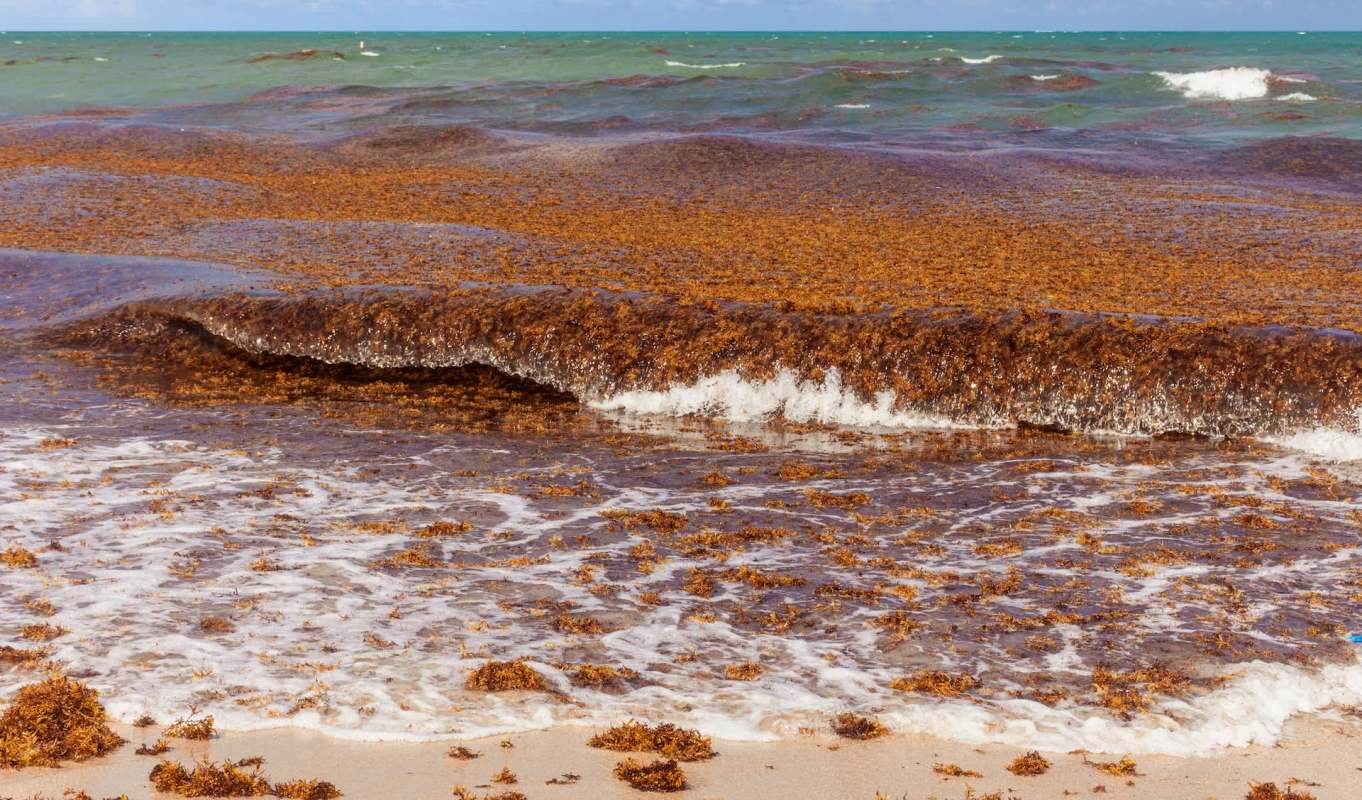
South Florida may be headed for another punishing sargassum season, and researchers say 2026 could surpass the severe beach invasions seen in 2023 and 2025.
What's happening?
Scientists who monitor sargassum, the floating brown seaweed that can smother shorelines, clog boat motors, and release a rotten-egg odor as it decays, say this year is already off to a troubling start.
The Miami Herald reported that Chuanmin Hu of the University of South Florida, an early developer of satellite-based sargassum tracking, said January set a record for that month. Blooms have been showing up sooner and in larger sizes, and many researchers expect the trend to continue.
Beach crews in South Florida are already clearing piles of sargassum with tractors, only for more to wash ashore again within hours. Miami-Dade taxpayers spend nearly $4 million each year on beach cleanup alone, according to the report.
Tourists are also paying attention. People in online groups about Florida's sargassum swap photos and debate whether to change their vacation plans. One Missouri traveler told the Miami Herald that after seeing beach images, her family decided, "We don't need that in our lives."
Another visitor from Iowa said he "felt sick to [his] stomach" after learning the beach he booked for September might be affected.
TCD Picks » Quince Spotlight
💡These best-sellers from Quince deliver affordable, sustainable luxury for all




Why is sargassum a problem?
When shorelines are covered in seaweed, it can cause families to reconsider trips, workers to lose hours, and coastal businesses to take a hit. Hotels, restaurants, tour operators, and fishing charters all rely on beaches being clean and accessible. If visitors begin to see South Florida as a gamble instead of a getaway, the consequences can ripple through communities that depend on tourism.
As a result, the economic stakes are high. According to the Miami Herald, scientist Di Jin from the Woods Hole Oceanographic Institution put direct losses to Florida tourism and fishing at about $2.7 billion. When restaurants, bars, and other nearby businesses are included, the estimate rises to roughly $5 billion, with worst-case projections nearing $10 billion.
There is also a broader environmental issue behind the blooms. Researchers say warmer conditions, changing winds, and fertilizer runoff may all be altering how the Atlantic sargassum belt forms and moves. Hu said the steady stream of record-setting years has been especially unsettling.
Even cleanup has drawbacks. Once seaweed is removed from beaches, it is often transported to landfills. As it decomposes, that organic waste can release methane, a potent heat-trapping gas. In other words, public money is being spent to manage a problem that can also contribute to the same warming trends, making life along the coast more difficult.
At the same time, sargassum serves a purpose offshore. Floating mats provide habitat for small fish, shrimp, and crabs. That is one reason experts say blocking or removing it at sea is not a simple solution, particularly off Miami, where the Gulf Stream is strong, and barriers could create new problems for reefs and marine life.
What's being done about sargassum?
For now, the clearest path forward is better forecasting and smarter reuse.
The National Oceanic and Atmospheric Administration now offers a daily coastal outlook for likely sargassum levels. It is not perfect — clouds can block satellite views, and currents or shifting winds can quickly change where the seaweed ends up — but researchers are working to improve those models so local governments can deploy cleanup crews more effectively and travelers can plan with better information.
Scientists have also asked beachgoers to submit photos to help refine forecasts.
Miami-Dade County is also exploring ways to turn collected sargassum into something useful rather than sending it straight to the landfill. The county has partnered with the Miami-Dade Innovation Authority on pilot efforts to convert the seaweed into products such as fertilizer or building materials.
For residents and travelers, there is no simple fix. But checking official beach conditions before a trip, sharing on-the-ground reports, and supporting policies that reduce runoff and curb heat-trapping pollution can all help address the forces making these blooms worse.

Get TCD's free newsletters for easy tips, smart advice, and a chance to earn $5,000 toward home upgrades. To see more stories like this one, change your Google preferences here.






