


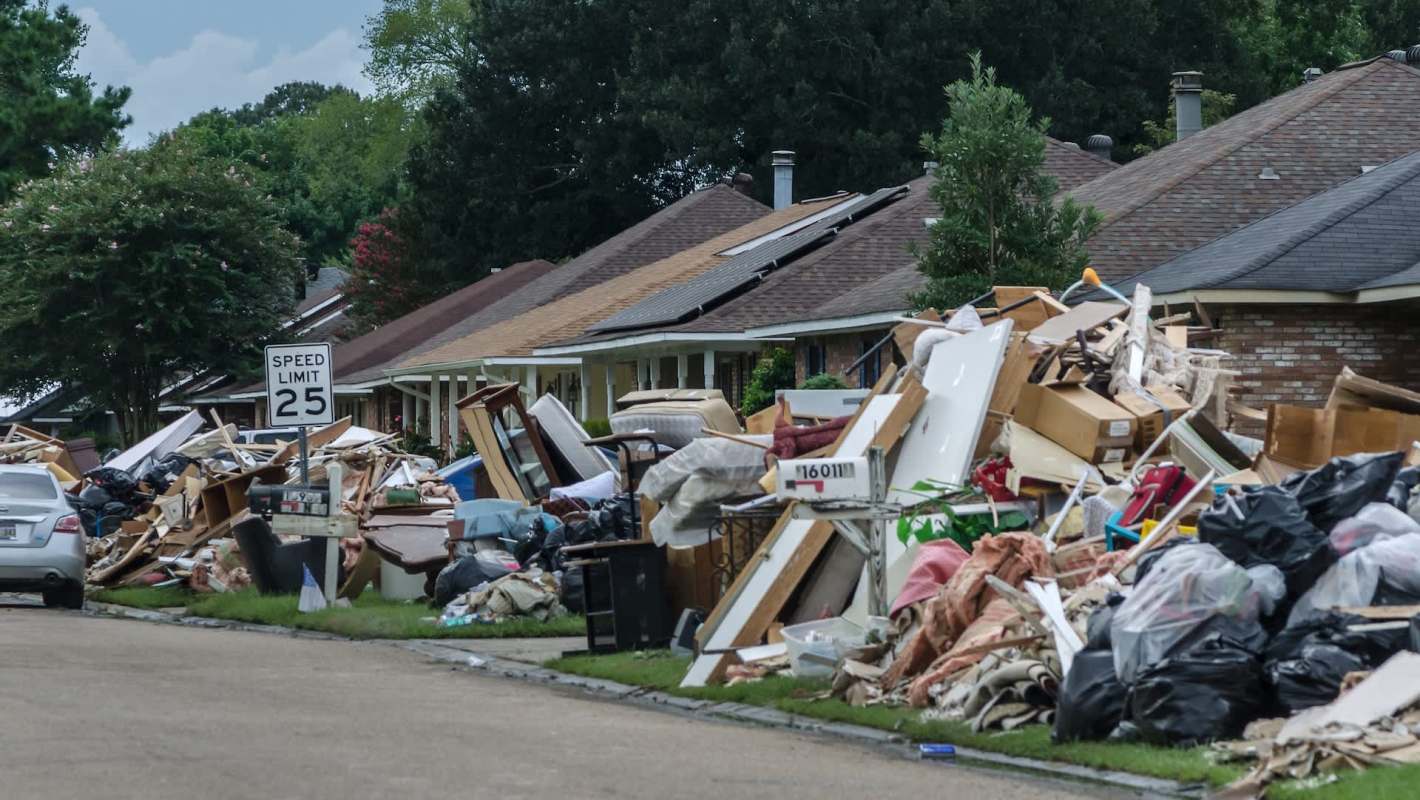
Home insurance premiums in the U.S. are becoming one of the clearest examples of how extreme weather events are increasingly shaping everyday costs.
As Quartz summarized, a Bankrate analysis of average annual premiums for policies with $300,000 in dwelling coverage found notable differences from one state to the next.
Vermont, Delaware, and Alaska had the cheapest states for homeowners insurance, while Nebraska, Louisiana, and Florida ranked as the most expensive.
Those rankings highlight just how closely weather patterns are tied to affordability. The least expensive states generally avoid the country's most severe storm corridors, while the most expensive states sit directly in the path of repeated extreme weather.
What causes home insurance costs to vary by state?
Home insurance costs vary by state because insurers price policies around local risk.
Weather exposure is a major factor. States that regularly have to deal with hurricanes, tornadoes, hailstorms, wildfires, and other severe weather often have much higher premiums because insurers expect to pay more claims in those areas. Construction costs, home values, population density, and the number of insurers still writing policies in a state also influence pricing.
TCD Picks » Quince Spotlight
💡These best-sellers from Quince deliver affordable, sustainable luxury for all




In practical terms, geography alone can change the cost of insuring similar houses by thousands of dollars per year.
Why are home insurance costs by state concerning?
For most homeowners with a mortgage, insurance is not optional, so when premiums rise, the true cost of owning a home rises with them.
The latest numbers show just how wide that gap has become. Bankrate found that the national average premium is now $2,424 per year for $300,000 in dwelling coverage.
But state-by-state differences are substantial. Vermont had the lowest average premium at $827 annually, while Nebraska had the highest at $6,587. That means a homeowner in Nebraska pays $5,760 more per year than a homeowner in Vermont for the same level of dwelling coverage. Louisiana averaged $6,274, and Florida averaged $5,838, both well above the national average.
Part of that pressure is tied to growing storm losses. According to Triple-I and Quartz, in 2025, convective storms alone generated more than $50 billion in insured losses. It was the third consecutive year above that threshold. Over time, those losses are reflected in the rates homeowners pay.
How climate risks are reshaping the home insurance map
The cheapest states for home insurance (Vermont, Delaware, and Alaska) share one key advantage: They generally face fewer of the covered weather events that lead to major insurance losses.
Vermont, for example, is far from the Gulf Coast and the country's main tornado corridors, which helps keep claims lower. Delaware has some coastal exposure, but it does not see the repeated hurricane landfalls common farther south. Alaska has its own risks, but standard homeowners insurance usually does not cover earthquakes, and the state is not exposed to the same hurricane, tornado, or hail threats as much of the Lower 48.
The most expensive states tell the opposite story. Nebraska sits in the heart of Tornado Alley, where tornadoes and hailstorms can damage thousands of homes in a single event. Louisiana faces recurring Gulf Coast hurricane risk along with a strained insurance market. Florida is exposed along both the Atlantic and Gulf coasts and is also dealing with carrier instability that has left homeowners with fewer options.
That last point is important. Premiums are not driven by storm risk alone. In some states, insurers have scaled back or stopped writing new policies after years of heavy losses. When fewer companies compete for business, prices can climb even higher.
How rising insurance costs affect homeowners
For homeowners, these figures are a reminder that a home's listing price is only part of the financial picture.
A property that looks affordable on paper can become far more expensive once insurance, taxes, and maintenance are included. That is especially true for first-time buyers, who may not realize how much insurance costs can change from one region to another.
Before buying, homeowners may want to get insurance quotes early in the home-shopping process; ask whether a property is in a hurricane-, hail-, wildfire-, or flood-prone area; find out whether separate flood or wind coverage may be required; ask about discounts for storm-resistant roofs, shutters, or other protective upgrades; and compare multiple carriers, especially in high-risk states where options may be limited.
As weather-related losses continue to mount, home insurance is becoming a bigger affordability issue across the country. And for many Americans, where they live is now one of the biggest factors in what it costs to protect their home.

Get TCD's free newsletters for easy tips, smart advice, and a chance to earn $5,000 toward home upgrades. To see more stories like this one, change your Google preferences here.






