


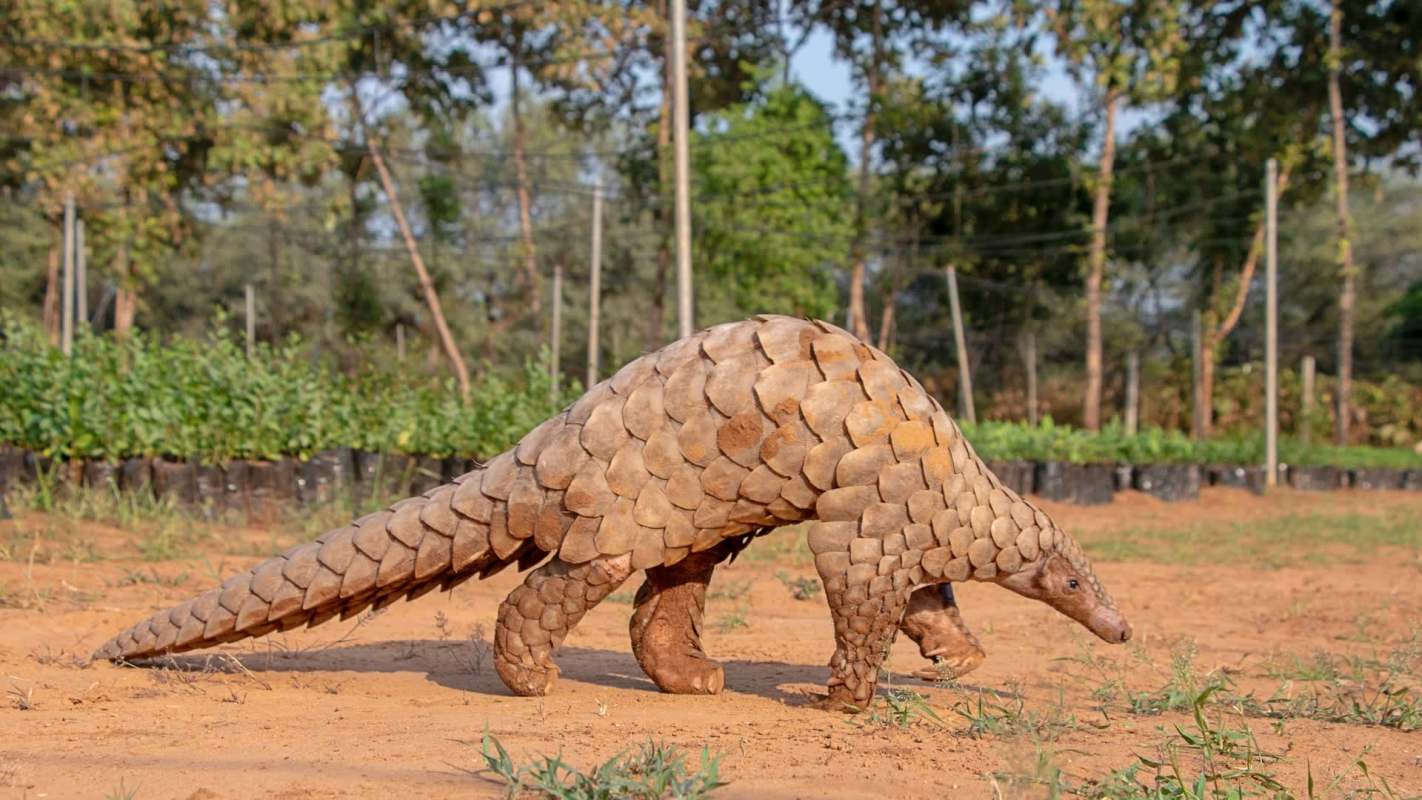
For generations, some villagers in northeastern India viewed pangolins as bad omens that weren't worth any protection. Now, one community in Nagaland living along a major wildlife trafficking corridor is moving to save them instead.
What's happening?
According to Mongabay, Nagaland's Sangtam Naga community has passed a resolution banning pangolin hunting in 42 villages — a potentially significant shift in a region where people have hunted and trafficked the elusive mammals for a long time.
"Our forefathers would say that if a pangolin enters a house, it was considered a bad omen or curse," said L. Kipitong Sangtam, a resident of Amahator village in Kiphire district. "In the past, if someone encountered a pangolin, they would try to catch and kill it, sometimes by digging it out of its burrow."
Earlier this year, the United Sangtam Likhum Pumji, the apex tribal body of the Sangtam Naga community, approved the community-led ban in Kiphire district, near the porous India-Myanmar border. The district lies within the Indo-Myanmar biodiversity hotspot and has been identified as an important route for illegal wildlife trade.
That is especially significant because pangolins are the world's most trafficked mammal — global pangolin seizures topped 530,000 from 2016 to 2024, according to Mongabay. In India alone, more than 1,000 were involved in illegal trade between 2018 and 2022.
Although India's Wildlife Protection Act prohibits pangolin hunting, customary law and community-led governance in many districts complicate enforcement in Nagaland. In practice, that means a village-backed ban can carry more force than a distant legal provision.
TCD Picks » Quince Spotlight
💡These best-sellers from Quince deliver affordable, sustainable luxury for all




Why does pangolin protection in Nagaland matter?
Pangolins play an important role in maintaining healthy ecosystems, particularly in farming and forested landscapes, according to Mongabay. They consume large numbers of insects, including termites and other pests that can damage crops, wood, and bamboo — resources many families depend on for their livelihoods.
The timing matters, too. Experts say demand for pangolin scales has fueled illegal trade. This is because some people wrongly believe they have medicinal value, as Araluen "Azza" Schunmann, director of the Pangolin Crisis Fund, told Mongabay. Even as international demand shifts, localized hunting for meat, small-scale use, and ornaments remain concerns in parts of northeast India.
What's being done?
Rather than relying only on top-down enforcement, conservationists are working through village councils and customary courts. Mongabay reported that, under the Sangtam resolution, local councils will enforce the ban. Customary systems that residents already recognize and use will address violations.
The initiative builds on a similar model in neighboring Manipur, where a tribal body imposed a pangolin hunting ban across 252 villages with support from the Wildlife Trust of India. WTI officials said the response there improved gradually after sustained outreach.
In Nagaland, the outreach has emphasized practical benefits rather than payouts. According to Mongabay, WTI staff said communities are being asked to protect pangolins for five to 10 years to give the animals time to recover.
The idea is to make it more difficult for outside traders to operate by reducing hunting at the village level.
"Pangolins are resilient," said Schunmann. "So while the situation is serious, we remain optimistic that, given space and protection, pangolins have a real chance of recovery over time, even in high-pressure regions."
Sangtam expressed similar confidence to Mongabay: "We are confident that the ban will be successful because the villagers have understood and agreed to protect the species."

Get TCD's free newsletters for easy tips, smart advice, and a chance to earn $5,000 toward home upgrades. To see more stories like this one, change your Google preferences here.







