


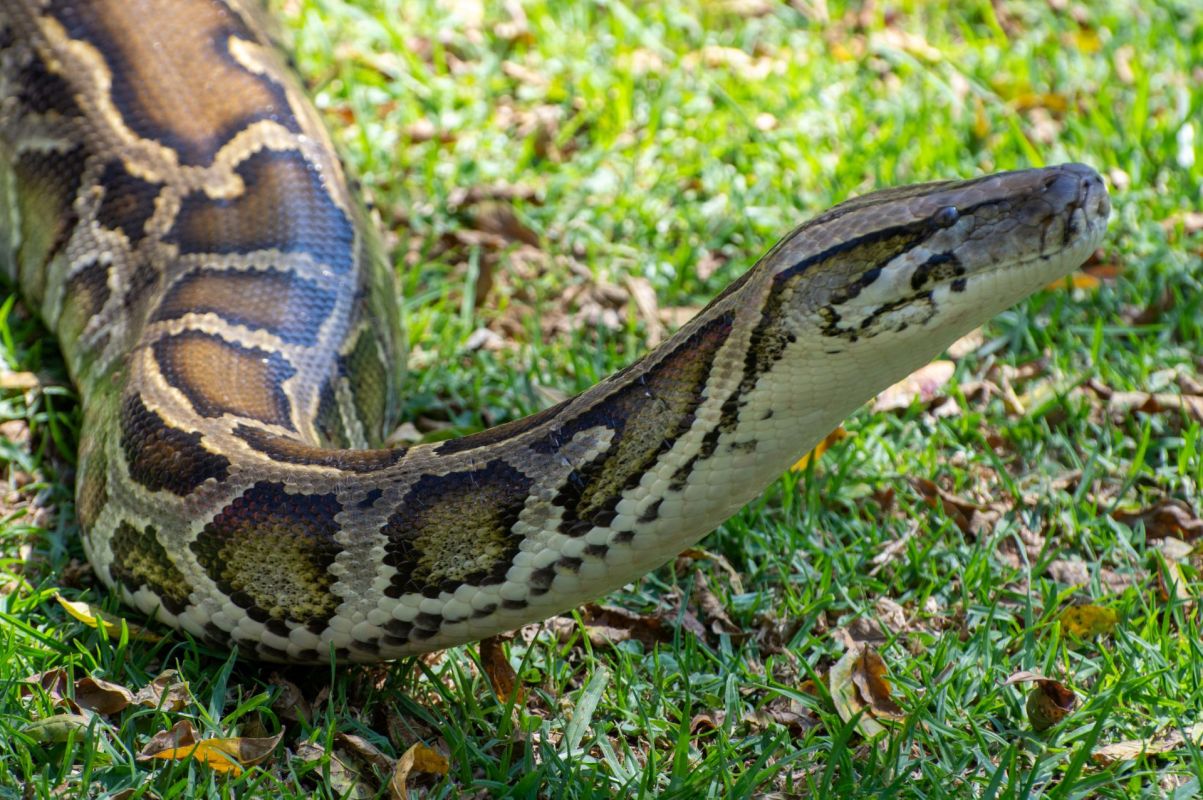
Scientists in the Everglades are still working to outsmart Burmese pythons, one of the region's most destructive invaders.
WLRN detailed how University of Florida researchers used radio-tagged "scout" snakes to help locate other pythons hidden deep in the grass. This strategy could make future removals faster and more effective.
Researchers with the school's Croc Docs Wildlife Research Lab headed into the Everglades to track non-native Burmese pythons using a mix of VHF (very high frequency signals) and GPS telemetry. Their goal was to relocate a snake they had already tagged, then add another tracker to gather more detailed data on its movements and habitat.
The team, funded by the regional water district and Florida's wildlife agency, does this kind of work about four times a week. On this trip, Rep. Debbie Wasserman Schultz, whose district includes part of the Everglades, joined them.
Instead of finding the original scout snake, the researchers located two "associate" snakes nearby: a large female estimated at 80 to 100 pounds and a smaller male. That was still a win, because reproductive females are especially important to remove. As researcher Melissa Miller explained, one female can carry "up to, like, one hundred eggs."
Burmese pythons are native to Southeast Asia, but in South Florida, where they were introduced through the exotic pet trade, they have become a major ecological threat. In October, the state noted that more than 23,000 have been removed and reported to the Florida Fish and Wildlife Conservation Commission since 2000. The pythons can thrive in many habitats and eat mammals, birds, and reptiles, including native animals central to the Everglades, according to WLRN.
TCD Picks » Quince Spotlight
💡These best-sellers from Quince deliver affordable, sustainable luxury for all




That creates a problem not just for wildlife, but also for people. Florida has spent enormous sums on Everglades restoration, and invasive predators can undermine those gains by disrupting the region's carefully balanced food web.
Wasserman Schultz put it plainly: "If an invasive species ends up upending all the work we did or much of the work we did to rebalance the flora and fauna, then that's a problem for us down the road."
The work also highlights how conservation often depends on long-term public investment. Field searches may look dramatic, but much of the job happens behind the scenes through tracking data, lab analysis, and grant applications.
Researchers have similarly used trackers on raccoons and opossums to locate and remove the snakes.
The snakes caught on this outing will also support additional research, including a UF vet school project studying PFAS, or "forever chemicals," in python bodies. That means each capture can produce several layers of information about the ecosystem.
For everyday Floridians, the story is a reminder that invasive species control is not a one-time fix and that supporting science-based conservation, whether through public policy or local awareness, can help protect both wildlife and restoration investments. It also underscores the importance of keeping wildlife where it belongs and why the response to displaced species remains a long game.
"It's hard in this case," Miller said of euthanizing the snakes, according to WLRN. "The pythons aren't supposed to be here. … But you just have to think of the native wildlife and our native snakes and the greater good you're doing for our native wildlife."

Get TCD's free newsletters for easy tips, smart advice, and a chance to earn $5,000 toward home upgrades. To see more stories like this one, change your Google preferences here.







