


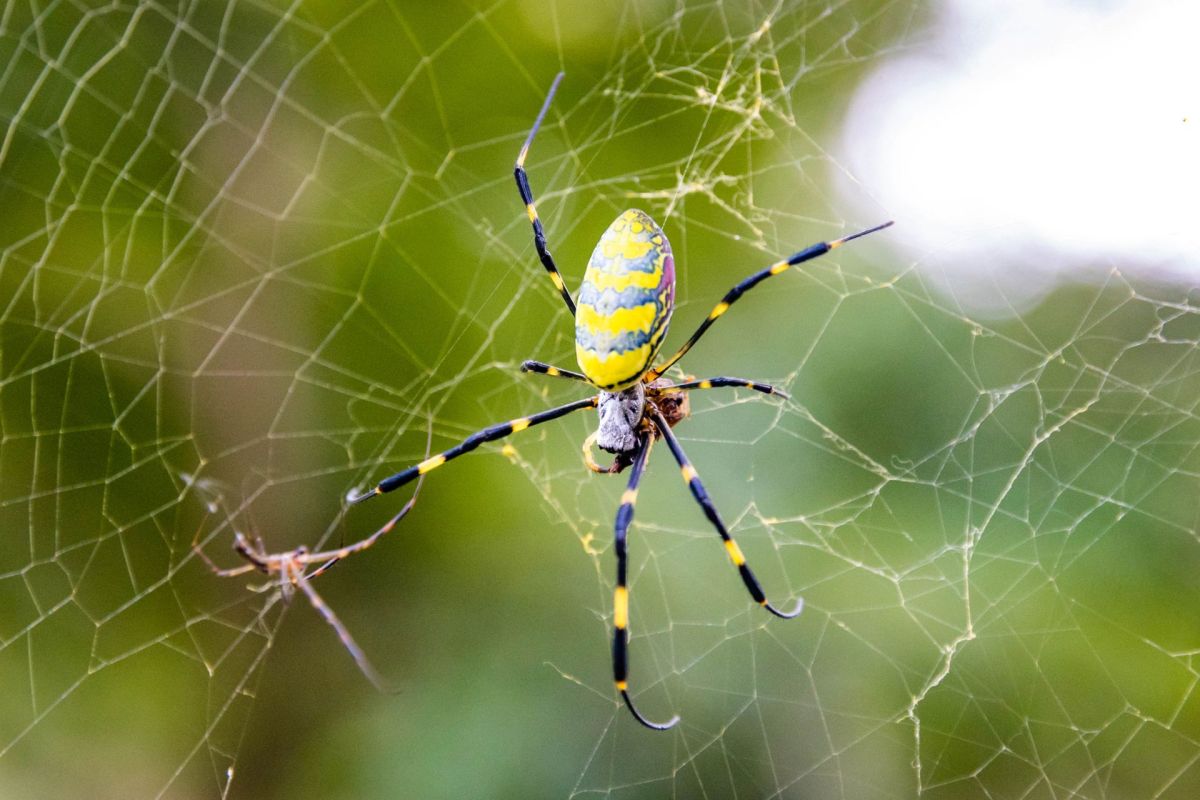
Internet panic has painted Joro spiders as giant, venomous invaders set to overrun the East Coast. But experts say the reality is far less alarming.
While the spiders are spreading, researchers emphasize that the expansion is gradual and that the species poses little risk to people or pets, according to Scientific American.
What makes Joro spiders so noticeable is their appearance: large bodies marked with vivid black-and-yellow coloring and enormous golden webs.
Joro spiders, or Trichonephila clavata, originate from East Asia and were first documented in Georgia in 2013, likely after arriving in the United States through shipping containers.
Since then, millions have become established across the Southeast, and scientists say preventing their continued spread northward may be difficult.
Sightings have also occurred outside their main range, including in Maryland, West Virginia, and Oklahoma. However, experts believe many of those cases were isolated incidents caused by human activity, such as spiders hitching rides on vehicles.
TCD Picks » Quince Spotlight
💡These best-sellers from Quince deliver affordable, sustainable luxury for all




Without that assistance, the spiders spread much more slowly — roughly 10 miles per year.
While young spiderlings can "balloon" through the air on strands of silk, adult Joro spiders cannot fly.
And despite their intimidating online reputation, experts say bites are rare, usually mild, and often less painful than a bee sting.
"They are not going to hurt you; they are not going to hurt your kids; they are not going to hurt your pets," said biologist Erin Grabarczyk, according to Scientific American.
For most households, Joro spiders are expected to be more of a nuisance than a danger.
The larger concern is ecological. Researchers still do not know whether Joro spiders could outcompete native species or significantly alter local food webs.
So far, though, there are some reassuring signs. The spiders do not appear interested in eating monarch butterflies because the insects carry toxins that make them unappealing prey.
Scientists also believe the spiders could provide one potential benefit. If Joro spiders begin overlapping with spotted lanternflies, an invasive species known for damaging crops, they may help control those populations.
Researchers continue monitoring where the spiders appear and what they eat, with community-science projects such as Joro Watch helping track sightings.
That kind of monitoring could become increasingly important as the species expands beyond the Southeast in the coming years.
Scientists are also trying to correct public misconceptions about the spiders. One recent study found that Joro spiders are unusually timid, often freezing when stressed rather than attacking.
That matches field observations from students who have reached directly into the spiders' webs without being bitten.
For homeowners, experts say the message is simple: Do not panic, and do not assume the spiders need to be killed on sight.
Unlike spotted lanternflies, Joro spiders are not currently the target of widespread extermination efforts.
If one appears in your yard, researchers recommend giving it space, avoiding its web, and leaving it alone. Because adults often remain in the same spot for months, scientists say the spiders can provide an "unprecedented educational opportunity" for children and adults to observe spider behavior up close.
"Give it a name. Show your kids that spider. Show them what spiders do," said scientist Andy Davis, according to Scientific American.

Get TCD's free newsletters for easy tips, smart advice, and a chance to earn $5,000 toward home upgrades. To see more stories like this one, change your Google preferences here.







