


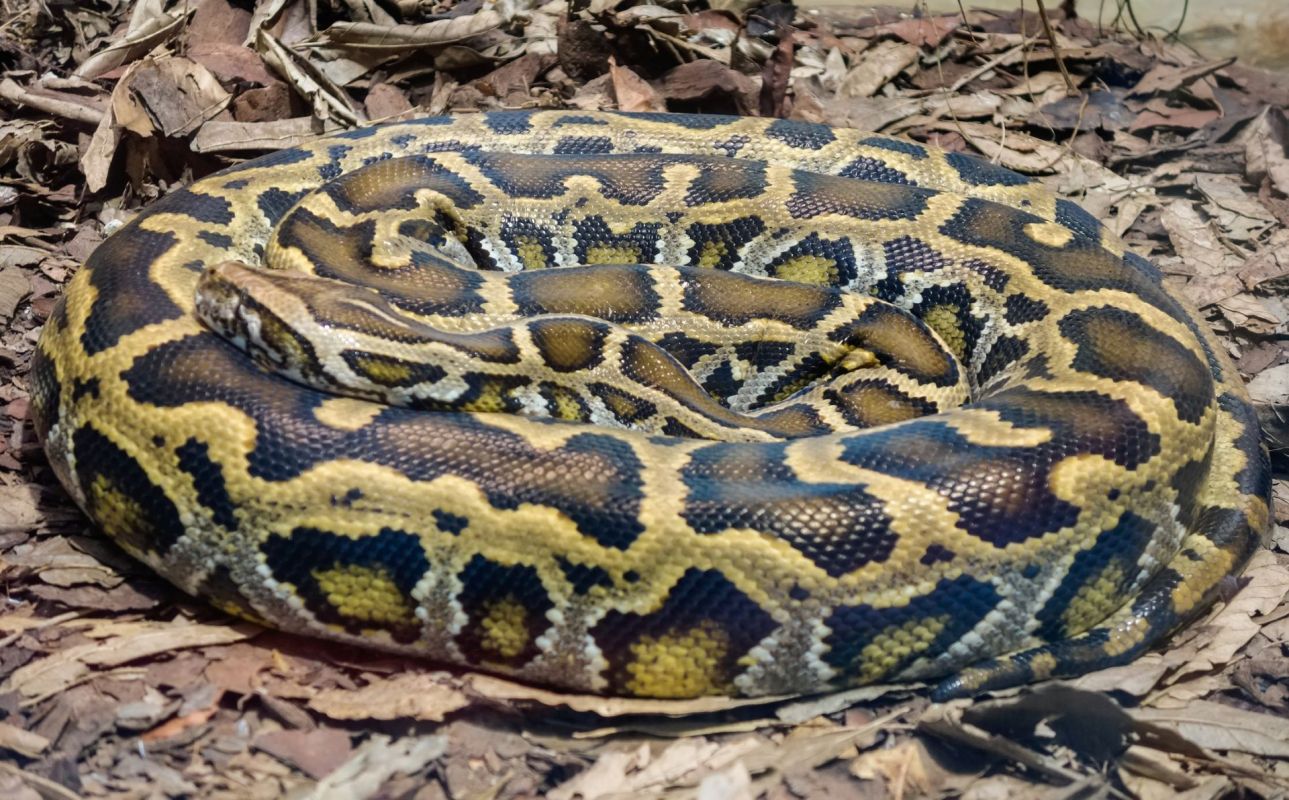
A prospective Burmese python owner was met with a wave of blunt warnings online after asking whether it would be safe to adopt the snake while living alone — and whether a taser could stop it in an emergency.
The response in the comments was clear: no and no. As one commenter put it, "A taser will only make them constrict worse."
What's happening?
In a Reddit post, a snake owner said they were considering taking in a re-homed Burmese python described as friendly and "on the small side." The person said they had experience with several smaller snakes, including ball pythons, a corn snake, and a roughly 6.5-foot boa they had handled alone while volunteering with a reptile rescue.
Still, they had reservations. According to the original Reddit post, they wanted to know both whether solo Burmese python care was actually safe and whether some kind of stun device or sedative could end a constriction episode without harming the snake.
Commenters overwhelmingly told them not to move forward.
"It's never safe to handle a snake that big with no one around in case of emergency," one person wrote. Another said the phrase "2-person snake" exists for a reason. Others emphasized that even a calm, socialized Burmese python can become dangerous if it is startled, stressed, or simply trying to stabilize itself with its body weight.
TCD Picks » Quince Spotlight
💡These best-sellers from Quince deliver affordable, sustainable luxury for all




One commenter who said they had worked with large constrictors professionally warned that these snakes do not need to view a person as prey to cause life-threatening harm. Another shared a story about needing four people to help free them after a feeding-related mistake with a large snake.
The takeaway from the discussion was straightforward: As one commenter in the Reddit thread suggested, if a person is already thinking about emergency gear like a Taser, that is a sign they should not be handling that snake by themselves.
Why is Burmese python ownership concerning?
The most immediate concern is human safety. Burmese pythons are incredibly powerful animals, and even nonaggressive behavior can become dangerous when a snake is large enough to anchor itself around a person's neck, chest, or arms. That can put owners, family members, and even emergency responders at risk if something goes wrong.
There is also a broader issue. Giant constrictors are often sold or re-homed into situations that are not equipped for their long-term care. These snakes can require massive enclosures, costly veterinary care, specialized handling protocols, and backup help during feeding, cleaning, transport, and medical treatment. When owners become overwhelmed, animals can end up neglected, surrendered, or worse, released into the wild.
That has consequences for entire communities and ecosystems.
When exotic pet ownership outpaces preparation, it does not just create a personal safety risk — it can strain rescues, threaten native species, and make it harder to build healthier environments for both people and wildlife.
What can I do to help Burmese pythons and native wildlife?
For would-be owners, the most responsible step is to be honest about experience, housing, cost, and safety support before taking in a giant constrictor. If a snake requires multiple handlers to manage safely, that needs to be part of the care plan from the beginning.
Commenters generally recommended never handling a large constrictor alone; working with a reputable rescue, herpetological society, or experienced mentor before adopting; making sure proper enclosure space, transport equipment, and reptile vet access are already in place; avoiding impulse re-homing decisions based on temperament alone; and never releasing unwanted exotic pets into the wild.
People who want to help without taking on a giant snake themselves can support reptile rescues, donate to invasive-species response efforts, or volunteer with organizations that educate owners about responsible care. In places where Burmese pythons have already become an ecological threat, local removal programs and pet amnesty initiatives can also help reduce harm.
Sometimes the safest and most compassionate choice is to not bring the animal home at all.

Get TCD's free newsletters for easy tips, smart advice, and a chance to earn $5,000 toward home upgrades. To see more stories like this one, change your Google preferences here.







