


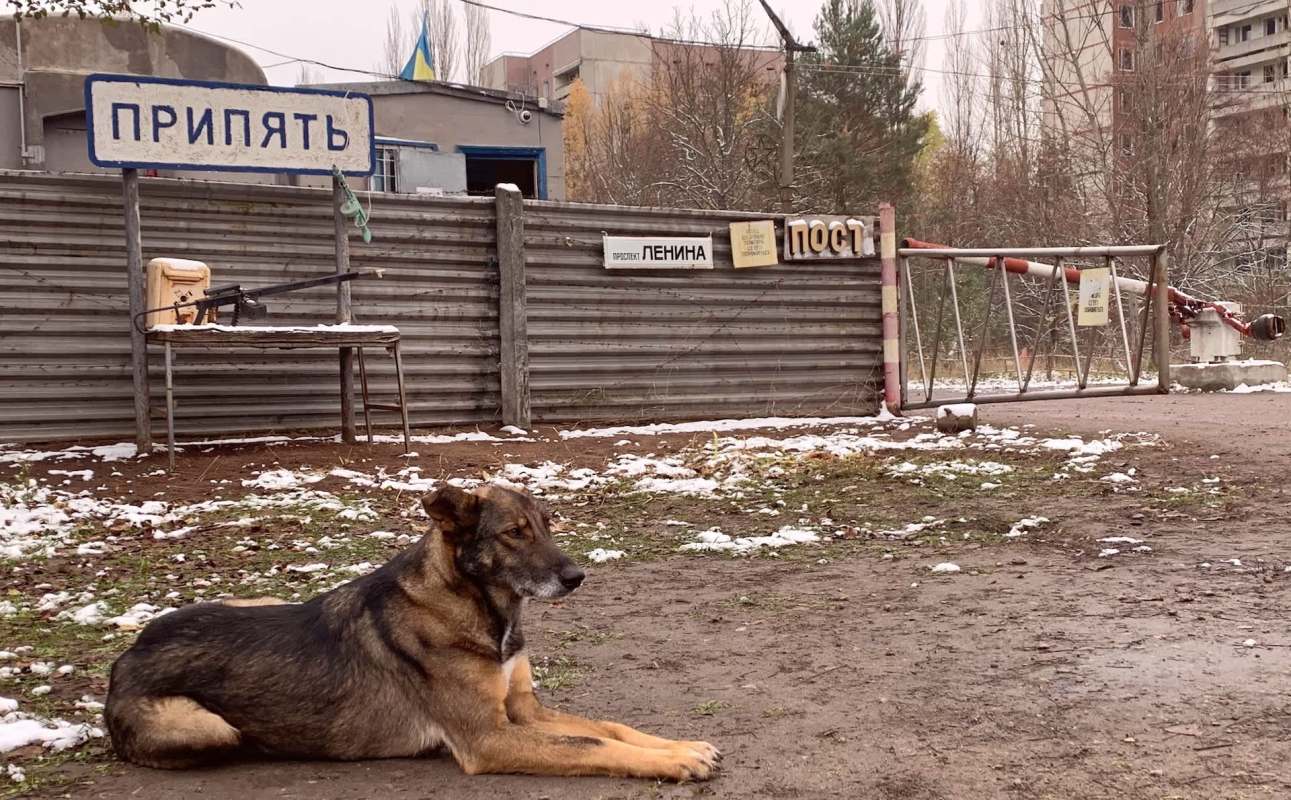
Forty years after the Chernobyl nuclear disaster, one of the region's most unexpected survivors is a population of free-roaming dogs that may offer insight into how life adapts in contaminated environments.
What's happening?
Researchers said dogs living inside and around the Chernobyl Exclusion Zone in northern Ukraine appear genetically distinct from nearby dog populations, raising the possibility that long-term radiation exposure has shaped their evolution, according to Popular Mechanics. However, scientists also caution that the evidence remains far from definitive.
The story traces back to 1986, when Reactor 4 at the Chernobyl Nuclear Power Plant exploded, spreading radiation across the region and forcing a rapid evacuation.
In the decades since, people have largely stayed away from much of the exclusion zone, an area roughly the size of Yosemite National Park. Wildlife, meanwhile, has moved in. Wolves, birds, insects, horses, and feral dogs have all been found living there, with many of the dogs believed to be descendants of pets left behind during the evacuation, per Popular Mechanics.
In a 2023 study published in Science Advances, researchers from the University of Southern California and the National Human Genome Research Institute analyzed the DNA of 302 feral dogs living in or around the zone.
They found that dogs near the power plant were genetically different from those living about 10 miles away in Chernobyl City. That separation is notable because it suggests the groups were shaped by different pressures, though the study did not prove radiation was the cause.
TCD Picks » Quince Spotlight
💡These best-sellers from Quince deliver affordable, sustainable luxury for all




Why does the distinction matter?
The uncertainty is significant because scientists have long examined whether radiation can accelerate evolution, and Chernobyl has become a major natural laboratory for that question.
Past research found that Eastern tree frogs in the zone were more commonly black, a shift researchers linked to melanin that may help counter radiation. A 2026 paper on wolves also reported immune-related genetic clues that the authors interpreted as possible evidence of radiation-linked selection, as noted by Popular Mechanics.
However, the picture became more complicated in 2024, when researchers from North Carolina State and Columbia's Mailman School of Public Health in New York published a follow-up study in PLOS One.
After comparing Chernobyl dogs at the chromosomal, genomic, and nucleotide levels, they found no signs that elevated mutation rates were driving the animals' genetic differences. In other words, the dogs do appear genetically distinct, but scientists still cannot say radiation caused those changes.
What's the bigger picture?
That distinction carries broader implications for how people understand environmental recovery.
Chernobyl is often cited as evidence that wildlife can flourish in radioactive landscapes, but some experts argue the simpler explanation is that animals returned because humans left. Even so, the dogs remain valuable to researchers because they offer a rare opportunity to compare mammals living in a contaminated environment with closely related populations nearby.

Get TCD's free newsletters for easy tips, smart advice, and a chance to earn $5,000 toward home upgrades. To see more stories like this one, change your Google preferences here.







