


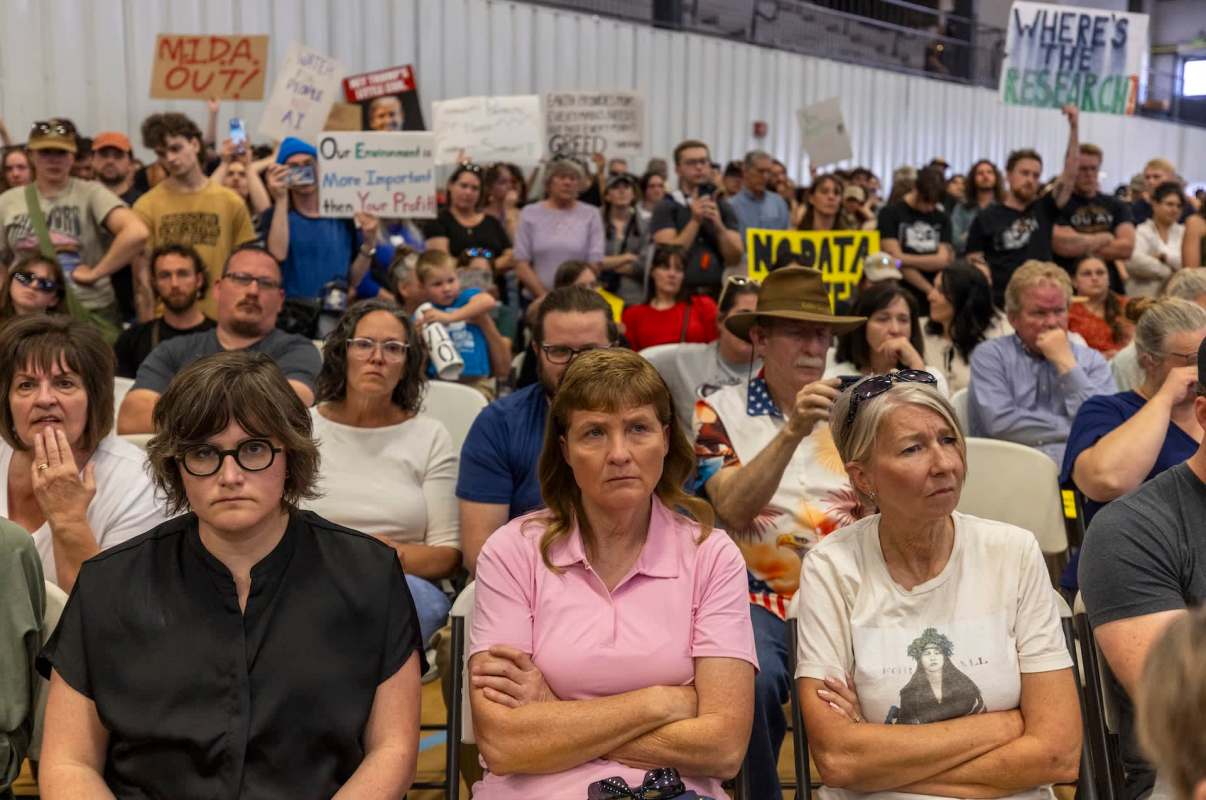
A proposed hyperscale data center in northern Utah is drawing scrutiny for reasons beyond its enormous power appetite. The Salt Lake Tribune reported that researchers now say the project could send enough waste heat into Hansel Valley to meaningfully reshape the local landscape and nearby ecosystems.
The development, called the Stratos Project, is planned for Box Elder County and is backed by developer and "Shark Tank" investor Kevin O'Leary. Supporters say the site could eventually need 9 gigawatts of electricity — more than twice Utah's current statewide consumption — but critics argue the bigger issue may be what happens after that power is used.
Robert Davies, a physics professor at Utah State University, told the Tribune that he began running rough calculations to better understand the project's scale and was shocked by the outcome.
In his view, the facility would not only consume 9 gigawatts of power, but could also release another 7 to 8 gigawatts as waste heat. Because the heat would remain concentrated in Hansel Valley rather than being spread across homes, roads, and businesses, Davies figured the project would amount to roughly a 16-gigawatt thermal load in that local environment.
He said that would be the "equivalent of about 23 atom bombs' worth of energy dumped into this local environment every single day."
According to the Tribune's reporting on Davies' estimate, that heat could increase daytime temperatures in the valley by about 5 degrees Fahrenheit and nighttime temperatures by as much as 28 degrees.
TCD Picks » Quince Spotlight
💡These best-sellers from Quince deliver affordable, sustainable luxury for all




Ben Abbott, an ecology professor at Brigham Young University, told the Tribune after reviewing the estimates that the shift could move the area toward desert-like conditions, increasing evaporation, harming wildlife and vegetation, and lowering soil fertility. Abbott said that Hansel Valley could become another source of dust pollution for the Wasatch Front as the Great Salt Lake continues to shrink.
There are also major unanswered questions about how the project would be powered and cooled. The Tribune reported that Box Elder County commissioners approved the project Monday without taking public comment, even as environmental concerns remain unresolved. Davies said he has not seen evidence of a working system at the promised scale.
He believes developers may be considering a newer natural-gas technology that produces hot water as a byproduct, creating yet another cooling challenge in an already hot, dry region. He estimated that air-cooling the water could require roughly 400 acres of large industrial fans. Another option would be to pipe the hot water underground so the aquifer cools it.
"But again, it's a radical amount of heat," Davies said.
Utah leaders have promoted the project, but experts quoted by the Tribune say concentrating that much heat, noise, and industrial activity in one place could cause lasting ecological harm, especially near the already-stressed Great Salt Lake watershed.
"I suspected it would not be good," Davies said. "What I've found is it's so much worse than I even thought it would be." Abbott was even more direct, saying, "This would absolutely change the landscape."

Get TCD's free newsletters for easy tips, smart advice, and a chance to earn $5,000 toward home upgrades. To see more stories like this one, change your Google preferences here.






