


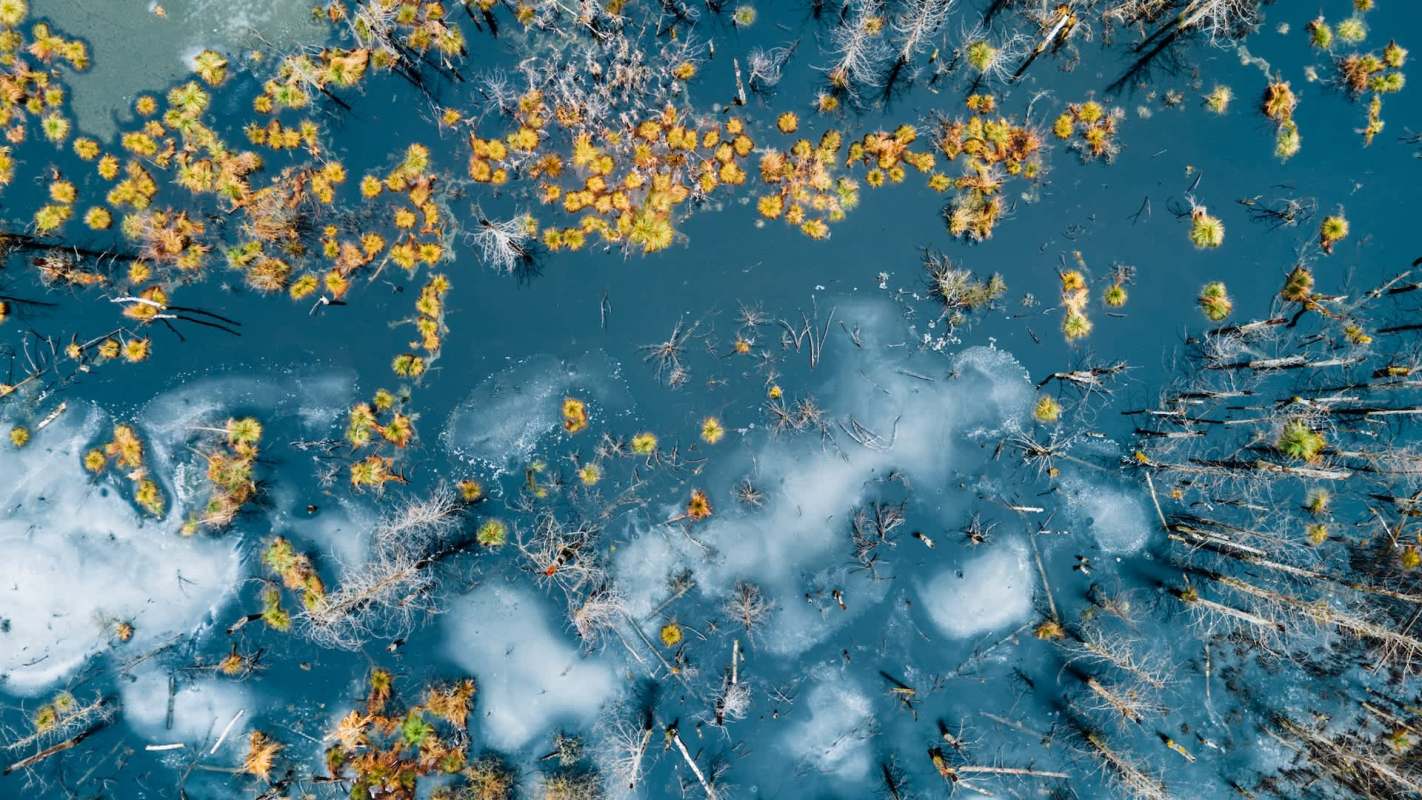
Each year, the Arctic cycles through thawing and freezing cycles across the seasons. As the Arctic continues to warm at an unprecedented rate, the thawing cycle is lasting longer than ever before. But new research relayed from Queen Mary University of London is challenging previous findings about what, and how much, this thawing unearths.
An international team of researchers, including scientists from Queen Mary University of London, found that roughly half of the microorganisms in High Arctic soils were still dormant after months of thaw. They published their findings in the journal mSystems.
The finding challenges previous findings that warming uniformly ramps up microbial activity from thawing permafrost and the ecosystem below. It also challenges how much carbon gets released from the melt.
To investigate what really happens underneath the permafrost, the team collected soil from Svalbard, an archipelago between Norway and the North Pole.
They then incubated the soil to mimic the seasonal thaw. Using DNA stable isotope probing, they were able to track which microbes actually grew as liquid water became available.
The research suggests that as frozen soil thaws, it does not simply flip a biological "on" switch. Instead, some microbes started growing within days, others only after several weeks, and many stayed inactive for the full 98-day experiment.
TCD Picks » Quince Spotlight
💡These best-sellers from Quince deliver affordable, sustainable luxury for all




In other words, thawing soil did awaken organisms trapped beneath the ice, but only partially, and on very different timelines.
The team also found that the active community was not limited to microbes breaking down organic matter.
Researchers found predatory and epibiotic bacteria, microbes that feed on or live attached to other microorganisms, suggesting thaw triggers a more complex food web underground.
They also detected methane-oxidizing microbes that did not become active until longer thaw periods had passed, hinting that late-season soil activity may play a bigger role in controlling methane than previously understood.
This research is critical and could improve how scientists forecast climate risks.
Arctic soils hold close to one-third of the world's soil carbon, making the region a major climate wildcard as temperatures rise. Climate models that assume a uniform response in microorganisms may miss important shifts in greenhouse gas emissions.
Better predictions can help inform everything from climate policy to local adaptation efforts in regions already being hit hard by warming. The finding also reinforces why protecting natural systems and cutting pollution now remains so urgent.

Get TCD's free newsletters for easy tips, smart advice, and a chance to earn $5,000 toward home upgrades. To see more stories like this one, change your Google preferences here.







