


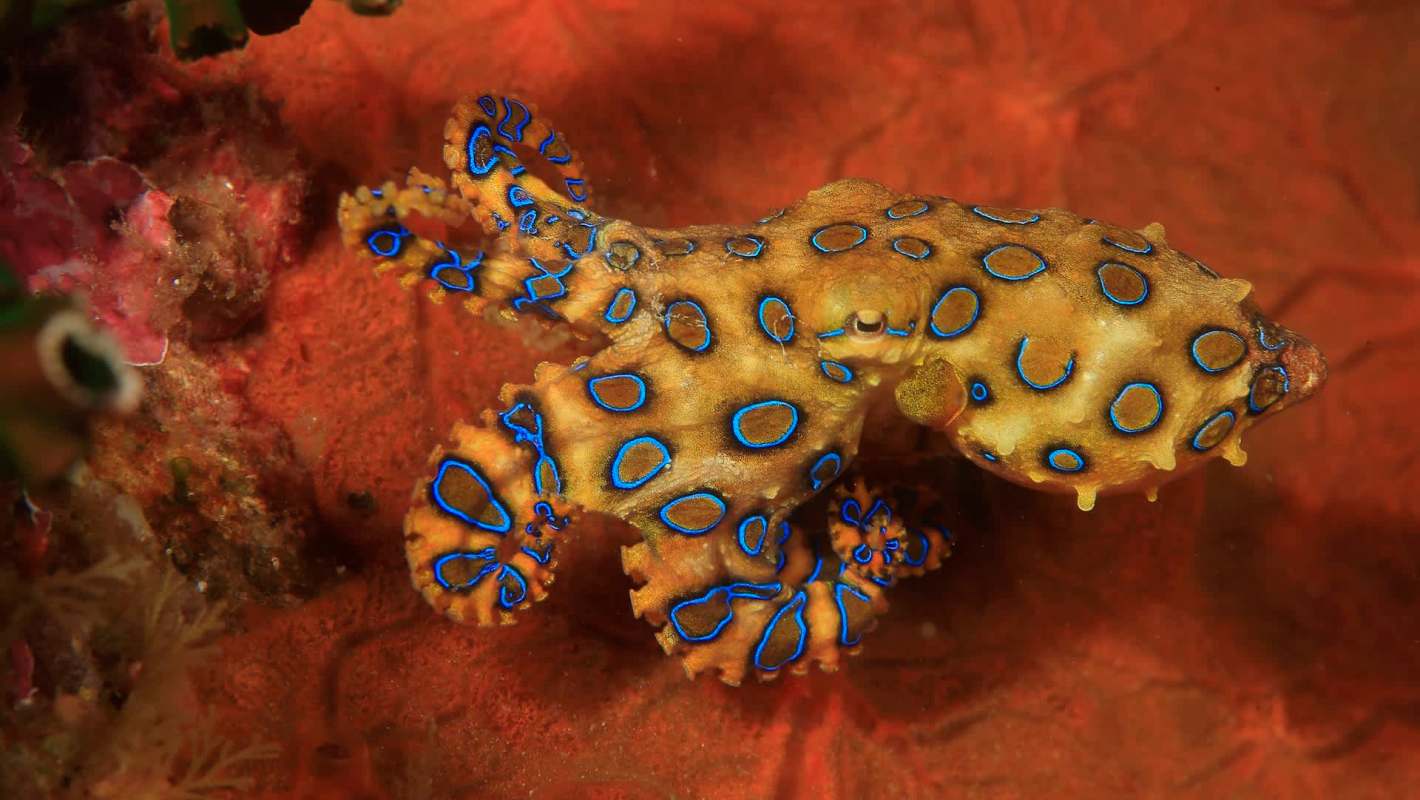
The tiny blue-ringed octopus may seem ordinary in the ocean, but its size can be quite deceiving, as it theoretically has enough venom to kill 26 people in its golf-ball-sized body.
According to Forbes, the tiny cephalopod, which is no larger than 22 centimeters (8 inches) and is the world's most venomous cephalopod, per the Guinness World Records, lives in the Indo-Pacific, most commonly found around Australia and parts of Southeast Asia.
When unbothered, they are yellow or beige, but when agitated, they flash iridescent blue rings as a caution to keep a safe distance if you value your life.
A 1989 study published in Marine Biology showed that, even more remarkable than the toxicity of the venom, the octopus does not produce its own toxin, tetrodotoxin (TTX). Instead, the octopus produces its venom with the assistance of bacteria that live within its body.
A 2007 study published in Toxicon noted that the TTX isn't confined to a single gland or delivery system, as in a jellyfish's stinger, but is spread throughout the octopus's body. This means that the animal's total toxin load is substantial — enough to kill 26 people — even though the individual dose it usually delivers is small.
The evolution of developing the potent toxin holds benefits that growing larger or developing exterior protective structures — both of which would limit the octopus's mobility and ability to deftly navigate the reef ecosystems they inhabit — do not.
TCD Picks » Quince Spotlight
💡These best-sellers from Quince deliver affordable, sustainable luxury for all




A 2025 study in Current Biology noted that male blue-ringed octopuses also sometimes use the toxin during mating to subdue females, reducing the common risk of being cannibalized by much larger females.
The octopus is typically found in shallow reefs and tidepools, so humans could encounter one, and its small size means it can be accidentally stepped on or disturbed. As with all wildlife, you should never touch anything that you encounter, as you may not know how dangerous it may be.
Many, like the cone snail and other toxic marine life, hide in plain sight, too. In the case of many, like the blue-ringed octopus, its bite is bigger than its bark.

Get TCD's free newsletters for easy tips, smart advice, and a chance to earn $5,000 toward home upgrades. To see more stories like this one, change your Google preferences here.







