


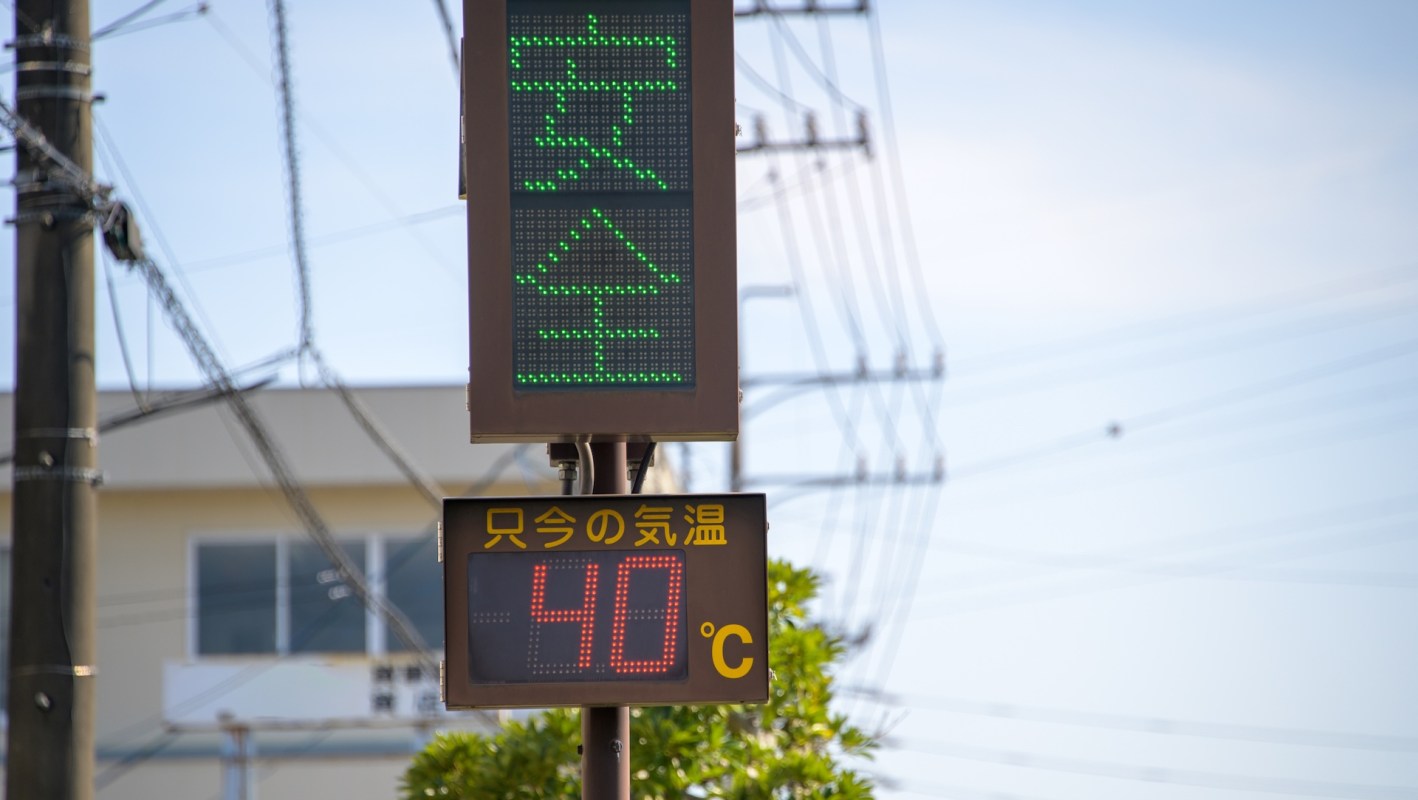
Scorching temperatures in Japan are so bad that the nation's weather agency felt the need to come up with a new term for the hottest of days.
What's happening?
The Japan Meteorological Agency announced that days with temperatures exceeding 40 degrees Celsius (104 degrees Fahrenheit) will now be designated "cruelly hot," or "kokusho-bi" in Japanese, as Phys.org noted.
This newly coined phrase is intended to inform the public about necessary precautions during extreme conditions.
In a JMA public survey, 478,000 participants made their voices heard, selecting "cruelly hot" as the top choice. Other options ranged from "sauna day" and "stay at home day" to "super-extremely hot day," the runner-up.
This classification adds to existing JMA terminology, which includes "summer day" and "extremely hot day" for the lower thresholds of 25 and 35 degrees Celsius (77-95 Fahrenheit).
Why is surging heat in Japan and elsewhere concerning?
Unfortunately, the cruelly hot term's usage may soon become a regular part of local weather lexicon as temperatures continue to rise.
TCD Picks » Quince Spotlight
💡These best-sellers from Quince deliver affordable, sustainable luxury for all




Last year, Japan set several records for heat during July. That was the hottest month recorded in the record-keeping era, which began in 1898.
Japan was far from alone in the trend of rising global temperatures, with 2025 finishing as the third-warmest year on record, trailing only 2023 and 2024. Should global temperatures keep increasing, these extreme days are expected to recur more frequently and with troubling consequences for public health.
Studies show that extreme heat is connected to a range of concerning conditions, including heat stroke, dehydration, and even death. It also can come with major negative economic consequences.
Pollution from energy sources such as coal, oil, and gas is contributing to rising temperatures and intensifying heat waves. While Japan is taking steps to increase awareness among the public for the hottest of days, people may still face dangerous conditions with increasing regularity if trends hold.
What's being done about extreme heat in Japan?
JMA's move encourages the public to be extra careful in these moments. Residents are best off staying cool indoors and only venturing outside if they must.
Heat mitigation strategies such as planting trees to create shade and easing the heat island effect can help in urban areas. Transitioning to clean energy sources such as solar and wind power, or even fusion one day, can help cut down on human-generated pollution that plays a role in heating the planet.

Get TCD's free newsletters for easy tips, smart advice, and a chance to earn $5,000 toward home upgrades. To see more stories like this one, change your Google preferences here.







