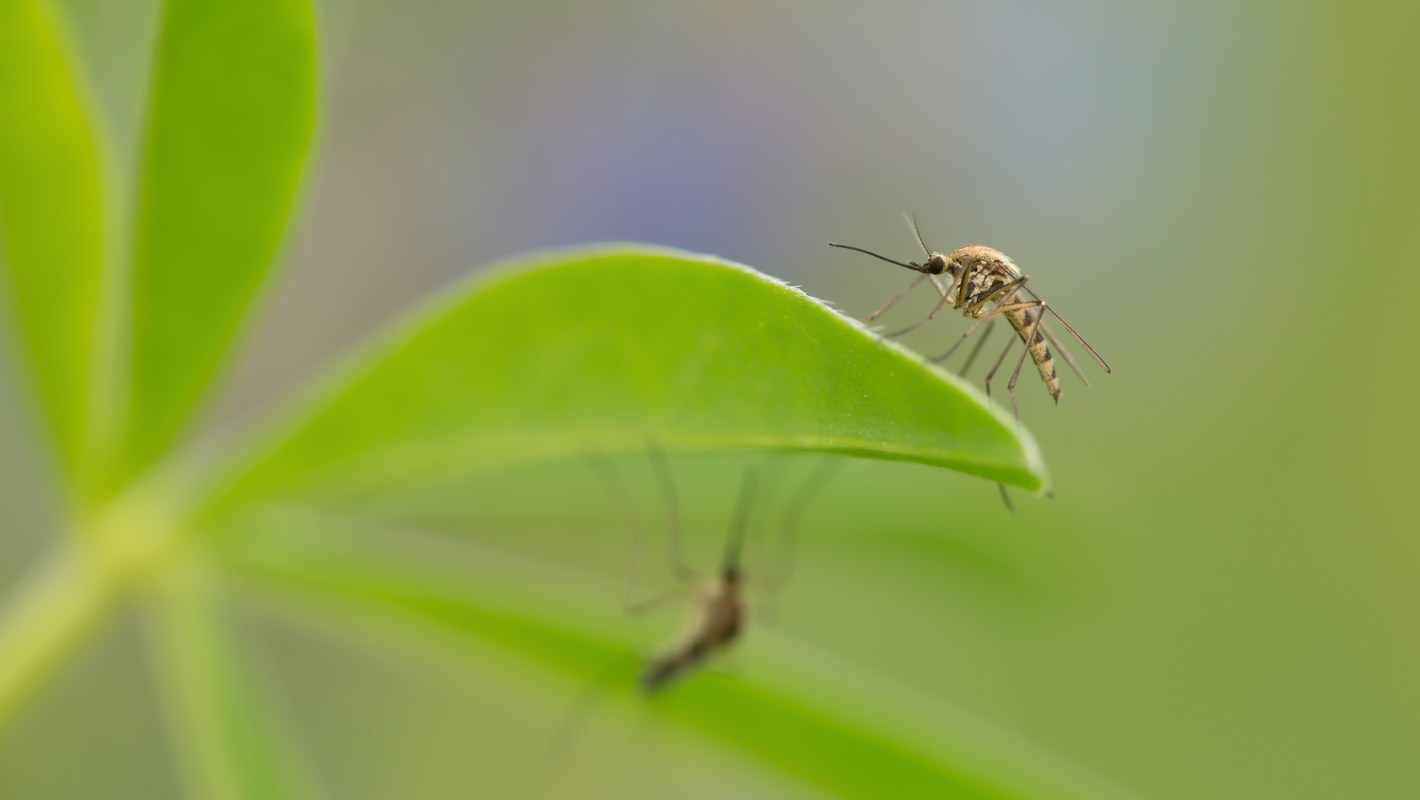
Virginia Tech researchers have been working on a way to combat prolific mosquito swarms for years.
In an April lab report, the experts homed in on a hormone they think could be manipulated to prevent the troublesome and disease-carrying bugs from reproducing.
Limiting mosquito numbers could help to curb human illnesses, including hundreds of millions of cases of dengue, Zika, and other diseases, according to the researchers. The Barcelona Institute for Global Health reported that mosquitoes cause around one million deaths annually.
VT's solution involves disrupting communication between the bug's methoprene-tolerant receptor protein and juvenile hormone, which greatly reduced mosquito egg production in studies.
The breakthrough came when the team discovered that methoprene was serving the role of two receptors, one inside and one outside the cell. Experts originally thought that two different proteins were at work, per the research published in the journal PNAS.
"This allows juvenile hormone to coordinate both rapid and long-term responses, giving mosquitoes a precise way to control reproduction," said VT Professor Jinsong Zhu.
TCD Picks » Quince Spotlight
💡These best-sellers from Quince deliver affordable, sustainable luxury for all




It's part of in-depth research, including video, into how female mosquitoes carefully manage their energy and nutrients during egg production.
"Understanding mosquito biology at the molecular level is essential if we want to develop more effective and environmentally responsible control strategies," Zhu said in the summary.
The VT bug studies also have the potential to reduce the use of harmful pesticides. Mosquitoes can become resistant to traditional treatments that also impact other, untargeted insects.
"Our goal is not just to control mosquitoes, but to find targets that are specific to mosquitoes and reduce impact on beneficial insects," Zhu said.
|
Which of these savings plans for rooftop solar panels would be most appealing for you?
Click your choice to see results and earn rewards to spend on home upgrades. |
 Save $1,000 this year 💸
 As Earth's overheating continues to change ecosystems, disease-carrying species, such as mosquitoes, are making new footholds. The insects have been found for the first time in Iceland, and experts are trying to understand if they can establish a permanent population.
Researchers elsewhere are trying to develop more sustainable pesticides, some including unlikely ingredients, such as human urine. Natural remedies, including lemon balm leaves, are among the plants that can be included in your backyard vegetation to help repel mosquitoes. The right mix of plants can ward off pests while adding habitat and food sources for helpful insects, such as pollinators.
At VT, the experts are continuing to research how the hormone and protein receptors work. It's part of a 10-year project funded by a $3.3 million federal grant, per the release.
"If that process is disrupted, reproduction is reduced," Zhu said, referring to hormone communication. "That makes this system an important point of control we can begin to study more closely."

Get TCD's free newsletters for easy tips, smart advice, and a chance to earn $5,000 toward home upgrades. To see more stories like this one, change your Google preferences here.