


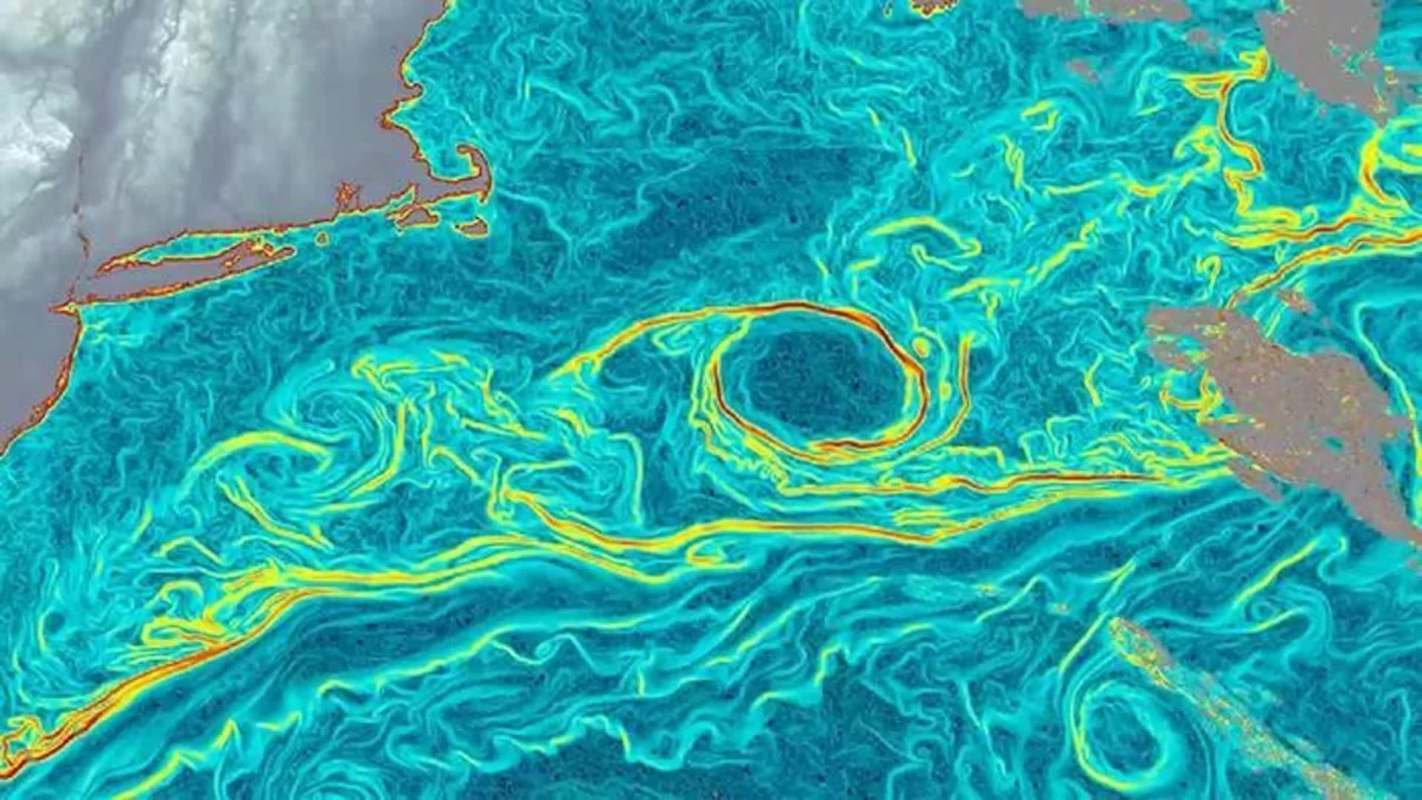
Scientists are turning to artificial intelligence to unearth new insights on ocean currents from weather satellite images.
CNET reported on a study from University of California San Diego that trained an AI tool to map ocean currents. Nature Geoscience published the researchers' findings, which could provide new insight into which currents influence temperature variations across different locations.
"We can now observe small, fast-changing ocean currents from space with much greater detail and frequency than before," Luc Lenain, the study's coauthor, told CNET. "Those currents are important because they help control how heat, carbon, nutrients, and pollutants move through the ocean."
The concept for GOFlow (Geostationary Ocean Flow) emerged when Lenain reviewed thermal satellite images of the North Atlantic Ocean a few years back. Movements caused by large currents, such as the Gulf Stream, can have a major impact on weather conditions.
The researchers then got to work on training AI to measure simulated currents and attribute real-life temperature changes from satellite imagery. GOFlow can now pinpoint which currents are responsible for ocean temperature changes.
The tool's results align with findings from both ship-based and satellite oceanographers but also unearthed more comprehensive results previously only available via computer simulations.
TCD Picks » Quince Spotlight
💡These best-sellers from Quince deliver affordable, sustainable luxury for all




"These kinds of [AI] driven approaches are not replacing physics," Lenain explained. "Instead, AI is helping us extract physical information that is already present in satellite observations, but has been difficult to recover with traditional methods until now."
Indeed, scientists are tapping into AI to fill the gaps in weather forecasting and other areas like conservation, where it can interpret huge swaths of data.
Expanding this approach to ocean currents is a promising new direction for researchers aiming to learn more about their impacts on global conditions. Considering their close connection to weather patterns, these insights could prove invaluable.
One challenge for the tool is cloud cover's interference, which can obstruct satellite views. Future work will involve integrating additional satellite data to address these gaps.
|
Which of these savings plans for rooftop solar panels would be most appealing for you?
Click your choice to see results and earn rewards to spend on home upgrades. |
 Save $1,000 this year 💸
 The researchers plan to make the computer code available to foster further exploration. The hope is that scientists can build on this starting point and continue to glean valuable information.
"I feel like this idea, combining existing infrastructure with AI/Machine Learning techniques, is a fertile ground for future science," one of the study's coauthors, Kaushik Srinivasan, told CNET.

Get TCD's free newsletters for easy tips, smart advice, and a chance to earn $5,000 toward home upgrades. To see more stories like this one, change your Google preferences here.







