


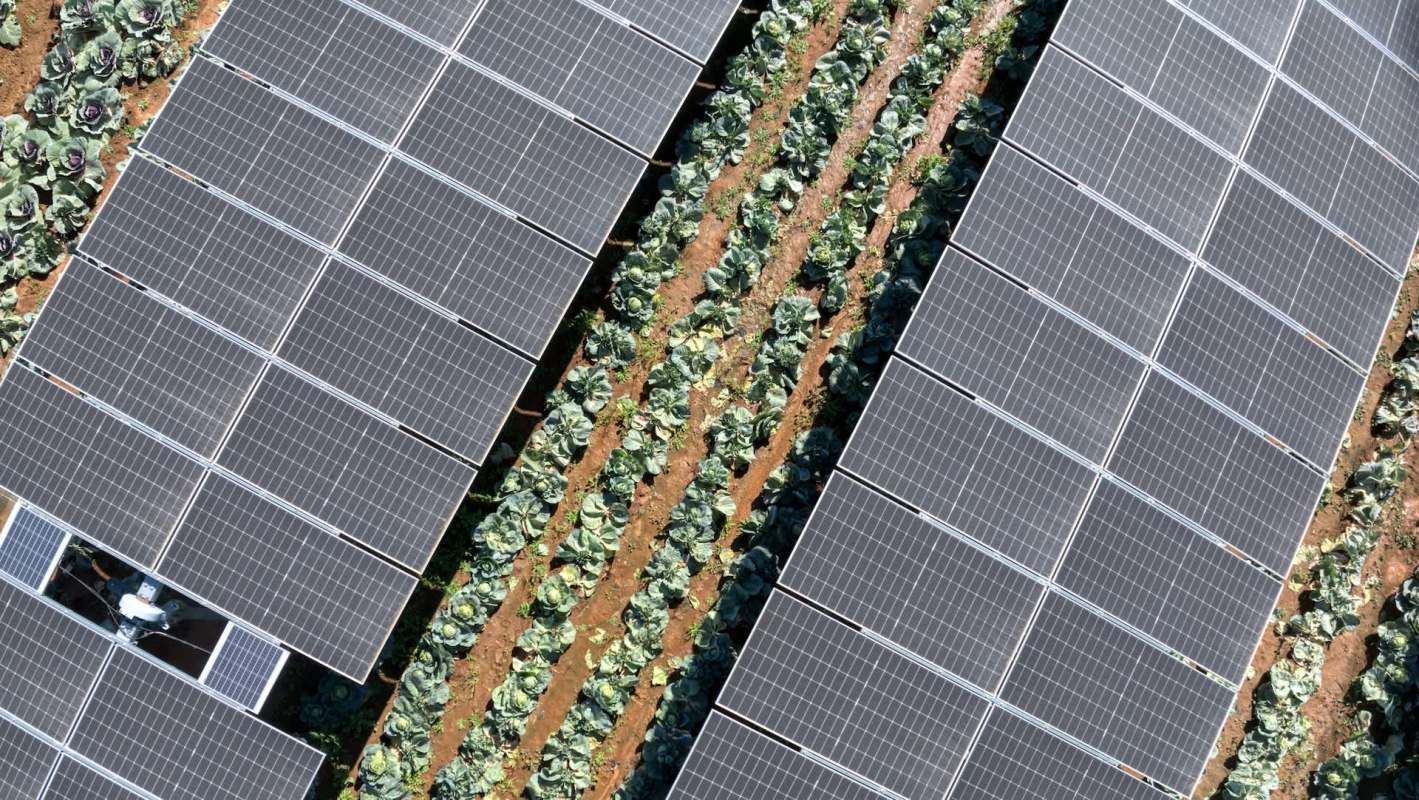
A new study revealed that while there isn't a one-size-fits-all approach for agrivoltaics, finding the right mix for crops can boost productivity and generate clean energy.
PV magazine reported on research from Ontario's Western University that examined the cultivation of turnips under 13 types of solar modules with a variety of properties.
The study was published in the Journal of Cleaner Production and indicated that the right combination of solar panels and turnips could add nearly $36 billion in economic benefit over the system's 25-year lifespan.
"We took a hard look at agrivoltaic turnips and discovered several semi-transparent treatments that resulted in substantially more food while providing solar energy," lead author Joshua M. Pearce explained to PV magazine.
Notably, the researchers found variance on productivity in both energy production and cultivation success when tweaking the transparency and spectral properties. They examined how the panels impacted a number of variables, such as plant height and leaf count.
The modified panels helped regulate heat, optimizing growing conditions. While they landed on a particular model that was most effective for growing the turnips, alternatives were superior for generating energy.
TCD Picks » Quince Spotlight
💡These best-sellers from Quince deliver affordable, sustainable luxury for all




The exercise reinforced that finding the optimal mix for each type of crop will pay major dividends in maximizing the benefits of agrivoltaics.
"Instead of selecting PV modules based solely on energy output or transparency percentage, system designers should also take into consideration how light is delivered to plant canopy — uniformly or non-uniformly — and how this interacts with plant morphology and stress tolerance," the researchers wrote.
The study's findings showed again that the integration of agriculture and solar energy is both feasible and profitable. Pairing solar panels with agriculture has been shown before to increase yields for crops such as olives.
It also has been deployed successfully with benefits for both livestock and farm workers. It generates needed passive income for farmers and more efficiently uses vast strips of land. The clean energy it generates can also reduce reliance on polluting energy sources such as oil and gas.
|
Which of these savings plans for rooftop solar panels would be most appealing for you?
Click your choice to see results and earn rewards to spend on home upgrades. |
 Save $1,000 this year 💸
 The research team said pairing turnips with solar panels is a no-brainer for Canada.
"As the climate warms, stressing even relatively robust crops like turnips, agrivoltaics provides a realistic path to a sustainable food system," Pearce concluded.

Get TCD's free newsletters for easy tips to save more, waste less, and make smarter choices — and earn up to $5,000 toward clean upgrades in TCD's exclusive Rewards Club.






