


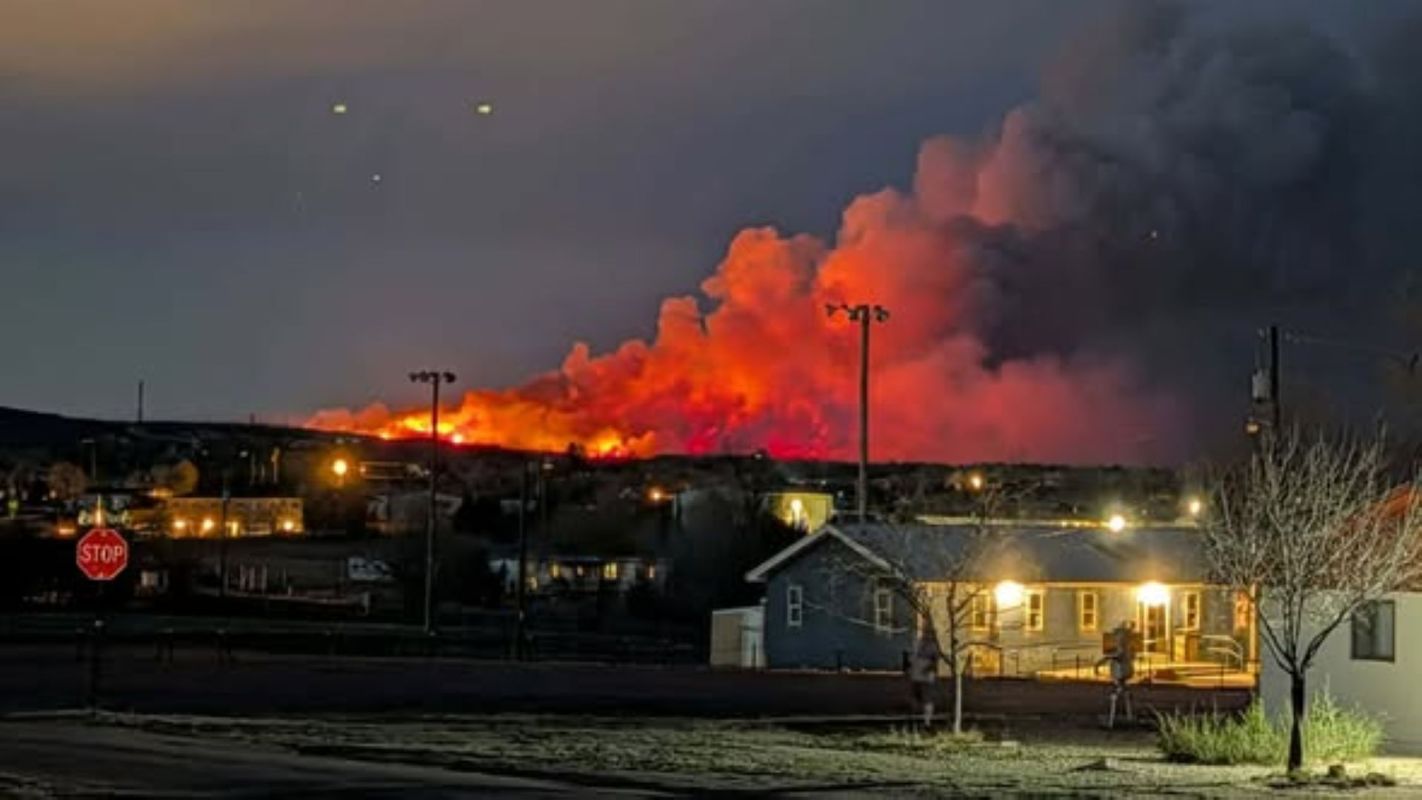
Colorado's wildfire season got off to an early start in March when the 24 Fire consumed at least 7,400 acres on Fort Carson land, caused busy Highway 115 to temporarily close, and forced evacuations, according to KRDO.
What's happening?
Colorado Public Radio reported that the blaze was started on March 18 by a malfunctioning vehicle. Unseasonably warm temperatures resulted in high plumes as crews worked to contain the flames, per the Gazette.
The Western Fire Chiefs Association, which tracks wildfires, reported that it was 96% contained by March 31.
"Mother Nature is not giving us any help," Mykel Kroll, who directs the Fremont County Emergency Management office, said, per CPR. "We really need everybody in our communities to be prepared, have plans in place, and listen to the warnings when they go out."
The advice is timely, as Kroll added that the region is seeing record fire conditions.
Why is this wildfire important?
Colorado's fire season typically runs from May through September, according to the U.S. Bureau of Land Management. And while every out-of-season blaze can't be attributed to the planet's overheating, experts have identified links to worsening fires.
TCD Picks » Quince Spotlight
💡These best-sellers from Quince deliver affordable, sustainable luxury for all




"Reduced snowpack, longer and more severe droughts, and greater evaporative demand mean that fuels are drier and more combustible," according to experts at Penn State. NASA has associated Earth's overheating with increased risks of conditions that increase the risk of extreme floods, droughts, hurricanes, and other severe weather.
USA Facts reported that wildfires aren't necessarily more frequent, but they are burning more land. Since 1983, 2.9 million wildfires have been tracked on 216 million acres. Preliminary data from 2024 indicated that the number of fires and the acreage they burned are above average. Not included in that data is the 2025 Palisades Fire in Southern California that devoured entire communities.
The fires can be deadly and extend beyond immediate safety risks. Experts studying the impact of the California fires said smoke exacerbated other health conditions, making them deadly. Disruptions to the local health care system and mental health impacts are secondary problems, all contributing to hundreds more deaths. As a result, the experts in this study published by JAMA think that the death count could be 440 or more. The tally was originally listed at 31 deaths.
Fighting the fires, and the property damage, can cost billions of dollars, according to the National Interagency Fire Center, making insurance more expensive and even unavailable in certain areas.
|
Which of these savings plans for rooftop solar panels would be most appealing for you?
Click your choice to see results and earn rewards to spend on home upgrades. |
 Save $1,000 this year 💸
 What's being done to help?
Understanding how human activity impacts conditions that make wildfires more favorable can help you take steps to prevent them. Knowing where risks are greatest will provide better judgment about where to live and vacation.
Penn State's report suggested limiting consumptive lifestyles and relying less on burning coal, oil, and gas for energy — fuels that produce heat-trapping pollution — as ways to reduce risks. Healthy forest management is also important, according to the experts.
Kroll had some common sense advice.
"We don't want to flip cigarettes out. We don't want to be dragging our chains when we're towing a trailer. We don't want to be doing burns," the expert told CPR. "Anything that creates a spark this year right now could turn into a catastrophic wildfire."

Get TCD's free newsletters for easy tips to save more, waste less, and make smarter choices — and earn up to $5,000 toward clean upgrades in TCD's exclusive Rewards Club.







