


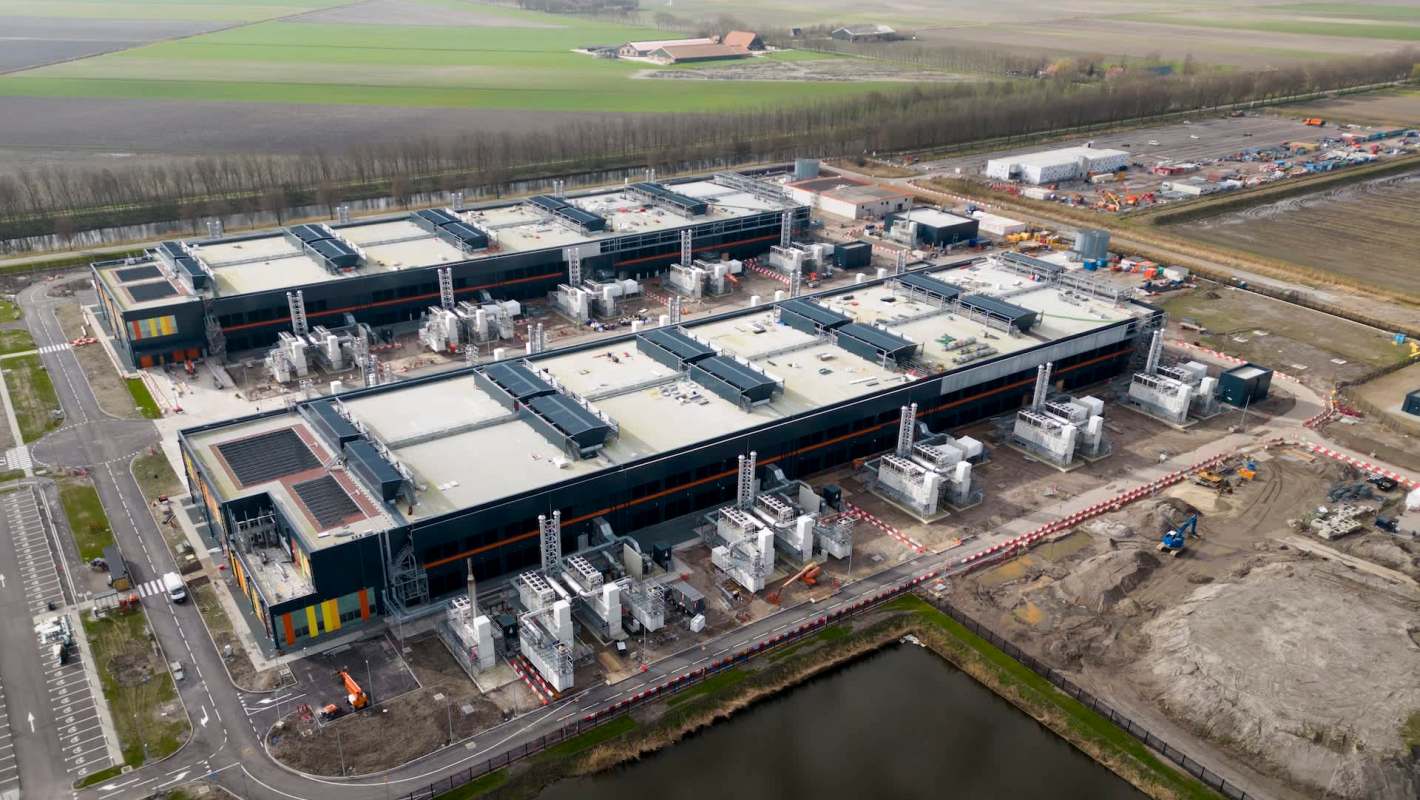
While data centers that power artificial intelligence have received a lot of attention for their massive energy use, one often overlooked impact has been the amount of water they consume.
One group has sounded the alarm on the potential impact that data centers could have on local drinking water supplies.
What's happening?
The Interstate Commission on the Potomac River Basin voiced strong concerns that data center water use could lead to a drinking water shortage in the region.
"The Potomac basin is home to the largest concentration of data centers in the world to date," the ICPRB report said. "While much of the public discussion has focused on electricity demand of data centers, these facilities can also use substantial amounts of water for cooling."
The Potomac River serves as an essential source of drinking water for parts of Washington, D.C., Maryland, and Virginia, providing over 75% of the water used by local utilities.
"Furthermore, it is the sole source of drinking water for Washington, D.C., and Arlington County, supporting over 1 million residents and critical federal services in the National Capital," explained the ICPRB.
TCD Picks » Quince Spotlight
💡These best-sellers from Quince deliver affordable, sustainable luxury for all




The commission warned that, as more and more data centers are built in the region, water shortages could occur. The risk of shortages is particularly high in the hot summer months, when demand for water is often at its peak and river flows are at their lowest.
"This is sort of a perfect storm of conditions, where you have increased water demand by other users, increased water demand by the data centers, and then the river itself is very, very low in the summer," Michael Nardolilli, executive director of the Interstate Commission, told WTOP News.
Why are data centers concerning?
The ICPRB report highlighted that the rapid spread of data centers has increased competition over limited resources.
As AI and cloud-computing services have gained popularity, the construction of data centers has surged worldwide. This has already driven electricity prices higher across the United States.
|
Which of these savings plans for rooftop solar panels would be most appealing for you?
Click your choice to see results and earn rewards to spend on home upgrades. |
 Save $1,000 this year 💸
 As the ICPRB pointed out, data centers could have the same impact on water supplies.
According to Brookings, a large data center can consume 5 million gallons of water every day, as much as a town of 50,000 people needs.
Adding to the concern, a study by researchers at the Lawrence Berkeley National Laboratory, published in the journal Environmental Research Letters, found that 20% of data centers in the U.S. rely on water sources that are considered under moderate-to-high stress due to drought.
What can be done about data center concerns?
While AI has the potential to deliver many benefits, from developing new medicines to enhancing productivity, the technology also comes with many risks.
To maximize AI's positives and minimize its drawbacks, policymakers, industries, advocacy groups, and citizens all need to have a seat at the table to balance competing interests.

Get TCD's free newsletters for easy tips to save more, waste less, and make smarter choices — and earn up to $5,000 toward clean upgrades in TCD's exclusive Rewards Club.






