


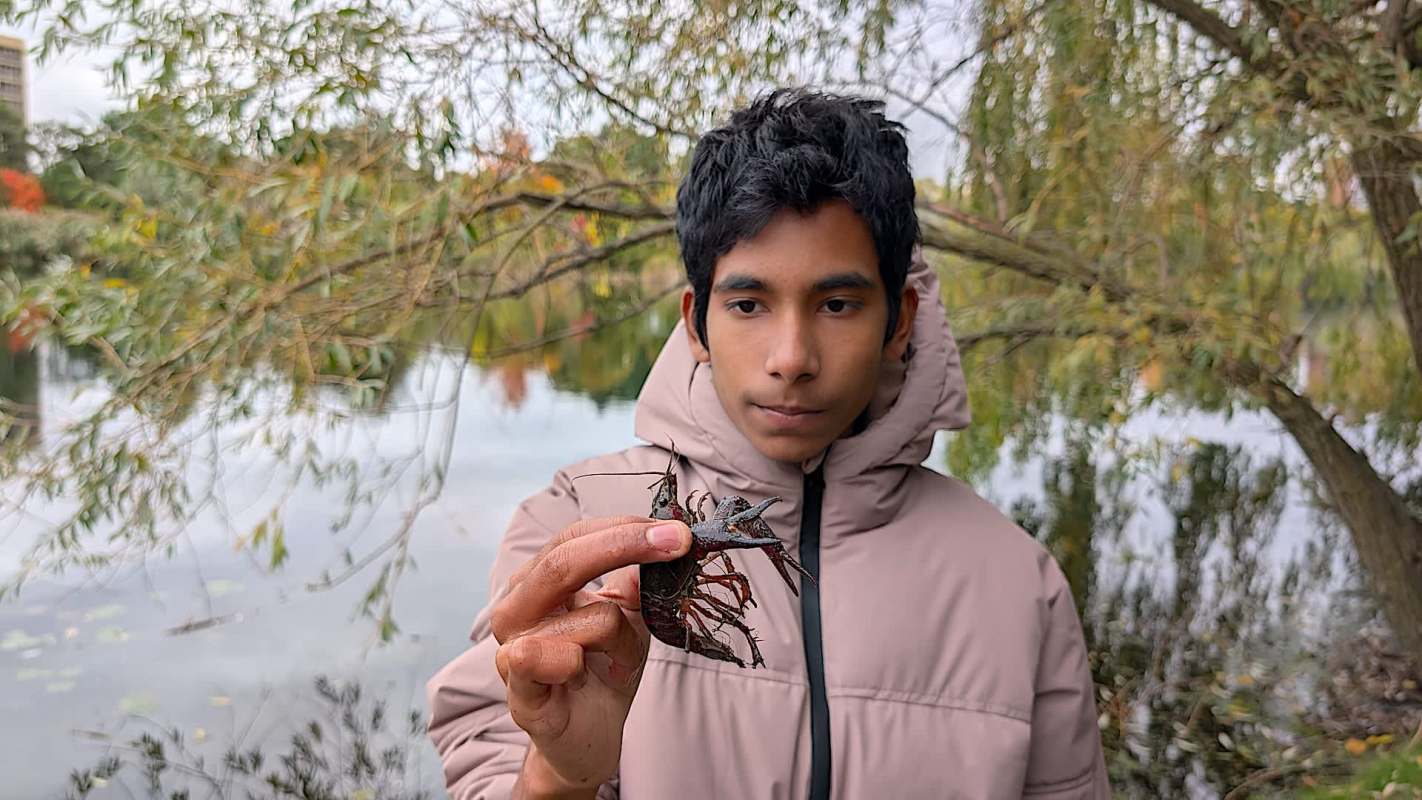
Conservationists are hailing a 10th-grader as an environmental hero for discovering an aggressive, non-native species in Lake Aquitaine in Ontario, Canada.
The student, named Santhosh, first started exploring nature at the beginning of COVID in the fields of his south Indian hometown.
"I like being outside a lot," he told The Pointer.
The more he explored, the more curious he became, and he turned to the internet to research. During one of these searches, he saw photos of red swamp crayfish but thought very little of them.
Four years later, his family moved to Mississauga, Canada, home of Lake Aquitaine.
"Lake Aquitaine is actually a man-made stormwater management pond fed by run-off water from the surrounding area. It is intended to improve water quality before it enters the Credit River," the City of Mississauga website explains.
TCD Picks » Quince Spotlight
💡These best-sellers from Quince deliver affordable, sustainable luxury for all




The lake is home to hundreds of species of fauna, and Santhosh soon began exploring the new ecosystem and recording what he saw. During one of these sessions, a familiar creature caught his attention.
"I was catching insects, looking around and then I noticed something big and red on the side," he recalled to The Pointer.
He was pretty certain he had found a red swamp crayfish and confirmed his discovery in a crayfish guide. He also saw that the species was prohibited in Ontario and had not yet established itself.
Santhosh took a picture and left it in the sun to dry out and die, knowing it was a non-native species and could cause a lot of harm. He then turned it over to the Credit Valley Conservation, a community-based environmental organization in Ontario dedicated to protecting, restoring, and managing the Credit River watershed. They began rapid-response efforts and worked to capture as many of the creatures as they could find.
|
Which of these savings plans for rooftop solar panels would be most appealing for you?
Click your choice to see results and earn rewards to spend on home upgrades. |
 Save $1,000 this year 💸
 Displaced species, like the red swamp crayfish, spread rapidly and outcompete native species for resources, which can harm biodiversity and even permanently change entire ecosystems.
Non-native species also often have an enormous economic impact. According to 2022 data, displaced crayfish and crabs carried the highest costs of any non-native species, totaling $120.5 and $150.2 million, respectively.
Stopping their spread early and community awareness are the best routes to prevent the species from becoming fully established.
Other areas have found creative ways to deal with the displaced crayfish. The University of Missouri found them in their pond, removed them, and donated them to the MU Raptor Rehabilitation Project. The crayfish become food for injured birds. Conservationists in Michigan suggest harvesting and eating them.
For his efforts, Santhosh became known as the "crayfish whisperer" among his CVC volunteer group — a well-deserved title.
The environmental non-profit Ontario Nature (@OntarioNature) agreed, posting to social platform X on Santhosh's accomplishment with a simple statement:
"Wow, just wow."

Get TCD's free newsletters for easy tips to save more, waste less, and make smarter choices — and earn up to $5,000 toward clean upgrades in TCD's exclusive Rewards Club.







