


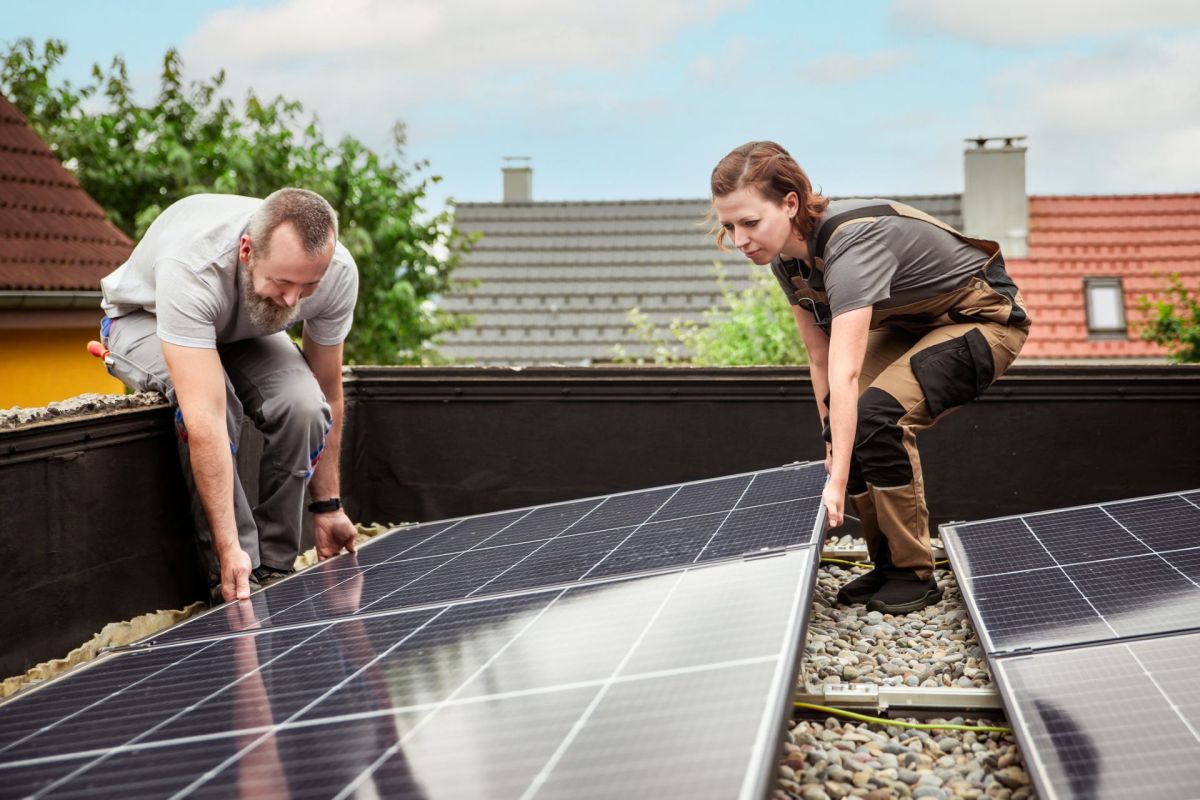
New solar subscription programs have helped to make solar panels a lot more accessible for residents across the United States.
While it's common knowledge that solar energy is one of the best ways for consumers to take control of their utility bills, the cost of installation is often a sticking point. These installation costs have recently become more prohibitive with the disappearance of certain tax credits.
But even as some federal support for solar vanishes, there are other alternatives to buying panels outright, including TCD partner Palmetto's LightReach program, which helps customers install rooftop solar panels for no money down.
The scoop
Purchasing an entire rooftop solar array is likely to cost between $20,000 and $30,000, depending on your state and incentives. Although that is a far cry from a decade ago, when prices were closer to $50,000, it's still a pretty penny.
That said, despite the installation costs, solar panels are usually an investment that pays for itself. Users can see up to six figures in electricity bill savings with rooftop solar over the lifetime of their panels.
Meanwhile, if you want to start curbing your energy bills and your fossil fuel usage, but you're hesitant about the upfront costs, you might be interested in Palmetto's LightReach program, which offers an enticing alternative called a solar lease.
The gist is that the company can install solar panels on a home's roof for no upfront installation cost. Instead, the resident pays a monthly fee and keeps the energy generated by the solar panels.
This model can help consumers secure a more stable rate for energy costs. Plus, Palmetto covers all of the panel maintenance for the entire length of the contract.
Get $1,000 cash to slash your bills with rooftop solar panels for $0 down and low monthly payments Whatever your solar budget, Palmetto can help you save. If you want to buy your own panels, Palmetto's advisors can help you save up to $10,000 on installation through a network of preferred installers. And if you'd rather get solar savings without upfront costs, Palmetto's revolutionary LightReach subscription program can deliver — including an exclusive $1,000 cashback offer for TCD readers. LightReach lets you lease solar panels with no money down, making it painless to lock in long-term savings of up to 33% off your current power bill. Palmetto covers a 25-year warranty for the panels, which means you'll get reliable performance without unforeseen costs. To get started, just book a short meeting with Palmetto's experts to explore your options and find the solution that's right for you. |

"With the Palmetto Energy Plan, we own the system and you get the power. So you can lock in a rate that's lower and more stable than your current utility bill, with no upfront cost, and no maintenance to worry about," Palmetto's website explains.
How it's helping
Typically, those who buy panels outright will see the greatest long-term savings. They'll have access to any related tax credits available in their state to help make the initial investment more affordable, and all of the energy generated will go directly to their household.
|
Which of these savings plans for rooftop solar panels would be most appealing for you?
Click your choice to see results and earn rewards to spend on home upgrades. |
 Save $1,000 this year 💸
 In many areas, when you own your panels, you can even sell excess power back to the grid.
However, solar leasing can still be a good investment depending on your financial situation and location. With many solar subscription programs, there are no upfront costs, so you can install panels without taking on a loan or immediately spending tens of thousands of dollars.
In turn, you will pay a predictable monthly payment and own the power your solar panels generate. Whatever energy your panels generate can be used to reduce your regular electricity bill. And because you don't own the panels, you don't have to worry about repairs or maintenance.
Regardless of how you install your panels, from leasing to owning outright, capturing your own energy from the sun can dramatically reshape your energy costs and help your home cut down on harmful fossil fuel emissions.
To help fund your home electrification, Palmetto also offers a free Home app. By completing simple challenges, such as reducing your home's energy consumption, you can unlock up to $5,000 in rewards to upgrade your home.

Get TCD's free newsletters for easy tips to save more, waste less, and make smarter choices — and earn up to $5,000 toward clean upgrades in TCD's exclusive Rewards Club.






