


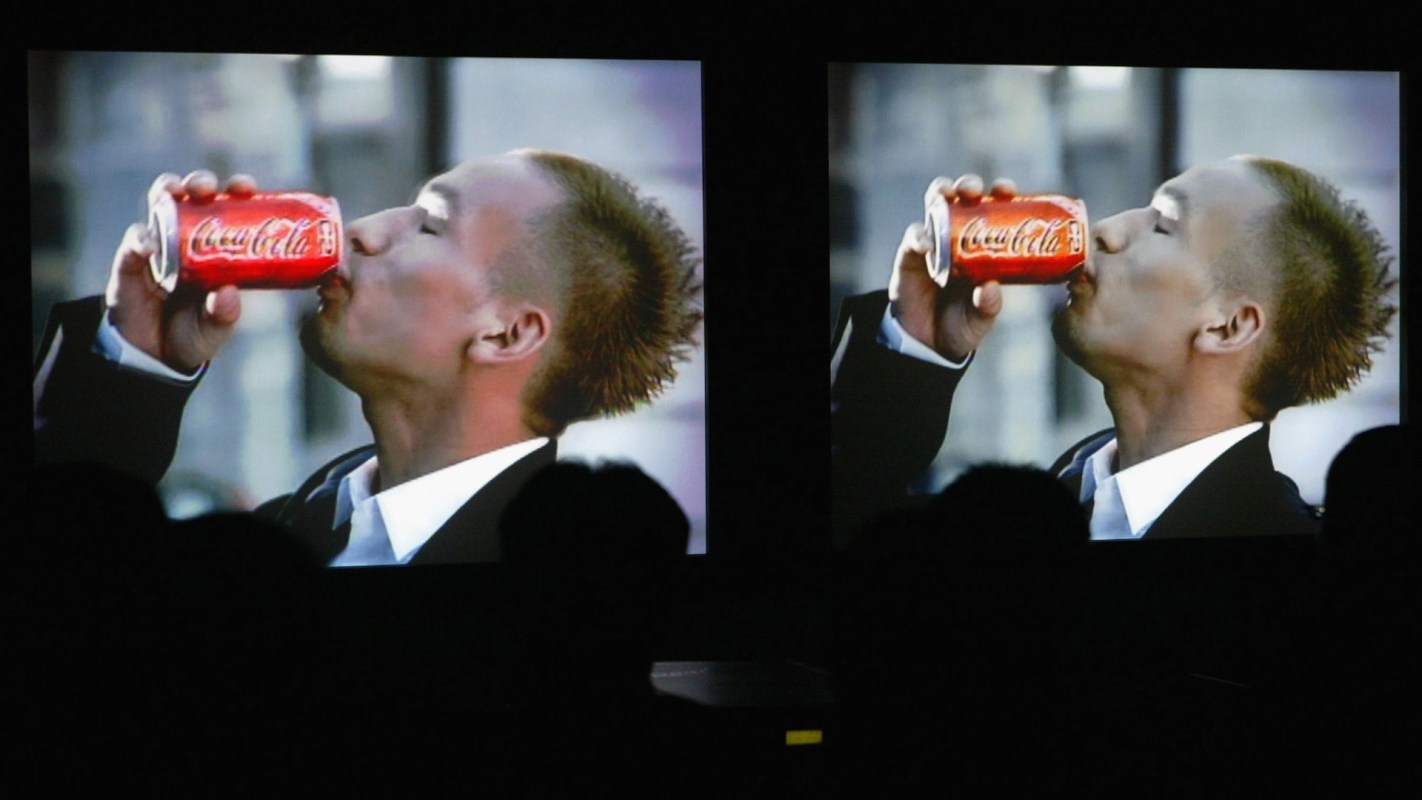
"There's no such thing as bad publicity" is an oft-repeated business axiom, and a recent Business Insider article suggested Coca-Cola might be leaning into it.
What's happening?
In 2024, Coca-Cola debuted its first-ever AI-generated Christmas commercial, drawing significant backlash.
Undeterred, Coke went the AI route for its 2025 Christmas ad, once again generating overwhelmingly negative feedback.
After the second generative-AI Coca-Cola Christmas commercial proved as unpopular as the first, Coca-Cola's Global Vice President & Head of Generative AI, Pratik Thakar, signaled the beverage giant wanted to embrace that discord.
Business Insider profiled the use of generative AI among CPGs, or "consumer packaged goods" brands, and executives argued in favor of outsourcing in-house creative work to robots.
Silverside AI founder Johnny Rohrback works with Coca-Cola and other food and beverage brands; the outlet observed that "social media sentiment was largely negative" for the 2025 Coke spot but acknowledged it was the "most talked about" due to the controversy.
TCD Picks » Quince Spotlight
💡These best-sellers from Quince deliver affordable, sustainable luxury for all




"I'm super proud of that ad," Rohrback admitted, citing what Business Insider described as "high demand" for CPGs to churn out content without expanding marketing expenditures to compensate human creators.
Why is this concerning?
When Coke's AI-generated Christmas ad flopped in 2024, public sentiment about generative AI was nowhere near as negative as it would soon become.
Throughout the Business Insider article, there was unpalatable subtext — quoted executives appeared to fully understand consumers' dislike of generative AI, and they seemed to view negative engagement and lower marketing expenses as a win-win.
Whether that ostensible calculus will work out in their favor, however, was unclear.
TCD Picks » Quince Spotlight
💡These best-sellers from Quince deliver affordable, sustainable luxury for all
|
Which of these savings plans for rooftop solar panels would be most appealing for you?
Click your choice to see results and earn rewards to spend on home upgrades. |
 Save $1,000 this year 💸
 As 2025 progressed, AI evolved from a somewhat controversial emerging technology to a full-on raging debate over the economy and resources, along with a broad sentiment that AI was being forced on everyone, everywhere.
At the same time, a growing number of data centers began sapping resources across the country, a localized nuisance that became widespread when everyone's electric bills shot up.
Hitting Americans in their wallets did nothing to endear them to the technology, and the already simmering hostility toward AI began to boil over.
Executives didn't seem unfamiliar with their consumers' feelings that AI was an imperfect technology forcibly inserted into every part of daily life, but Business Insider wrote that one marketer said brands were using AI to make "digital twins" of consumers for market research.
"We can talk to them just like we would be talking to a consumer," said Sonja Evans, VP of business intelligence and strategy at Blue Chip Marketing Worldwide, who asserted that AI customers provided feedback "shockingly similar" to that of their flesh-and-blood counterparts.
What's being done about it?
Corporations and brands seemed to view AI as an inevitability, but people have flexed their power, too.
AI backlash grew so swiftly in late 2025 that community pushback blocked close to $100 million in new data center development — a factor for which marketing executives didn't seem to account.

Get TCD's free newsletters for easy tips to save more, waste less, and make smarter choices — and earn up to $5,000 toward clean upgrades in TCD's exclusive Rewards Club.







