


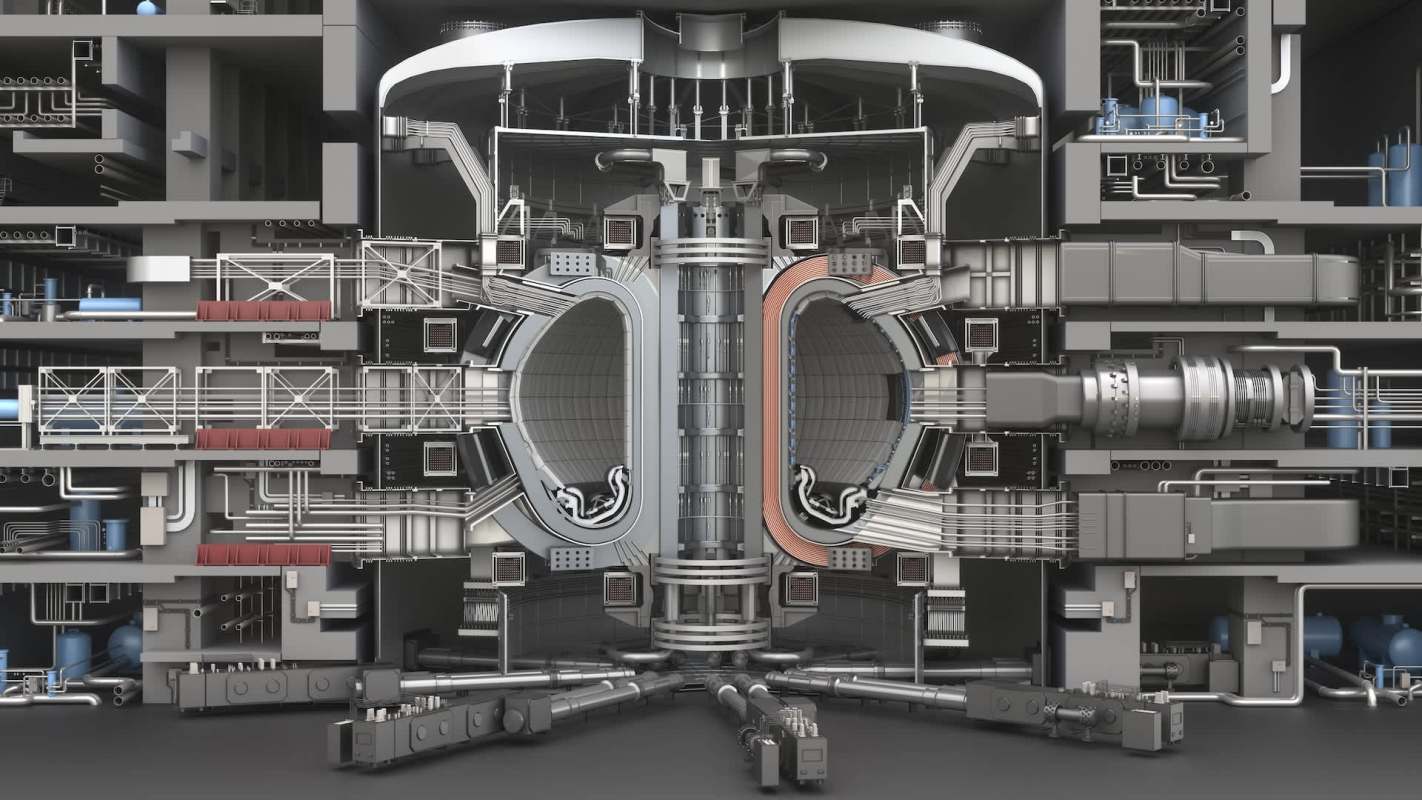
A partnership between the U.S. Department of Energy and Japan's Kyoto Fusioneering aims to advance critical infrastructure needed to accelerate and commercialize nuclear fusion power.
According to Interesting Engineering, this move will establish UNITY-3, a first-of-its-kind facility focused on testing "breeding blankets," a critical technology that will help fusion reactors produce their own fuel so they can run constantly.
The facility will be located at Oak Ridge National Laboratory in Tennessee and is the latest addition to KF's global Unique Integrated Testing Facility network.
The goal is to bridge the gap between theoretical research and real-world testing to advance the commercial deployment of fusion pilot plants, the report added.
Fusion is the process that occurs naturally in the Sun, where two atomic nuclei (typically hydrogen) fuse to release enormous amounts of energy.
It holds the promise of near-limitless energy generation through a zero-carbon process that's safe and available to run nonstop, as long as fuel is consistently available, which this research facility will be focused on.
TCD Picks » Quince Spotlight
💡These best-sellers from Quince deliver affordable, sustainable luxury for all




KF's UNITY-1 project is located at its own research center and is dedicated to non-radioactive blanket and thermal cycle testing, while UNITY-2 at Chalk River Laboratories in Ontario, Canada, focuses on the complete deuterium-tritium fuel cycle.
Hydrogen isotopes like deuterium and tritium can be derived from seawater — or even atomic waste — and according to the World Economic Forum, our oceans contain enough energy to last billions of years.
As the U.S. Department of Energy observed, just one gram of deuterium-tritium fuel is equivalent to the energy from 2,400 gallons of oil, marking a path away from highly polluting petroleum products and toward a more sustainable alternative.
A market analysis by MIT, cited by the WEF, projected that fusion could become the world's leading power source, surpassing coal, which currently supplies around 34% of global electricity.
|
Which of these savings plans for rooftop solar panels would be most appealing for you?
Click your choice to see results and earn rewards to spend on home upgrades. |
 Save $1,000 this year 💸
 "Fusion energy represents a transformational opportunity for our energy future," said Dr. Darío Gil, DOE Under Secretary for Science, in a press release.
"By combining ORNL's deep expertise in fusion systems, materials, and blanket research with Kyoto Fusioneering's unique technology and engineering expertise, and integrated test platforms, this partnership can strengthen the public-private fusion ecosystem and support the commercialization of fusion energy," added Troy Carter, director of ORNL's Fusion Energy Division.

Get TCD's free newsletters for easy tips to save more, waste less, and make smarter choices — and earn up to $5,000 toward clean upgrades in TCD's exclusive Rewards Club.






