


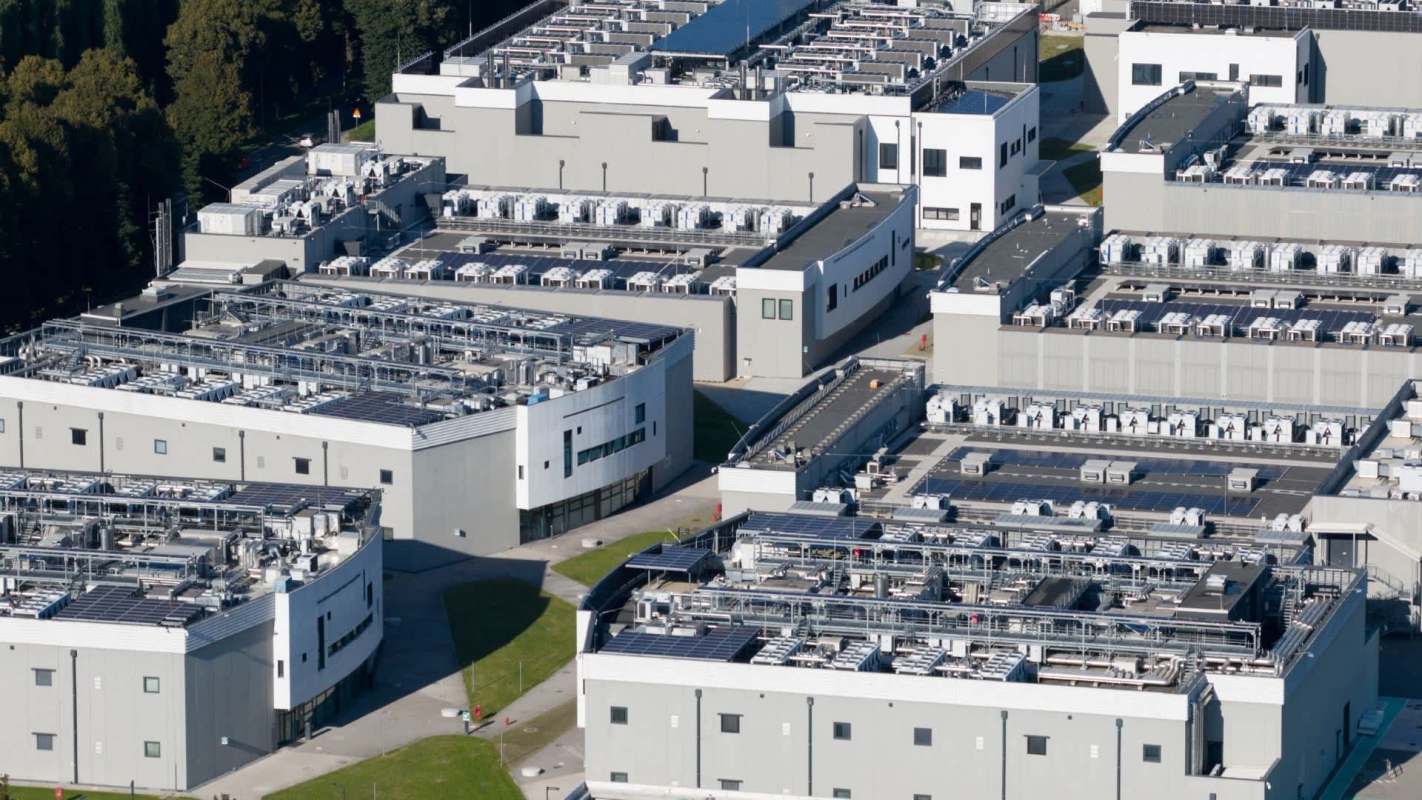
Artificial intelligence tools can feel unobtrusive on your devices, but the facilities that power them are anything but small.
Researchers estimate that by 2030, American data centers could require additional water capacity comparable to New York City's daily water supply.
What's happening?
The research, led by University of California, Riverside associate professor Shaolei Ren and published as a preprint on arXiv, examined how much water data centers might need in the coming years.
If current trends continue, data centers in the United States could require between 697 million and 1.45 billion gallons of additional peak water capacity per day by 2030 — an amount equivalent to New York City's daily water consumption.
Much of this demand stems from how these facilities keep their equipment from overheating.
Data centers run constantly and generate large amounts of heat from densely packed servers and networking hardware. To maintain safe temperatures, many facilities rely on evaporative cooling towers — a technology that can consume significant amounts of water.
TCD Picks » Quince Spotlight
💡These best-sellers from Quince deliver affordable, sustainable luxury for all




According to the research, a large modern data center could require more than 1 million gallons of water per day during peak demand, while some facilities could cycle through as much as 8 million gallons daily.
"Those companies are profit driven, right? So I think clearly there is something wrong," Ren told Gizmodo, addressing the water infrastructure upgrades that could be needed to support the industry.
Why is this concerning?
Researchers estimate that expanding water infrastructure to meet data center demand could cost between $10 billion and $58 billion — expenses that might directly impact the communities hosting these facilities.
The rapid expansion of artificial intelligence is driving this trend. Because AI systems require immense computing power, companies are racing to build new data centers nationwide.
|
Which of these savings plans for rooftop solar panels would be most appealing for you?
Click your choice to see results and earn rewards to spend on home upgrades. |
 Save $1,000 this year 💸
 AI has the potential to deliver major benefits, including accelerating innovation in areas such as clean energy.
However, the infrastructure needed to support these systems can also increase pressure on electricity grids, raise energy demand, and, as this study highlights, strain local water supplies.
What's being done about it?
Researchers say that greater transparency could help communities better prepare for the growth of data centers.
Currently, most companies report only their total annual water use, which can obscure how much water facilities use during peak demand periods.
Ren and his colleagues suggested requiring data centers to disclose peak water demand, so cities can plan infrastructure upgrades more accurately.
They also advocated for collaboration between tech companies and local communities to ensure the financial burden of these upgrades doesn't fall solely on residents.
"I don't see any ways for them to afford this type of upgrade," Ren said. "We need corporate funding and support."

Get TCD's free newsletters for easy tips to save more, waste less, and make smarter choices — and earn up to $5,000 toward clean upgrades in TCD's exclusive Rewards Club.






