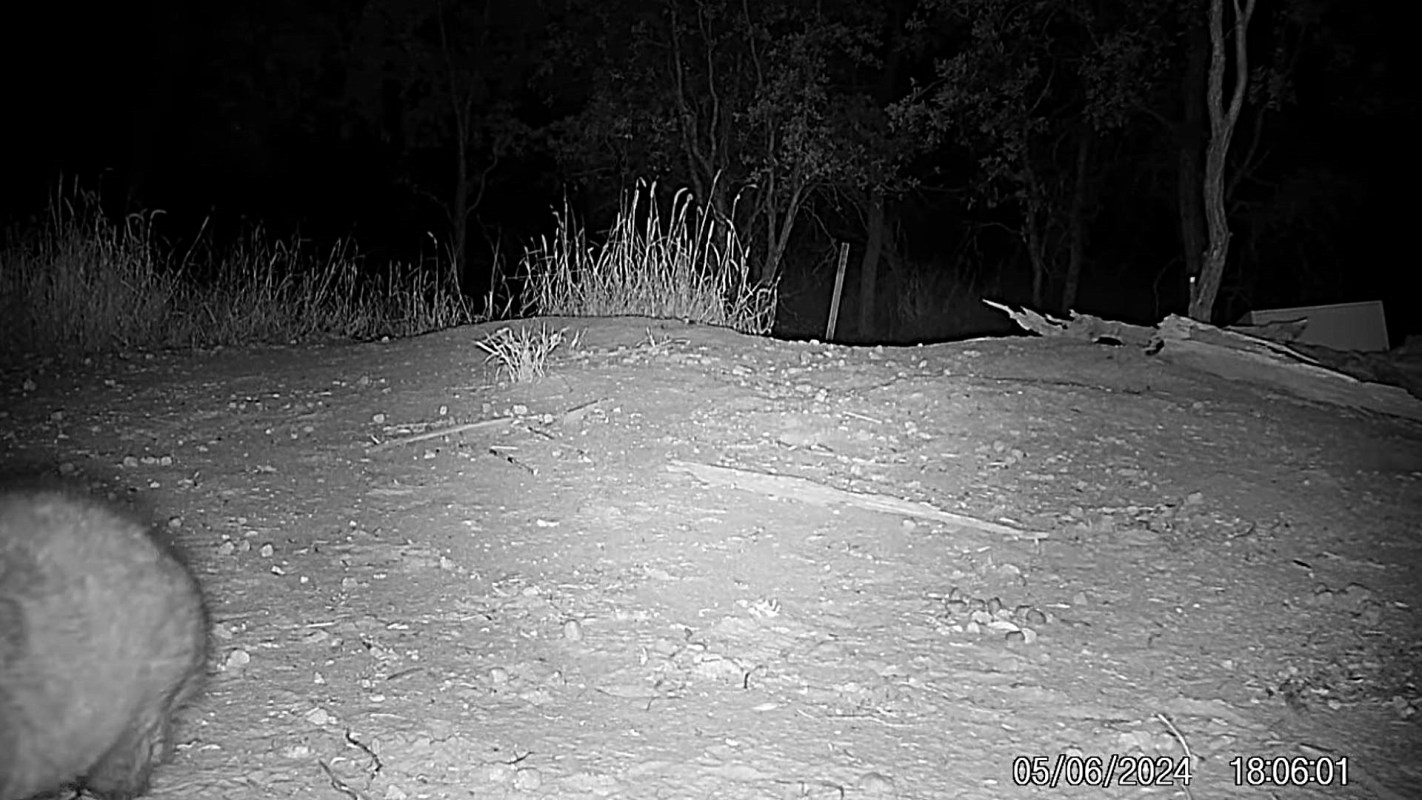
A rare mammal made an unexpected appearance on a trail camera in Queensland, Australia, The Kansas City Star reported.
It was a northern hairy-nosed wombat, a species with a global population of roughly 400. Australian Wildlife Conservancy ecologists said the footage shows that wombats are once again breeding in the refuge.
Ecologist Andy Howe spotted the young wombat while reviewing over 100 hours of trail camera footage from the Richard Underwood Nature Refuge. The animal appeared across two separate nights in June 2024, looking healthy and well-fed. Howe estimated that the wombat was 2 years old.
"It's very gratifying to know that one of the world's most critically endangered animals is doing well and breeding within the safety of the fenced area," Howe said, per the Star.
Trail cameras have become one of the most valuable tools in modern wildlife conservation, allowing researchers to monitor species without disturbing them. In another case, this technology has helped scientists spot the critically endangered forest musk deer in Vietnam for the first time in decades.
The northern hairy-nosed wombat is the world's largest burrowing marsupial, growing over three feet long and weighing over 60 pounds, per AWC.
TCD Picks » Quince Spotlight
💡These best-sellers from Quince deliver affordable, sustainable luxury for all




According to the Queensland government, this species' numbers had dwindled to just 35 in 1982. Factors such as habitat loss, predation, and livestock competition have slowly reduced their numbers over the years.
Thanks to decades of conservation work, their population has rebounded to around 400.
Part of that effort has involved spreading the population across multiple locations. The goal is to ensure that a single disaster, like a wildfire or disease outbreak, can't wipe out the entire species. A second colony was established at RUNR in 2009, and a third at Powrunna State Forest in 2024.
Efforts to protect the wombat help preserve its species and maintain its woodland habitats, which in turn support local biodiversity. Healthier ecosystems also provide cleaner water, fertile soil, and other resources for nearby communities.
|
Which of these savings plans for rooftop solar panels would be most appealing for you?
Click your choice to see results and earn rewards to spend on home upgrades. |
 Save $1,000 this year 💸
 AWC continues its dedicated conservation work. The organization plans to collect wombat hair from burrow entrances — a noninvasive method — to study the population's genetics.
That research, conducted with the University of Adelaide, will help guide future efforts to grow and sustain the species long-term. It's part of a broader pattern: Research suggests that dedicated conservation efforts play a critical role in driving species recovery worldwide.
The northern hairy-nosed wombat's survival has never been guaranteed, but moments like this underscore that with the right protections in place and by supporting conservation efforts, nature has a remarkable way of holding on.

Get TCD's free newsletters for easy tips to save more, waste less, and make smarter choices — and earn up to $5,000 toward clean upgrades in TCD's exclusive Rewards Club.