


While wildlife can be resilient and tenacious, a motley collection of researchers in Wyoming is exploring ways to improve migration survival rates along Interstate 80, WyoFile reported.
What's happening?
WyoFile's coverage opened with the story of Mule Deer 959, a young fawn who, like his mother, spent the first year of his life close to home.
When he eventually embarked on his "inaugural migration," tracking data showed how Interstate 80 influenced Mule Deer 959's movements.
As the outlet explained, the young buck was pulled southward by instinct.
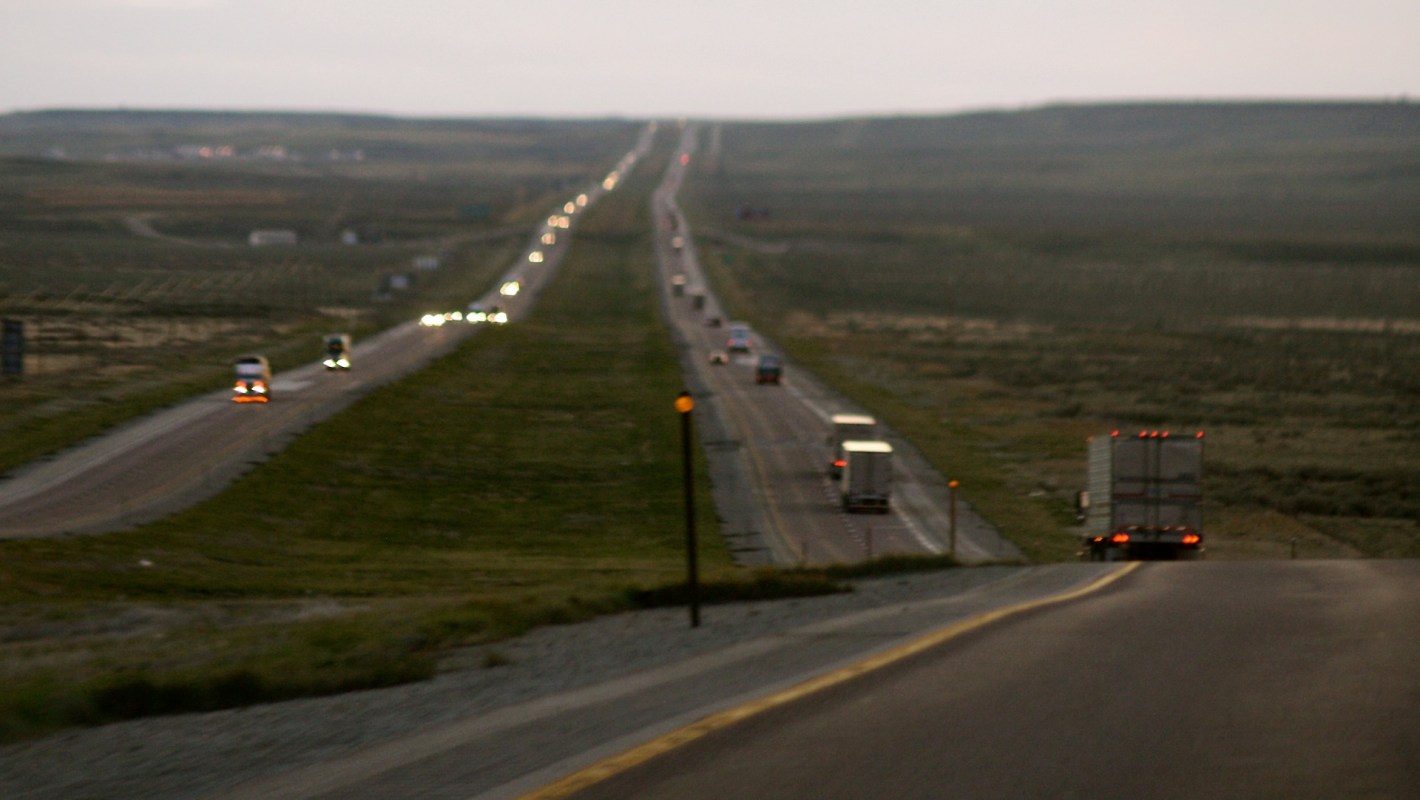
However, the massive, heavily trafficked interstate kept him running parallel for nearly two weeks before he "made a run for it near the Flying J Truck Stop just before Rawlins."
Mule Deer 959 safely reached his migratory destination, but that's not always the case.
TCD Picks » Quince Spotlight
💡These best-sellers from Quince deliver affordable, sustainable luxury for all




As such, experts from the Wyoming Migration Project, along with those from a few state agencies, are working to make the journey through these "leakage points" less perilous.
Why is this important?
According to WyoFile, thousands of elk, mule deer, and pronghorns, driven by instinct to migrate seasonally, are forced to cross I-80.
They've adapted by finding "makeshift underpasses," unofficial wildlife corridors established by animal traffic rather than infrastructure.
The Wyoming Migration Initiative's co-founder, Matt Kauffman, is also a longtime leader of the Wyoming Cooperative Fish and Wildlife Research Unit, and he described the herds' kludgy paths to their summer ranges.
|
Which of these savings plans for rooftop solar panels would be most appealing for you?
Click your choice to see results and earn rewards to spend on home upgrades. |
 Save $1,000 this year 💸
 "This herd actually still has connectivity across the interstate. It's not because of purpose-built [infrastructure] — it's because there just happened to be these machinery underpasses that they're using," Kauffman explained, per WyoFile.
As the outlet noted, the Wyoming Department of Transportation and the Wyoming Game and Fish Department have long catalogued information about migratory patterns and I-80, but those records are scattered across the agencies and remain hard to compile.
WYDOT district engineer John Eddins told WyoFile that wildlife-vehicle collisions on I-80 were so commonplace that mortality rates were nigh on impossible to estimate.
"They get hit, and there's nothing to pick up. There's so much traffic," Eddins lamented.
WyoFile said the danger had been clear since the thoroughfare's inception in the 1970s.
It was followed by "large die-offs of pronghorn, piling up on the interstate … and dying by the thousands," according to Wyoming Game and Fish Department wildlife biologist Lee Knox.
Unfortunately, Mule Deer 959 became one of those casualties — he was struck and killed on his journey home Nov. 8.
What's being done about it?
Ben Koger, an assistant professor in the School of Computing at the University of Wyoming, is running point on a trail camera network focused on I-80 junctures with the highest levels of wildlife traffic; artificial intelligence will be used to help count migrating animals.
Eddins said the data will enable Wyoming to determine where it can best concentrate its spending to reduce unnecessary wildlife deaths.
Knox told WyoFile that time was of the essence.
"Anything we can do to allow these migratory animals to connect their habitats north and south of the interstate is pretty critical. In a world where we're already losing habitat at a pretty fast rate, losing full connectivity is a big deal," he explained.

Get TCD's free newsletters for easy tips to save more, waste less, and make smarter choices — and earn up to $5,000 toward clean upgrades in TCD's exclusive Rewards Club.







